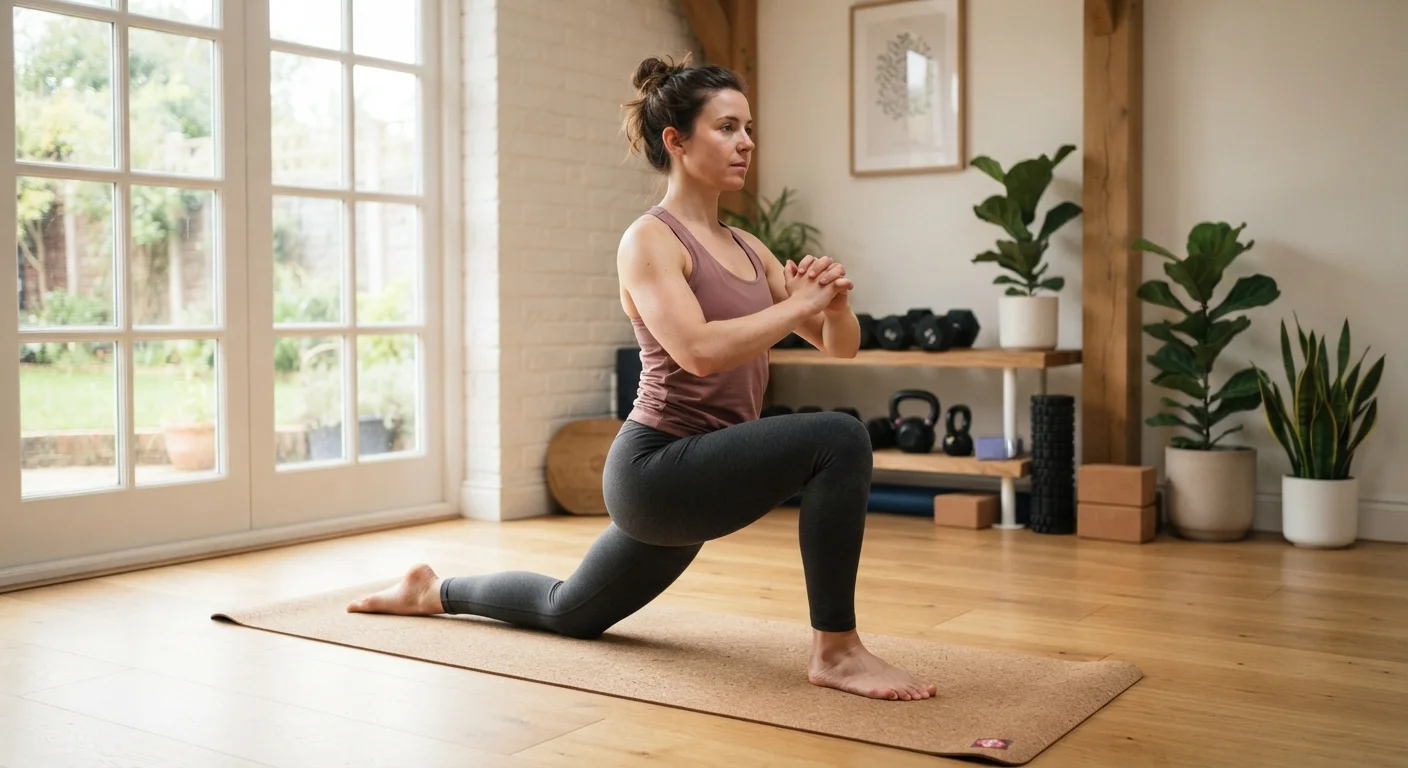
Why Mobility Gets Left Out
Most fitness routines are built around the things people can easily measure: weights lifted, miles run, calories burned. Mobility — the capacity to move your joints through their full, controlled range of motion — rarely generates the same motivation. It's quiet work. The results come gradually and are felt more than seen.
That invisibility is partly why mobility is so commonly skipped. Surveys and observational data from fitness professionals consistently show that even regular exercisers rarely dedicate intentional time to joint mobility work. The consequence isn't dramatic at first. Instead, it accumulates: hips that won't fully hinge, shoulders that pull forward, a squat that stalls at a limited depth. Over months and years, restricted mobility can quietly cap strength gains and set the stage for injury.
For anyone building a sustainable routine — whether you're just starting out or have been training for years — understanding mobility is a genuinely useful step. It's also a central theme in building a fitness habit that lasts.
Mobility Work Is Not a Replacement for Medical Care
If you're experiencing joint pain, persistent stiffness, or a history of injury, mobility exercises may help — but they may also be contraindicated depending on your condition. Always consult a licensed physical therapist or physician before beginning targeted mobility work for a specific joint concern. This article provides general education, not individualized guidance.
Mobility vs. Flexibility: A Useful Distinction
These terms are often used interchangeably, but they describe different things. Flexibility is a passive property — how far a muscle can be elongated when an outside force (gravity, your hands, a partner) applies pressure. Mobility is active. It describes how much range of motion a joint has when your own muscles are doing the work of controlling it.
Here's a simple illustration: someone with very tight hamstrings may struggle to touch their toes in a seated stretch (low flexibility). But a person who can passively fold deeply into a stretch might still have poor hip mobility if their muscles can't actively generate and control that range during movement — like in a deadlift or a lunge.
This distinction matters practically. Spending all your time on passive stretching won't necessarily translate to better movement quality during exercise. Mobility training — which includes dynamic drills, controlled articular rotations (slow, deliberate circles through a joint's range), and loaded movements at end-range — teaches your nervous system to access and trust the range you already have.
~50%
Decline in joint flexibility by age 70
Research published in sports medicine literature suggests adults may lose roughly half their functional joint flexibility between young adulthood and their seventh decade without intervention.
10–15 min
Effective daily mobility session length
Movement specialists and physical therapists commonly cite this range as sufficient for meaningful improvement when practiced consistently several times per week.
2–3x
Recommended weekly mobility sessions
Most exercise science guidelines suggest at least two to three dedicated mobility or flexibility sessions per week as part of a well-rounded fitness routine.
What Restricted Mobility Actually Costs You
Limited joint mobility doesn't just feel uncomfortable. It has downstream effects on performance and injury risk that are well-documented in sports medicine and physical therapy literature.
- Compensatory movement patterns: When one joint can't move freely, neighboring joints are often forced to pick up the slack. A stiff ankle, for example, can lead to excessive knee cave during a squat, shifting stress to a structure not designed for it.
- Reduced strength output: Muscles that are shortened or working at mechanical disadvantage due to poor joint positioning generate less force. Mobility restrictions can literally limit how strong you can get.
- Increased injury risk: Research in sports science consistently links poor hip and shoulder mobility to elevated rates of soft-tissue injuries, particularly in athletes — but the same principle applies to recreational exercisers.
For adults over 50, these stakes are especially relevant. As joints naturally lose some range of motion with age, proactive mobility work becomes a meaningful strategy for preserving independence and reducing fall risk. Our article on starting exercise after 50 explores this in more detail.
Start With Your Biggest Restriction
Rather than following a generic routine, identify the one or two joints that feel most limited in your everyday movement or exercise. For many people, that's the hips or thoracic spine. Concentrating your early mobility work there tends to produce faster, more noticeable improvement — and keeps you motivated to continue.
How to Build Mobility Work Into Your Routine
The good news is that meaningful mobility improvements don't require long, separate sessions. Here are practical ways to integrate it:
- Use it as a dynamic warm-up. Spend 10 minutes before a workout moving through controlled hip circles, shoulder rotations, thoracic (upper back) rotations, and ankle circles. This primes joints for load rather than just raising heart rate.
- Add it to rest days. Dedicated mobility sessions on recovery days work well — they promote blood flow without adding training stress.
- Target your actual restrictions. Most people have one or two areas that consistently limit their movement — often the hips, thoracic spine, or ankles. Focusing there produces faster, more relevant results than a generic full-body routine.
- Be consistent over intense. Ten minutes daily outperforms a 60-minute session once a month. The nervous system adapts to mobility training with repetition, not volume spikes.
Mobility work also pairs naturally with the kind of everyday movement habits that support health between formal workouts. Even brief mobility breaks during a long workday can add up over time.
This article is for general informational and educational purposes only and does not constitute medical advice. If you have joint pain, a recent injury, or any health condition, consult a qualified healthcare professional before beginning a new movement program.