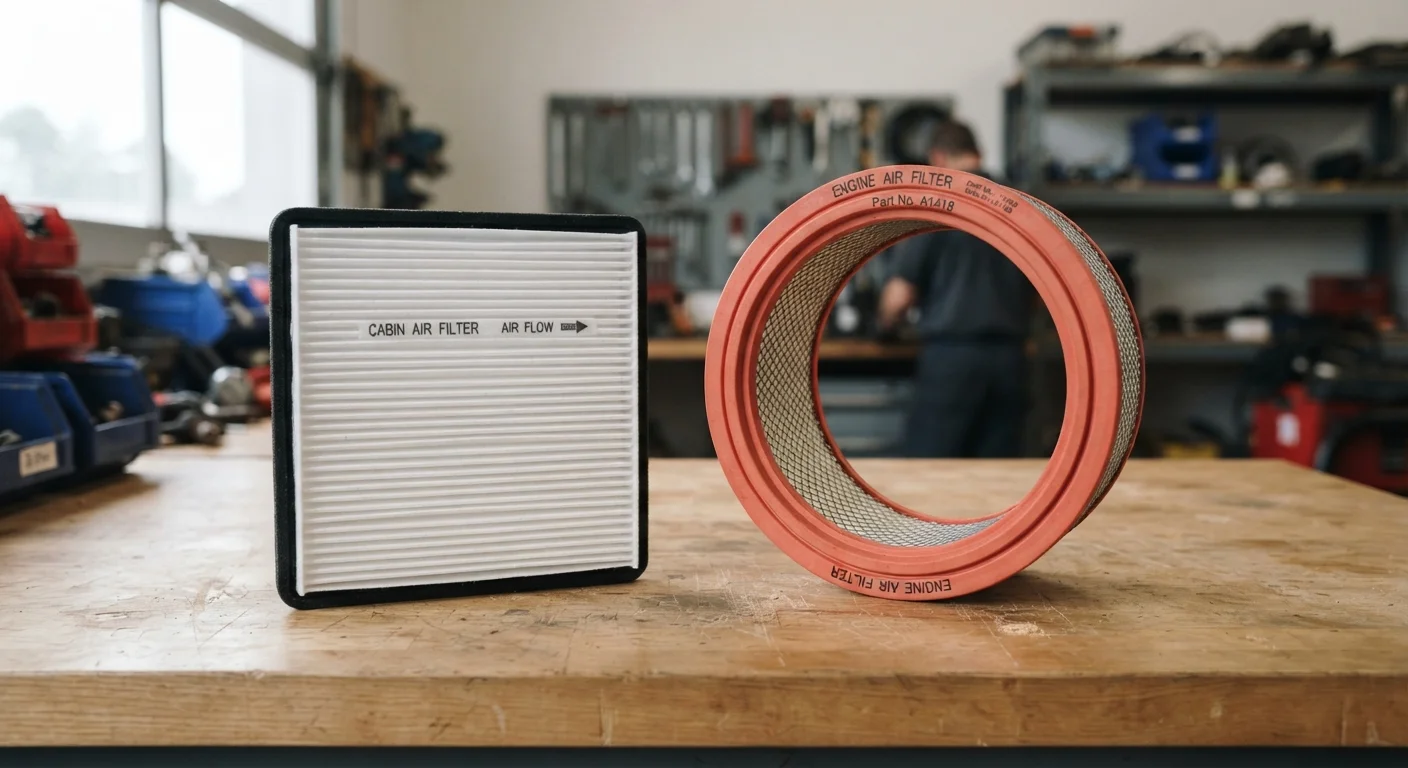
Two Filters, Two Completely Different Jobs
Your vehicle actually contains two separate air filtration systems, and confusing them is one of the most common gaps in routine maintenance knowledge. Both filters trap airborne particles, but they protect entirely different things - one protects you, and one protects your engine.
The cabin air filter sits within your vehicle's HVAC (heating, ventilation, and air conditioning) system, typically behind the glove box or under the dashboard. Every time you run your heater, air conditioning, or fan, outside air passes through this filter before reaching the vents. It captures pollen, dust, mold spores, and fine particulate matter, directly affecting the air quality inside the passenger compartment.
The engine air filter lives in the engine bay, housed in a plastic airbox connected to the intake system. Its job is to prevent abrasive dust, dirt, insects, and debris from entering the engine during combustion. Internal combustion engines require a precise mixture of clean air and fuel - contaminated intake air can cause accelerated wear on cylinders, pistons, and other internal components over time.
| Criterion | Cabin Air Filter | Engine Air Filter |
|---|---|---|
| What it protects | Passenger compartment air quality | Engine internals from debris |
| Location | Behind glove box or under dash | Engine bay airbox |
| Typical replacement interval | 15,000-25,000 miles | 15,000-30,000 miles |
| Symptom when clogged | Weak vent airflow, odors | Poor acceleration, reduced MPG |
| DIY inspection | Easy - glove box access | Easy - engine bay airbox clips |
| Impact if neglected | Poor air quality, HVAC strain | Engine wear, efficiency loss |
How to Check Each Filter
Inspecting both filters is something most drivers can do themselves with no special tools. A visual check takes just a few minutes and can save money by confirming whether replacement is actually needed.
Checking the Cabin Air Filter
Most cabin filters are accessed by opening the glove box, pressing in the sides to release the stops, and lowering it to reveal the filter housing. Pull the filter out and hold it up to the light. A heavily loaded filter will appear dark gray or brown and may carry visible debris. A new filter is typically white or light gray.
Checking the Engine Air Filter
Locate the airbox in the engine bay - it's usually a black plastic housing with a large hose attached. Release the clips or screws, lift the lid, and remove the filter. Look for heavy gray or black discoloration, compacted debris, or visible damage to the filter media. A light dusting of gray is normal; a filter that's visibly clogged warrants replacement.
When to Let a Mechanic Handle It
While both filters are generally accessible to most drivers, some vehicle designs - particularly certain European models and trucks - place the airbox or cabin filter housing in harder-to-reach locations. If you encounter resistance, unfamiliar clips, or are unsure about reassembly, having a qualified mechanic perform the swap during a routine oil change is a low-cost, reliable option. Incorrect reinstallation of either filter can allow unfiltered air to bypass the media entirely.
If you're uncertain about accessing either filter housing on your specific vehicle, the owner's manual will identify the exact location and provide guidance. A qualified mechanic can also inspect both filters during routine service visits.
Replacement Intervals and Warning Signs
Manufacturer recommendations vary, but general guidance applies to most passenger vehicles:
15,000-30,000 mi
Typical engine air filter service interval
Most vehicle manufacturers specify this range in owner's manuals, though conditions like dusty roads shorten it considerably.
Up to 10%
Potential fuel economy impact
The U.S. Department of Energy has noted that a severely restricted air filter can affect engine efficiency and fuel consumption in older carbureted vehicles; effects on modern fuel-injected engines are more variable.
- Engine air filter: Every 15,000-30,000 miles under normal conditions. Dusty or off-road driving environments may require more frequent changes.
- Cabin air filter: Every 15,000-25,000 miles, or annually for drivers in high-pollen or heavily polluted areas.
Watch for these warning signs specific to each filter:
Cabin Air Filter Warning Signs
- Noticeably reduced airflow from the vents even at high fan settings
- Musty or stale odors when the HVAC system runs
- Increased dust accumulation on the dashboard
- Worsening allergy or respiratory irritation inside the car
Engine Air Filter Warning Signs
- Decreased fuel economy over time
- Sluggish throttle response or reduced acceleration
- Rough idling or misfires in severe cases
- A visibly dark, clogged filter on inspection
If you're curious how filter ratings work in home HVAC systems - which also use layered filtration media - understanding HVAC filter ratings provides useful background on how filtration efficiency is measured and classified.