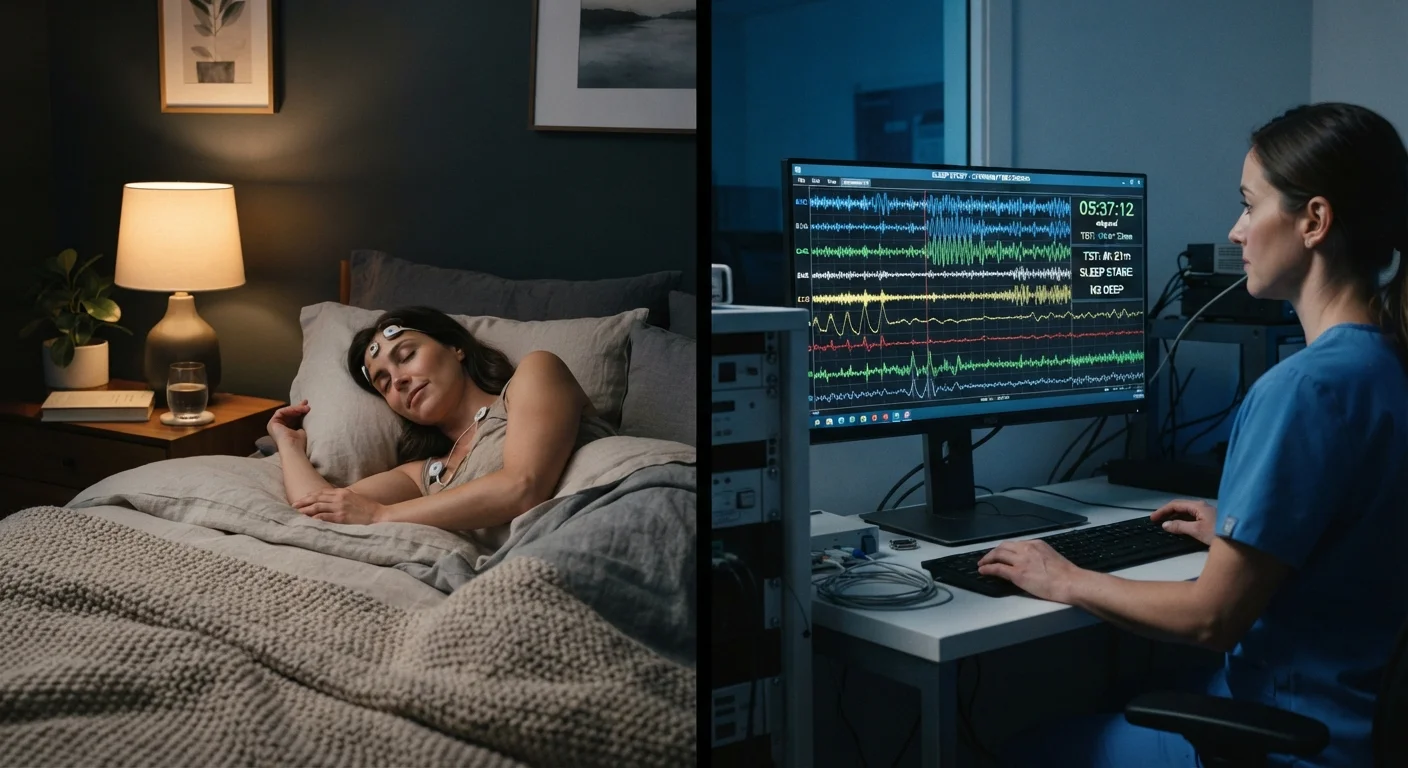
What Is Sleep Hygiene?
Sleep hygiene refers to a collection of behavioral and environmental practices designed to promote consistent, restorative sleep. Think of it as foundational maintenance for your sleep health — accessible, low-risk, and broadly applicable.
Common sleep hygiene recommendations include keeping a regular sleep and wake schedule seven days a week, reserving the bed primarily for sleep, limiting caffeine and alcohol in the hours before bedtime, and creating a bedroom environment that is dark, quiet, and cool. Winding down with a calming pre-sleep routine — such as reading or light stretching — also falls under this umbrella.
Sleep hygiene is widely recommended by health organizations as a starting point because it carries minimal risk and can benefit almost anyone with situational or mild sleep difficulties. However, research suggests that for people with chronic insomnia disorder, hygiene practices alone often produce modest improvements at best. They set the stage, but they don't necessarily fix the underlying patterns driving persistent sleeplessness.
Sleep Hygiene Has Real Limits
For people with diagnosed chronic insomnia, research has consistently shown that sleep hygiene alone produces limited improvement. A 2021 review published in the journal Sleep Medicine Reviews noted that CBT-I significantly outperforms hygiene-only approaches for chronic insomnia. If sleep hygiene practices haven't helped after several weeks, it may be time to seek professional evaluation rather than intensifying the same strategies.
What Is Sleep Restriction Therapy?
Sleep restriction therapy is a specific, structured technique that forms one of the core components of Cognitive Behavioral Therapy for Insomnia, or CBT-I — currently considered the first-line treatment for chronic insomnia by many clinical bodies, including the American Academy of Sleep Medicine.
The premise sounds counterintuitive: rather than allowing someone with insomnia to spend more time in bed hoping to capture more sleep, the approach temporarily limits the window of time a person spends in bed to more closely match their actual sleep time. This is intended to consolidate fragmented sleep, build up sleep pressure (the biological drive to sleep), and gradually re-associate the bed with sleep rather than wakefulness.
Over time, as sleep efficiency improves, the prescribed time in bed is incrementally extended. The process can be uncomfortable in the short term — increased daytime sleepiness is common early on — and it requires careful professional oversight. Sleep restriction therapy is not recommended for people with certain conditions, such as seizure disorders, bipolar disorder, or those in safety-critical occupations where drowsiness poses a serious risk. This is why it must be implemented under the guidance of a qualified healthcare provider.
| Criterion | Sleep Hygiene | Sleep Restriction Therapy |
|---|---|---|
| Primary target | Mild or situational sleep issues | Chronic insomnia disorder |
| Mechanism | Habit formation and environment optimization | Consolidating sleep by limiting time in bed |
| Professional supervision needed | Generally not required | Required — must be clinician-guided |
| Evidence base | Modest for chronic insomnia; useful for mild cases | Strong clinical evidence as part of CBT-I |
| Short-term discomfort | Minimal | Likely increased daytime sleepiness early on |
| Who should avoid | Suitable for most people | Not suitable for those with certain health conditions |
Which Approach Is Right for You?
The two approaches are not interchangeable — they target different levels of sleep difficulty through fundamentally different mechanisms.
Sleep hygiene is a reasonable first step for anyone experiencing occasional poor sleep, jet lag, stress-related insomnia, or who simply wants to optimize their rest. It costs nothing, carries negligible risk, and complements virtually any treatment plan. Just as structured recovery matters in fitness, consistent sleep habits form the backbone of overall well-being.
Sleep restriction therapy, by contrast, is a clinical intervention designed for people whose insomnia has become chronic — typically defined as difficulty falling or staying asleep at least three nights per week for three or more months. If that describes your experience, it is worth speaking with a healthcare provider or a behavioral sleep medicine specialist about whether CBT-I, including sleep restriction, is appropriate for you.
70–80%
Improvement rate with CBT-I for chronic insomnia
Research published in journals including Sleep Medicine Reviews suggests CBT-I, which includes sleep restriction, produces meaningful improvement in the majority of people with chronic insomnia.
30%
Adults reporting insufficient sleep regularly
The CDC has reported that roughly 1 in 3 American adults do not regularly get the recommended amount of sleep, underscoring how widespread sleep difficulties are.
This article is for general informational and educational purposes only and is not a substitute for professional medical advice, diagnosis, or treatment. Always consult a qualified healthcare provider before making changes to address persistent sleep concerns.