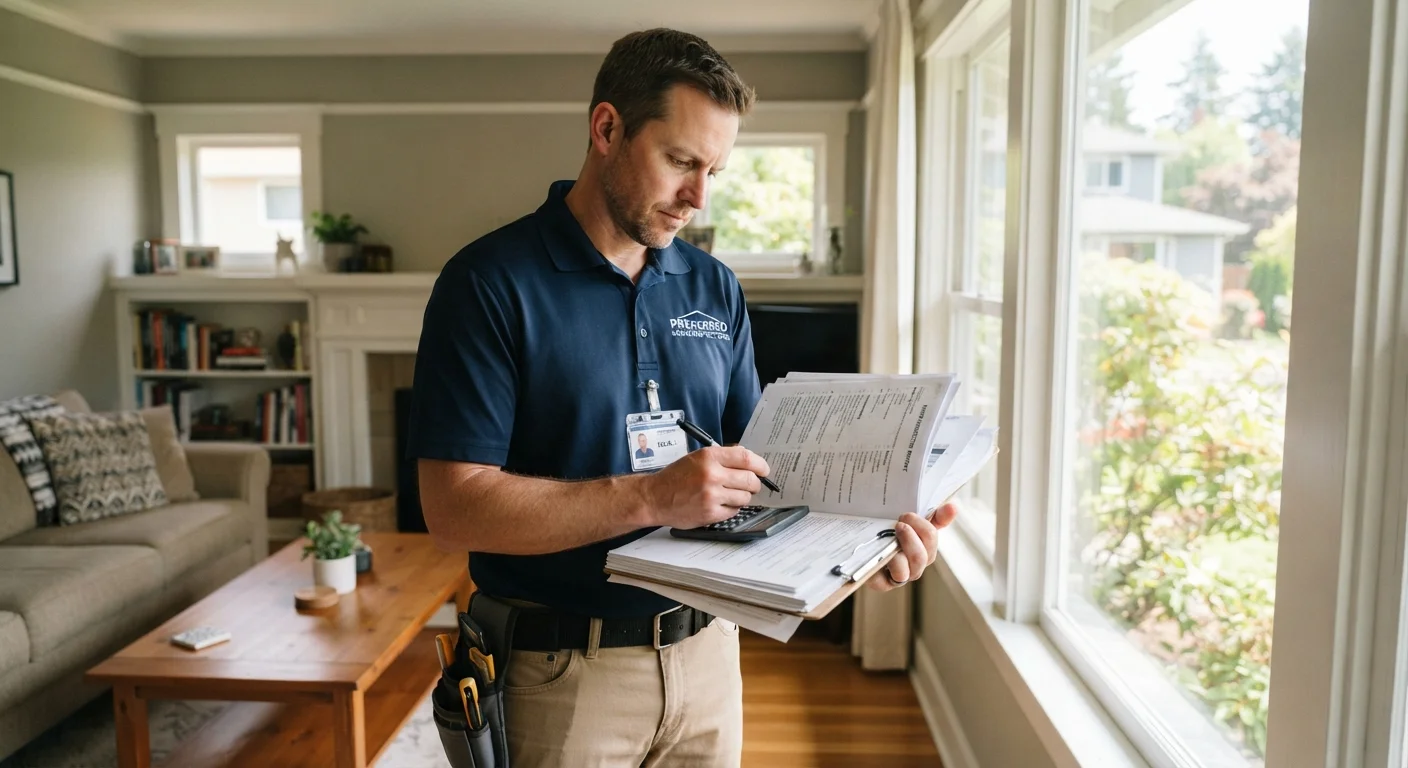
Why Inspection Reports Feel Overwhelming — And Why They Don't Have To
A standard home inspection report can run anywhere from 30 to 60 pages, packed with photographs, condition ratings, and technical language. For most buyers, opening that document for the first time feels like reading a case against the property. That reaction is understandable — and almost always disproportionate to what the report actually says.
Inspectors are required to note every observable condition, from a missing weatherstrip to a deteriorating roof deck. That thoroughness is exactly what you are paying for. But it also means the report treats a sticky door handle and a failing electrical panel with the same neutral, documentary tone. Learning to read the document rather than react to it is the skill that turns a 50-page report from a source of anxiety into a genuine decision-making tool.
Report Length Does Not Equal Severity
A 50-page inspection report is not necessarily bad news. Inspectors are trained to document every observable condition, including items that merely need routine upkeep. Resist the urge to count flagged items and draw conclusions from volume alone — what matters is the nature of each finding, not the total number.
Just as understanding data patterns helps buyers evaluate market conditions — a skill covered in our guide to reading a housing market report — reading an inspection report is fundamentally about separating signal from noise.
What you will need
How to Work Through Your Report Step by Step
The steps below walk you through a structured approach to reviewing your inspection report — starting with the summary, isolating what matters, and determining what to do next. Having the right tools on hand makes the process more efficient.
Licensed Home Inspector's Report
The primary document you will be reading and categorizing by finding type.
Highlighter or Digital Annotation Tool
Used to mark safety issues and major defects separately from routine maintenance notes.
Specialist Contractor Contact
A licensed roofer, electrician, or plumber who can provide follow-up estimates on flagged systems.
Read the Summary Page First
Most inspection reports include a summary section near the front that pulls the inspector's most notable findings into one place. Start here rather than on page one of the full narrative. This summary will typically distinguish between items the inspector considers safety concerns, items needing repair, and items to monitor over time.
Do not treat the summary as the whole story — it is a navigation tool. Use it to understand which sections of the full report deserve your closest attention before reading everything else.
Understand the Three Categories of Findings
Inspector findings generally fall into three broad groups, even if the report labels them differently:
- Safety hazards: Conditions that pose an immediate risk — exposed wiring, missing smoke detectors, improperly vented gas appliances, or deteriorated railings. These typically require prompt action regardless of whether you complete the purchase.
- Major defects: Significant system or structural problems — foundation cracks showing movement, a failing roof, an HVAC unit at end of life, or active plumbing leaks. These affect the home's habitability or long-term value and usually warrant negotiation or specialist review.
- Routine maintenance items: Things like dirty HVAC filters, minor caulking gaps, or peeling exterior paint. These are normal in any lived-in home and generally do not affect your purchase decision.
Isolate the Items That Matter Most
Go through the full report and physically mark — highlight, annotate, or make a separate list of — every finding that falls into the safety or major defect category. Leave routine maintenance items aside for now. You are building a focused shortlist, not a comprehensive to-do list.
Pay particular attention to findings in these systems, which tend to carry the highest repair costs: roof, foundation and structural components, electrical panel, plumbing (especially supply lines and the water heater), and HVAC equipment.
Get Specialist Estimates for Major Findings
For any item on your shortlist that involves a specialized system — roofing, electrical, structural, HVAC — engage a licensed contractor in that trade for a written estimate before you decide how to proceed. An inspector's role is to identify conditions, not to price repairs. A licensed roofer may confirm that what looked like a major issue is a localized repair, or they may find the full system needs replacement.
These estimates give you the information you need to negotiate a repair credit, request that the seller address specific items before closing, or make a fully informed decision about whether to move forward. For guidance on making sense of what contractors send back, see our article on reading a contractor quote.
Use the Report as a Long-Term Home Maintenance Reference
Even items the inspector flagged as "monitor" or routine maintenance are worth keeping. Once you own the home, that report becomes a baseline document — a record of the home's condition at a specific point in time. Items to monitor now become items to check in six months or a year.
Our guide to seasonal home maintenance can help you build a recurring schedule around the specific systems your inspector noted. Staying ahead of deferred maintenance is one of the most effective ways to protect your investment over time.
Flag Items, Then Get Cost Estimates
Once you've identified your priority concerns, get at least one contractor estimate before deciding how to proceed. Knowing whether a repair costs $300 or $12,000 changes every conversation. Our guide to reading a contractor quote can help you interpret those estimates clearly.
Do Not Skip the Inspector Walk-Through
Most inspectors offer a verbal summary at the end of their visit. Attending that walk-through — even briefly — gives you direct context that a written report alone cannot convey. If you cannot attend, ask your inspector whether they offer a phone debrief. Understanding tone and emphasis firsthand can prevent misreading a minor note as a crisis.
This article is for general informational purposes only and does not constitute legal, financial, or professional home inspection advice. Always consult with a licensed inspector, contractor, or real estate professional for guidance specific to your situation and property.