Why Your Hotel Zip Code Is Your Most Important Decision
New Orleans is one of America's most walkable cities — within a neighborhood. Cross into the wrong one for your travel style, and the gap between expectation and reality can be significant. Each district has its own sound level, safety profile, dining scene, and vibe. Before you book, it's worth knowing what you're actually signing up for.
| French Quarter noise level | High — 24/7 activity, especially on Bourbon Street |
| Garden District transit access | St. Charles Ave streetcar runs frequently |
| Frenchmen Street live music | Most nights until late; primarily local, not tourist-focused |
| City Park size | Approximately 1,300 acres — larger than Central Park |
| Best neighborhood for walkability | French Quarter and Garden District rank highest for pedestrian access |
| Peak tourist season | Mardi Gras (February/March) and Jazz Fest (late April/early May) |
The city is compact enough that neighborhoods bleed into one another, but distinct enough that a 10-minute walk can feel like a different city entirely. Whether you want to be in the middle of the action, steps from local restaurants, or settled into a quieter residential rhythm, New Orleans has a pocket for you — you just have to choose deliberately.
Neighborhood Profiles: What to Expect
French Quarter
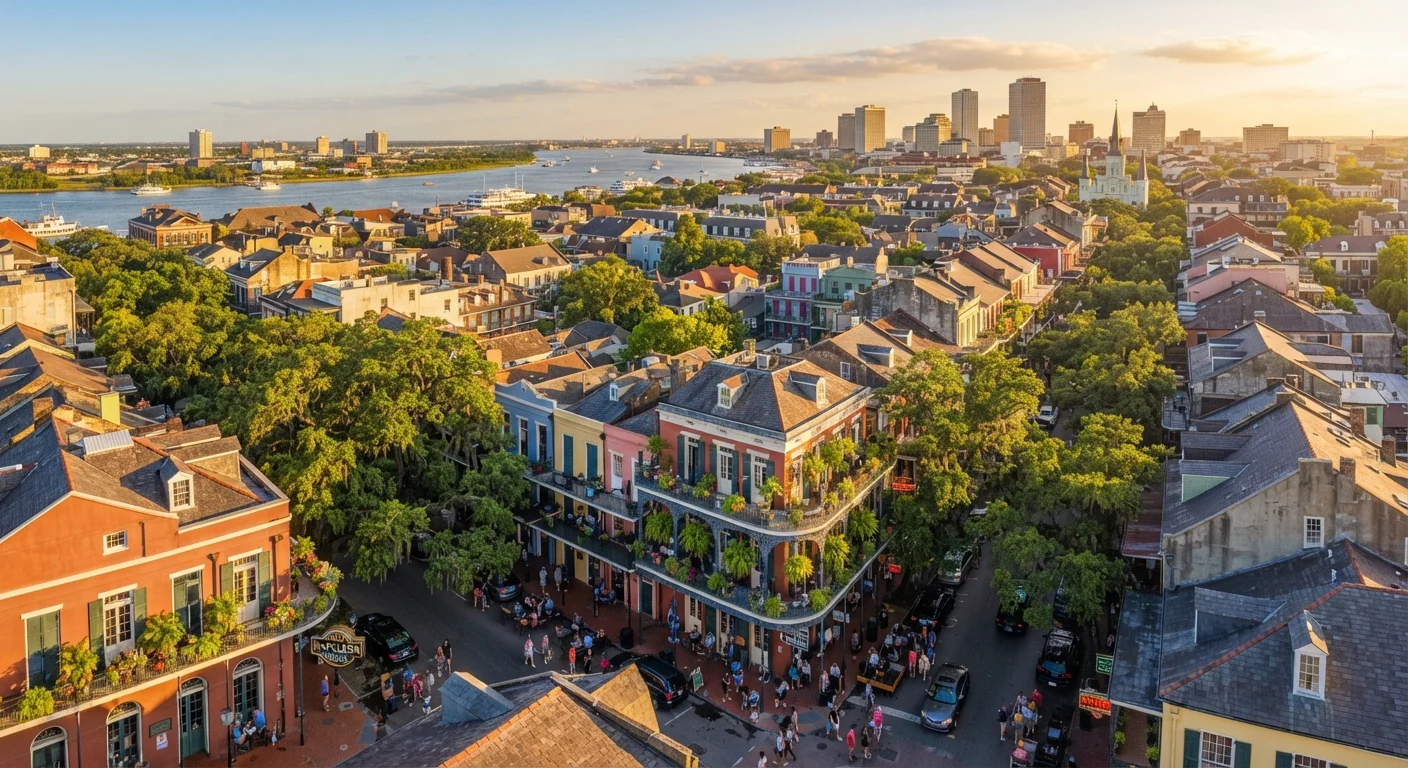
The Quarter is iconic for a reason: jazz clubs, historic Creole architecture, and Bourbon Street energy. It's dense, walkable, and never truly quiet — even on weekday nights. Ideal for first-time visitors who want maximum immersion. Noise and crowds are part of the deal, especially on weekends. Accommodation ranges from boutique guesthouses to large hotels, generally at a premium.
Garden District
Leafy, elegant, and notably calmer. The Garden District draws travelers who want gorgeous antebellum homes, Magazine Street shopping, and great restaurants without the Bourbon Street decibels. It sits along the St. Charles streetcar line, making the French Quarter accessible in about 20 minutes. A strong choice for those who want beauty and quiet within easy reach of activity.
Marigny and Bywater
These two adjoining neighborhoods sit just downriver from the French Quarter and attract a younger, more creative crowd. Frenchmen Street in the Marigny hosts some of the city's best live music in an authentically local setting. Bywater is more residential and artsy. Both are walkable to the Quarter but feel genuinely different — more neighborhood, less tourist corridor. Note that street-level awareness at night matters here as in many urban areas.
Mid-City
Further from the tourist core, Mid-City rewards travelers who want to eat and live alongside locals. City Park — one of the largest urban parks in the country — anchors the neighborhood. The dining scene along Canal Street and Esplanade Avenue is excellent and affordable. Transportation to other neighborhoods requires planning; this area suits travelers comfortable with ride-shares or biking.
Creole architecture
A style of building common in the French Quarter combining French, Spanish, and Caribbean influences, typically featuring stucco exteriors, courtyards, and wrought iron balconies.
Frenchmen Street
A stretch of road in the Marigny neighborhood renowned for its cluster of live music clubs, often cited by locals as a more authentic alternative to the French Quarter's Bourbon Street.
Streetcar line
New Orleans operates several historic streetcar routes — including the St. Charles line — that provide scenic, low-cost transit between neighborhoods. They run on a set schedule and accept cash or passes.
Downriver / Upriver
Local directional terms in New Orleans based on the flow of the Mississippi River. Downriver of the French Quarter leads to the Marigny and Bywater; upriver leads toward the Garden District and beyond.
Central Business District (CBD) and Warehouse District
The CBD is New Orleans' commercial core, home to convention hotels and straightforward logistics. The adjacent Warehouse District has been transformed by galleries, restaurants, and design-forward hotels. Both offer easy access to the streetcar network and are a short walk from the Quarter. A practical, less romanticized base for business travelers or those prioritizing convenience.
Setting Realistic Expectations Before You Book
Verify Current Conditions Before You Travel
Neighborhood character, safety advisories, and transit schedules can change. Before your trip, check the City of New Orleans official website and the U.S. State Department or local tourism authority for current visitor information. Accommodation hosts and local tourism offices are also practical resources for up-to-date neighborhood-level guidance.
New Orleans rewards travelers who do their homework. Parking is genuinely difficult in the French Quarter and Marigny — factor that in if you're renting a car. Heat and humidity peak from June through September, which affects how much walking you'll realistically want to do. Flooding can occur in heavy rain; ask accommodations about their ground-floor situation if that concerns you.
Safety varies block by block in ways that online reviews don't always capture clearly. The general advice from locals: stick to well-lit, populated streets at night, use ride-shares after dark in unfamiliar areas, and keep the same common-sense awareness you'd bring to any major American city. No neighborhood is universally unsafe, but none is entirely without risk either.
Finally, consider your priorities honestly. If live music until 2 a.m. is the whole point, the French Quarter or Marigny makes sense. If you want relaxed mornings, long breakfasts, and afternoon strolls, the Garden District or Mid-City will serve you far better. New Orleans is generous with great experiences — your neighborhood just shapes which ones are effortless to find.