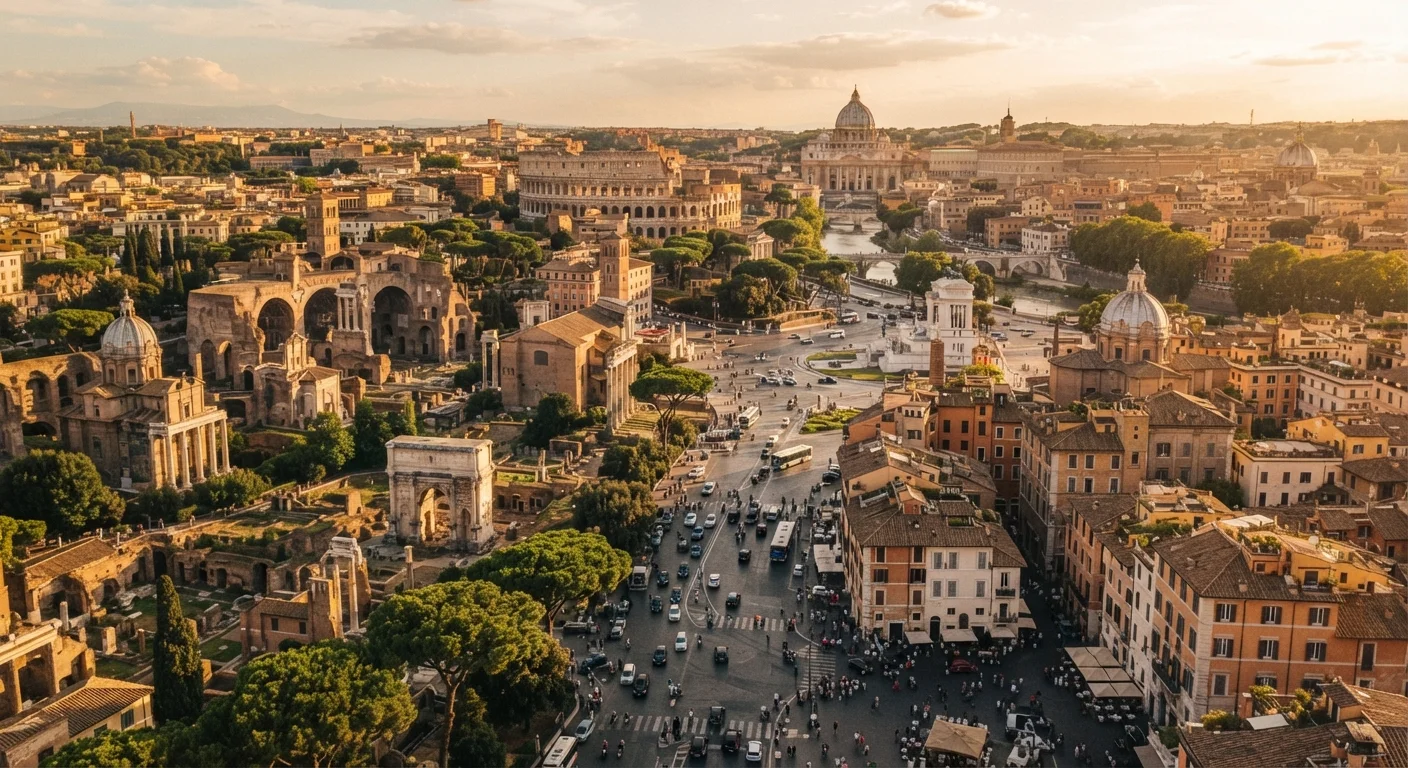
What Makes Rome So Disorienting
Rome doesn't ease you in. Within an hour of landing, most first-time visitors are confronting three thousand years of layered history, a transit system that predates GPS logic, summer temperatures that routinely push into the 90s Fahrenheit, and sidewalks so crowded near the Colosseum or Trevi Fountain that forward motion feels optional. The overwhelm is real — and it's not a sign you packed wrong or planned poorly.
The city is also genuinely large and geographically fragmented. The Vatican, the Forum, Trastevere, the Borghese Gallery, and the Spanish Steps are not a pleasant 10-minute stroll apart. Many first-timers underestimate walking distances on maps that compress ancient hills and river bends into a deceptively small grid.
Understanding these friction points before you arrive is half the battle. Rome rewards the traveler who expects complexity and builds in recovery time — not the one who arrives with a 14-attraction itinerary and no backup plan.
Heat and Dehydration Are Serious Risks
Rome's summer temperatures regularly exceed 90°F (32°C), and the city's stone surfaces retain heat significantly. Dehydration and heat exhaustion are genuine risks for tourists who underestimate this. Drink water consistently throughout the day using Rome's free public fountains, wear sun protection, and take shade breaks. If you feel dizzy or unwell, stop and seek help.
What You'll Need Before You Go
A little preparation work done at home pays off enormously once you're on the ground.
What you will need
With those in hand, you're ready to build an approach that actually works for Rome's pace and logistics.
Offline city map app
Lets you navigate Rome's winding streets without relying on cellular data roaming.
Reusable water bottle
Rome has hundreds of free public drinking fountains (nasoni) — a bottle means you're never without cold water.
Public transit card or contactless payment
Buses and the metro cover distances that are impractical to walk, especially in summer heat.
Portable battery pack
Long days of map use and photography drain phones faster than expected.
How to Navigate Rome Without Burning Out
Follow these steps to move through the city with confidence rather than exhaustion.
Anchor yourself to one neighborhood per day
Rather than crisscrossing the city to hit scattered sites, cluster your day around a single area. Spend one day in and around the ancient center (Forum, Palatine Hill, Colosseum), another in the Vatican neighborhood, another in Trastevere and Campo de' Fiori. This approach cuts transit time dramatically and lets you explore streets rather than just monuments.
Enter major sites first thing in the morning or late afternoon
Crowd density at the Colosseum, Vatican Museums, and Trevi Fountain peaks between 10 a.m. and 3 p.m. Booking the earliest available entry slot — or arriving in the last two hours before closing — gives you a materially different experience. The light is also better for photos at the bookends of the day.
Build a genuine midday pause into your itinerary
Many first-timers push through the midday hours and pay for it by late afternoon. Between noon and 3 p.m., Rome is hottest, most crowded, and many smaller churches and shops are closed anyway. Use this window to eat a proper sit-down meal, return to your accommodation, or find a shaded garden. You'll be genuinely more functional for the cooler evening hours.
Learn two or three navigation anchors
Rome's street grid is not intuitive. Instead of trying to memorize the map, identify two or three landmarks you can orient from — the Tiber River to the west, the Vittoriano monument's white marble visible from much of the historic center, or the dome of St. Peter's. When you feel turned around, locate one of these and reorient from there rather than spiraling.
Use buses and the metro intentionally, not constantly
Rome's metro has only two main lines and misses large portions of the historic center (to protect archaeological remains underground). Buses fill the gap but run on their own schedule. Walk when distances are under 25–30 minutes; use transit for longer cross-city trips or when heat makes walking impractical. Factor in that buses can be slow in traffic.
Embrace the Side Streets
Some of the most memorable Rome experiences happen one block off the main tourist path. Ducking into a neighborhood trattoria rather than a restaurant with a laminated English menu often means better food, lower prices, and a glimpse of everyday Roman life. Don't be afraid to wander — just keep your offline map handy.
Managing Expectations on the Ground
Even well-prepared travelers hit moments of frustration in Rome — a queue that moved slower than expected, a fountain blocked by scaffolding, a restaurant that turned out to be a tourist trap. Build psychological buffer into your trip by accepting that not everything will go to plan, and that some of Rome's best experiences are unscheduled: a side street bakery, an unexpected courtyard, a neighborhood market.
The travelers who leave Rome most satisfied are rarely those who checked off the most landmarks. They're the ones who slowed down enough to actually be somewhere — to sit at an outdoor table, drink a proper espresso, and watch the city move around them.
Verify Entry Requirements Before You Travel
Visa rules, entry documentation requirements, and local regulations can change. Do not rely on travel blogs or social media for this information. Check the official websites of the Italian government and your own country's foreign affairs or state department before booking and again shortly before departure. Requirements that applied on your last trip may not apply today.