Why Depreciation Myths Are Costly Mistakes
Depreciation is the single largest cost of car ownership for most drivers - larger, over time, than fuel, insurance, or routine maintenance combined. Yet it is also the cost most clouded by persistent myths. Buyers who accept these misconceptions at face value often make purchasing, trading, and resale decisions that don't hold up financially.
Understanding how depreciation actually works is not about finding a magic formula. It is about replacing oversimplified rules of thumb with a more accurate picture, so you can weigh the real trade-offs. See The Real Cost of Owning a Car Beyond the Sticker Price for a broader look at where your money actually goes.
Myth
A new car loses 20% of its value the instant you drive it off the lot.
Fact
The so-called 'instant depreciation' is real but varies significantly by vehicle, brand, and market conditions - it is rarely a flat 20%.
The idea that every new car sheds a precise 20% the moment it leaves the dealership has been repeated so often it feels like a law. In reality, initial depreciation depends on the vehicle's transaction price versus its immediate private-market value, supply and demand for that specific model, and whether the car is in high or low inventory. Some in-demand models hold their value unusually well right after purchase; others may depreciate more steeply. The figure varies - sometimes dramatically - from one model to the next.
Myth
Used cars don't depreciate - only new cars lose value.
Fact
Used vehicles continue to depreciate throughout their lives, just generally at a slower rate than new ones.
Depreciation is not a one-time event tied to the new-car transaction. A three-year-old vehicle will still lose value as it becomes a four-year-old vehicle, then a five-year-old one. The rate typically slows compared to the steep early-year drop common with new cars, but it does not stop. Condition, mileage accumulation, and evolving consumer preferences all continue to exert downward pressure on value over time. For a deeper look at how new and used purchases compare overall, see New Car vs. Used Car: What the Decision Actually Comes Down To.
Myth
All vehicles depreciate at roughly the same rate.
Fact
Depreciation rates differ substantially by make, model, segment, and demand - some vehicles hold value far better than others.
Pickup trucks, certain SUVs, and models with strong reputations for reliability have historically retained value better than average. Luxury sedans and vehicles in segments with oversupply often depreciate more quickly. Factors like fuel economy, brand perception, safety ratings, and even color can influence resale values. Treating depreciation as a uniform phenomenon leads buyers to underestimate the long-term cost differences between otherwise similar vehicles.
Myth
Electric vehicles always depreciate faster than gas-powered cars.
Fact
EV depreciation varies widely by model and has shifted considerably as the market has matured.
Early electric vehicles did depreciate quickly, partly because of range anxiety and a thin used-car market. That picture has become more complicated. Some EV models have shown strong value retention, while others continue to depreciate steeply - often tied to factors like battery warranty terms, range capability, charging infrastructure, and available tax incentives on new models that can suppress used-EV prices. Blanket statements about EV depreciation do not reflect the current diversity of the market.
Myth
Keeping mileage low is all you need for strong resale value.
Fact
Mileage is one factor among several; condition, service history, market demand, and model popularity matter just as much.
Low odometer readings help, but a low-mileage vehicle with a spotty service record, cosmetic damage, or in a segment that has fallen out of favor can still command a disappointing price. Buyers and appraisers look at the complete picture: maintenance documentation, accident history, interior and exterior condition, and whether the model is one the market actually wants. A well-maintained higher-mileage vehicle from a desirable model line can sometimes outsell a neglected low-mileage car in a less popular segment.
What Actually Drives a Vehicle's Depreciation
Once the most common myths are cleared away, a clearer picture emerges: depreciation is driven by a combination of factors that interact differently for each vehicle.
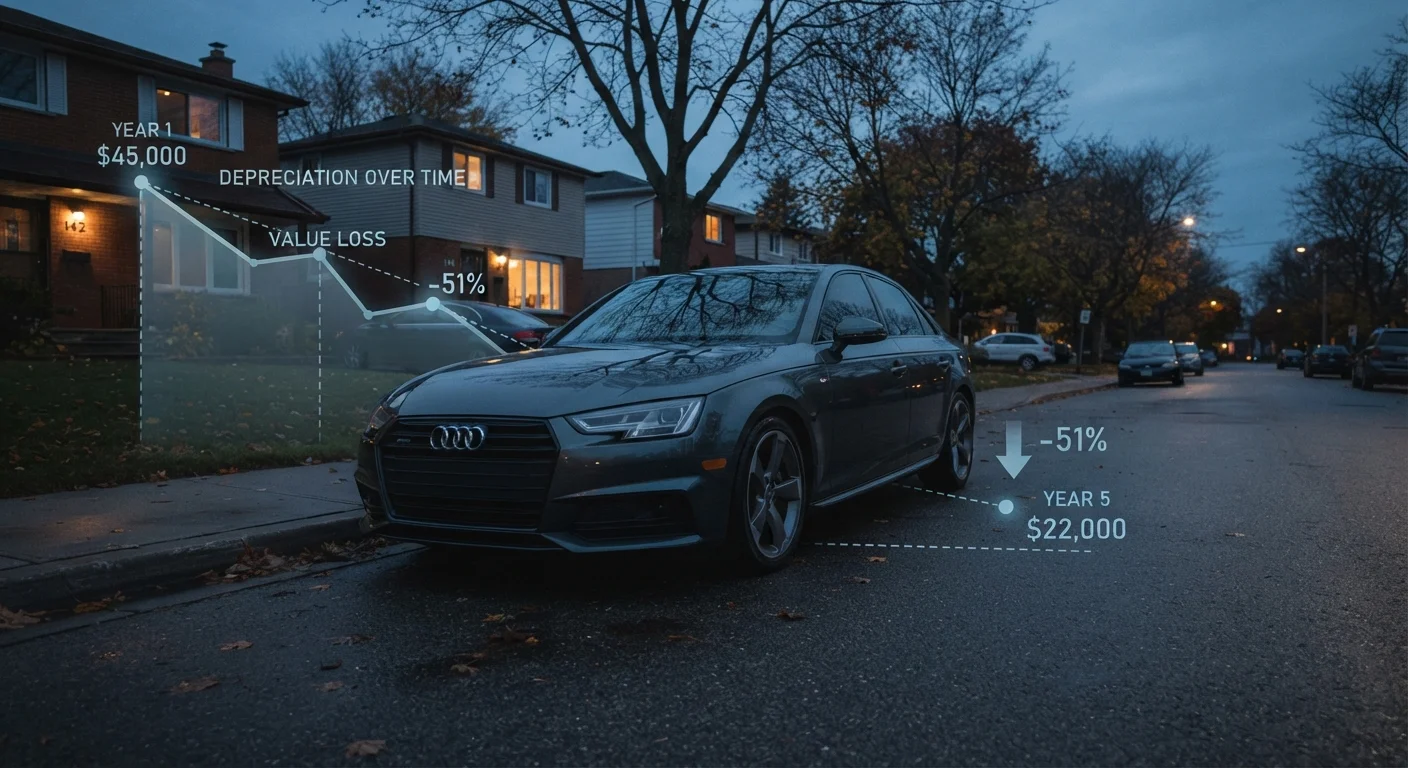
~50%
Average value lost in first five years
Industry data broadly suggests many new vehicles lose roughly half their value within five years, though the range across models is wide.
Year 1-2
Steepest depreciation window
The first one to two years of ownership typically see the largest single-year drops in vehicle value for new cars.
Varies by 30%+
Depreciation gap between top and bottom models
Automotive valuation analysts have found that five-year value retention can differ by 30 percentage points or more between the best- and worst-performing models in a segment.
Market demand is arguably the most powerful force. A model that buyers actively want in the used market holds its value regardless of age. Condition and service history signal to buyers how much life remains and how the vehicle was treated. Segment trends - such as a shift away from sedans toward crossovers in the U.S. market - can accelerate depreciation for entire vehicle categories regardless of individual car quality.
Resale Projections Are Never Guaranteed
Market conditions, regional demand, fuel price shifts, and unexpected events can all alter a vehicle's resale value in ways no one can reliably predict. Treat depreciation estimates as general benchmarks, not promises. Never make a purchase decision based solely on projected resale value.
Depreciation myths aren't unique to cars - similar misunderstandings shape decisions in other financial areas too. The mechanics of common investing misconceptions follow a similar pattern: widely shared beliefs that feel intuitive but lead to poor outcomes when applied uncritically.
This article is for general informational purposes only and does not constitute financial or purchasing advice. Market conditions vary and past depreciation patterns do not guarantee future results. Consult a qualified professional for advice specific to your circumstances.
Depreciation Affects Every Buyer
Whether you buy new or used, depreciation is part of the total cost of vehicle ownership. Understanding how it actually works - not how it is commonly assumed to work - can meaningfully influence the financial outcome of any car purchase. This article provides general financial education, not personalized financial or investment advice. For guidance specific to your situation, consult a qualified financial professional.