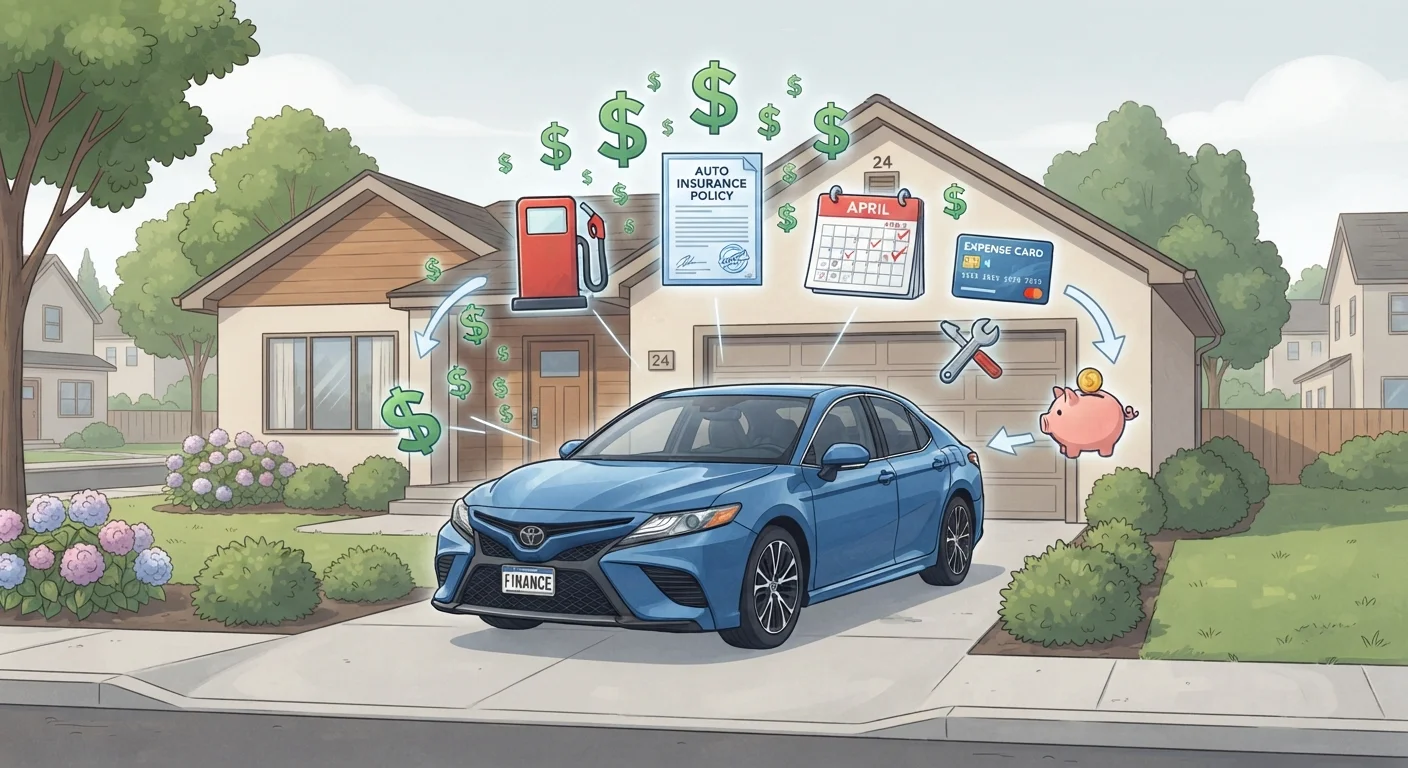
Why the Purchase Price Is Just the Starting Point
When you budget for a new or used vehicle, the number on the window sticker can feel like the whole story. It rarely is. For most American households, a car is the second-largest financial commitment after housing - yet many buyers focus almost exclusively on the sale price and monthly loan payment, while overlooking costs that can easily add thousands of dollars per year.
Understanding the full picture before you sign gives you realistic expectations and protects your budget. Whether you're weighing a new model or a pre-owned option, the same categories of ongoing expense apply. See our comparison of new vs. used car costs for a broader look at how those decisions interact.
| Average Annual Cost to Own a Car (U.S.) | Approximately $10,000-$12,000 (AAA Your Driving Costs study, recent years) |
| Largest Single Ownership Cost | Depreciation (Consistently cited in AAA and consumer finance analyses) |
| Typical Depreciation in Year One (New Vehicle) | 15-25% of purchase price (General industry estimate; varies by model and market) |
| States Requiring Auto Insurance | Nearly all 50 states (Insurance Information Institute) |
| Common Loan Terms | 48-72 months (Experian State of the Automotive Finance Market) |
| Routine Maintenance Interval (Oil Change, typical) | Every 5,000-7,500 miles (synthetic oil) (Most modern vehicle owner's manuals) |
The Major Cost Categories Every Buyer Should Know
Breaking total ownership cost into distinct categories makes it easier to estimate, plan, and compare vehicles before you commit.
Depreciation
Depreciation - the loss in a vehicle's market value over time - is typically the single largest cost of ownership, yet it's invisible on a monthly statement. A new vehicle can lose a significant portion of its value in the first few years. The rate varies by make, model, market conditions, and mileage. For a deeper look at how this works and common myths surrounding it, see our article on car depreciation misconceptions.
Insurance
Auto insurance is legally required in nearly every U.S. state, and premiums depend on factors including your driving record, location, coverage level, and the vehicle itself. Sports cars and luxury models often carry higher premiums than practical sedans or family SUVs. Getting coverage quotes before finalizing a purchase is a straightforward way to avoid surprises.
Fuel
Fuel costs depend on your driving habits, local prices, and the vehicle's efficiency rating. A truck or SUV driven 15,000 miles annually will cost substantially more to fuel than a fuel-efficient sedan or a hybrid, even if the purchase price is similar. Consider your typical commute and driving patterns when estimating this line item.
Maintenance and Repairs
Routine maintenance - oil changes, tire rotations, brake inspections, fluid top-offs - is a predictable, recurring expense. Repairs are less predictable but equally real. Older vehicles and high-mileage models generally carry higher repair risk. Staying on top of scheduled maintenance reduces the likelihood of costly breakdowns and helps preserve resale value.
Registration, Taxes, and Fees
State registration fees, annual property taxes (in states that levy them on vehicles), and local fees vary considerably by location. These are often overlooked in early budgeting but can add hundreds of dollars per year to your total cost.
Financing Costs
If you finance your purchase, the interest paid over the loan term increases your effective total cost significantly. A lower purchase price doesn't always mean a lower overall cost if the loan term is longer or the interest rate is higher. Running the full amortization - not just the monthly payment - gives you a truer number.
Depreciation
The reduction in a vehicle's market value over time due to age, mileage, and wear. It is typically the largest component of total car ownership cost, even though it doesn't appear as a monthly bill.
Total Cost of Ownership (TCO)
The complete financial cost of owning a vehicle over a defined period, including purchase price, financing, insurance, fuel, maintenance, taxes, and depreciation.
Amortization
The process of paying off a loan through scheduled payments over time. An amortization schedule shows how much of each payment goes toward principal versus interest.
Residual Value
The estimated market value of a vehicle at a specific point in the future, often used in lease calculations and resale planning.
Comprehensive Coverage
An optional auto insurance coverage type that pays for damage to your vehicle from non-collision events such as theft, weather, or falling objects.
Building a Realistic Ownership Budget
Adding up estimated annual figures across all cost categories - depreciation, insurance, fuel, maintenance, fees, and financing - gives you a monthly ownership cost that reflects reality, not just the loan payment. Industry tools and government resources like the U.S. Department of Energy's fuel economy guides can help with fuel estimates; insurance quotes are easy to obtain before purchase.
For comparison, the pattern of ongoing costs beyond an initial purchase price is a challenge that applies to other major purchases as well. The true cost of homeownership follows a similar structure - taxes, insurance, maintenance, and financing all compound on top of the purchase figure.
$10,000+
Estimated average annual car ownership cost in the U.S.
According to AAA's annual Your Driving Costs study, the average American spends well over $10,000 per year to own and operate a new vehicle.
~20%
Typical first-year new vehicle depreciation
New vehicles commonly lose roughly 15-25% of their value in the first year, making depreciation the dominant ownership expense for many buyers.
Being clear-eyed about total ownership cost helps you choose a vehicle that fits your financial life - not just one that fits the payment. When the full picture is in view, you make a more confident, informed decision.