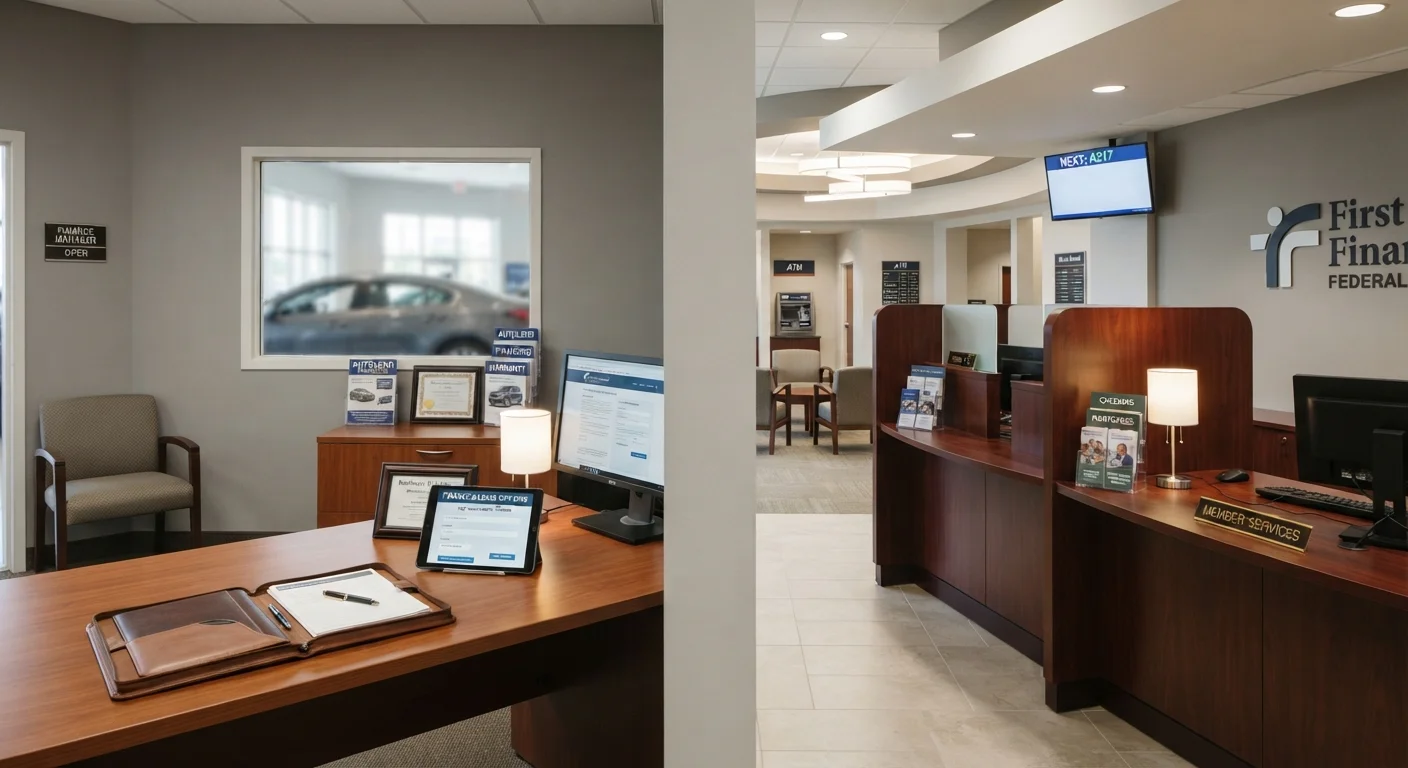
How Each Financing Route Works
When you finance through a dealer, the dealership acts as a middleman. It submits your application to one or more lenders - including the automaker's own captive finance company - and then presents you with loan terms. Dealers are often permitted to mark up the interest rate above what the lender actually requires, keeping the difference as profit. This is sometimes called a dealer reserve or rate markup.
When you finance through your own bank or credit union, you apply directly. If approved, you receive a pre-approval letter or a blank check up to a set amount, which you bring to the dealership. You are then effectively a cash buyer negotiating the vehicle price separately from your financing. For a broader look at how this fits into the overall purchase process, see our step-by-step car-buying walkthrough.
Understanding how your credit score affects your auto loan terms is essential before approaching either type of lender - your credit profile will shape every offer you receive.
| Criterion | Dealer Financing | Bank / Credit Union |
|---|---|---|
| Application process | Handled at the dealership | Applied for directly in advance |
| Rate transparency | Markup possible; rate may not be disclosed | Rate offered directly to borrower |
| Promotional rates | 0% APR sometimes available via manufacturer | Rarely available; market-based rates only |
| Negotiating leverage | Lower - financing tied to purchase | Higher - acts like a cash buyer |
| Typical APR competitiveness | Variable; can be higher due to markup | Often competitive, especially credit unions |
| Speed and convenience | Very fast - one-stop process | Requires advance planning and application |
| Membership required | No | Yes, for credit unions |
The Real Cost Differences to Watch For
Monthly payment comparisons can be misleading. A dealer might offer a slightly higher rate spread over a shorter term, or a lower rate stretched over 72 or 84 months. Always calculate the total amount repaid over the life of the loan, not just the monthly figure.
~1-2%
Typical dealer rate markup range
Industry observers and consumer finance researchers have documented dealer reserve markups commonly ranging from one to two percentage points above the lender's buy rate, though practices and caps vary by state and lender.
60-72 months
Most common new-car loan term in the U.S.
According to Experian's State of the Automotive Finance Market reports, the majority of new vehicle loans are now written for five to six years, increasing total interest paid versus shorter terms.
$780+
Extra cost per 1% APR on a $30K/60-month loan
This is an approximate figure based on standard loan amortization calculations; actual amounts vary with the base rate and loan structure.
Dealer rate markups, where permitted by the lender, vary - but even a seemingly small difference in APR can add meaningful cost over a multi-year loan. On a $30,000 loan over 60 months, each additional percentage point in interest adds roughly $780 or more to your total repayment, depending on the rate level.
Credit unions, as not-for-profit institutions, typically return value to members in the form of lower fees and rates rather than shareholder profits. That structural difference often - though not always - translates to a lower APR for qualified borrowers. Banks can also be competitive, particularly for customers with established relationships and strong credit histories.
Be aware that once you're in the finance office, you may be offered add-ons such as extended warranties, GAP insurance, and paint protection. These are separate decisions from your loan rate. Our article on dealership finance office add-ons explains what each product involves and how to evaluate it on its own merits.
Using Pre-Approval as a Negotiating Tool
Arriving at a dealership with a pre-approval in hand changes the dynamic of the conversation. You know your ceiling rate. If the dealer can beat it - whether through a captive lender or a promotional offer - you benefit. If they can't, you use your own financing. This approach also helps you keep the vehicle price and financing terms as separate negotiations, which is generally to your advantage.
Rebate vs. Low APR: Run the Numbers
When a manufacturer offers a choice between a cash rebate and a low promotional APR, the better deal depends on the rebate amount, the alternative rate you qualify for, and the loan term. Reducing the financed amount with a rebate and using your own financing sometimes results in lower total cost than 0% APR on a higher price. Calculate both scenarios with actual figures before committing.
Promotional rates from manufacturers (such as 0% APR for qualified buyers) are worth evaluating carefully. They tend to require excellent credit scores, and accepting them may mean forfeiting a cash-back rebate that would reduce the vehicle's purchase price. Do the math on both scenarios before deciding. For context on how price negotiation typically unfolds alongside financing discussions, see our guide on what car price negotiation looks like in practice.
This article is for general informational purposes only and does not constitute financial or legal advice. Loan terms, rates, and lender practices vary. Consult a qualified financial professional before making financing decisions.