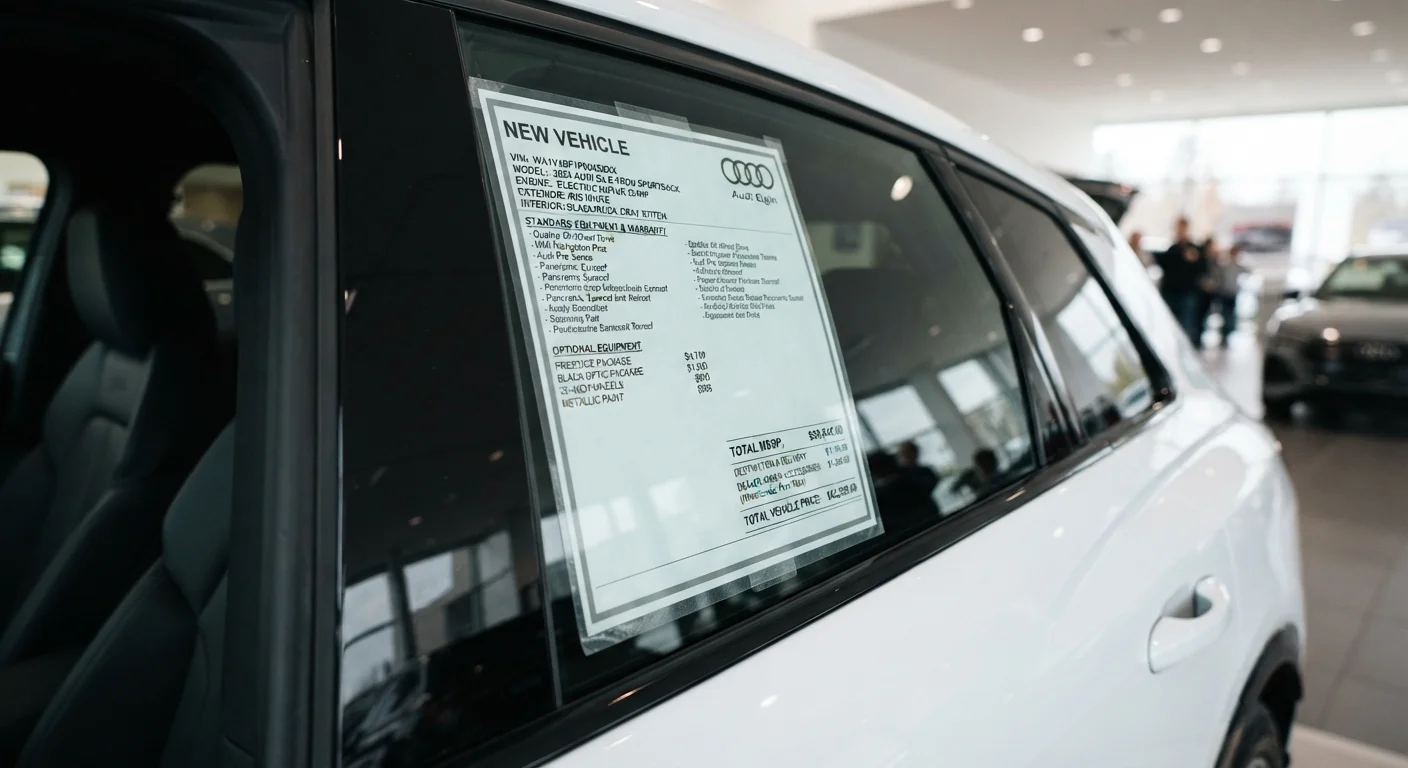
What the Monroney Label Is - and Why It Exists
The sticker on a new car's window is formally called the Monroney label, named after Senator Mike Monroney, who sponsored the Automobile Information Disclosure Act of 1958. That law made it a federal requirement for every new passenger vehicle sold in the United States to carry this standardized label - and it's illegal for anyone except the buyer to remove it before sale.
The label's purpose is straightforward: give buyers a consistent, verifiable snapshot of a vehicle's features, fuel economy, and pricing before any negotiation begins. Think of it as the vehicle's official identity card. Once you know how to read it, you can compare vehicles on equal footing and spot dealer-added charges before they surprise you at the finance desk.
| Law requiring the label | Automobile Information Disclosure Act (1958) |
| Who may legally remove it before sale | Only the purchaser |
| Fuel economy data source | U.S. Environmental Protection Agency (EPA) |
| Crash-test ratings source | National Highway Traffic Safety Administration (NHTSA) |
| VIN length | 17 characters |
| Dealer add-on pricing | Negotiable - separate from manufacturer MSRP |
Breaking Down Every Section of the Label
Monroney labels follow a regulated layout. Here's what each section contains:
Vehicle Identification
At the top, you'll find the make, model, trim level, and model year, along with the Vehicle Identification Number (VIN). The VIN is a 17-character code unique to that specific vehicle - record it before you leave the lot for use in vehicle history checks.
Standard and Optional Equipment
This section lists features that come standard on the trim level, followed by any factory-installed options that were added to this particular vehicle. Each option line typically shows an individual price. Scrutinize this list carefully: understanding which features are standard versus paid add-ons helps you evaluate whether the configuration matches what you actually want.
Fuel Economy Estimates
The prominent MPG figures in the center of the label come from standardized U.S. Environmental Protection Agency (EPA) testing. They show city, highway, and combined estimates. The label also includes an estimated annual fuel cost - a useful tool for comparing vehicles side by side, though your real-world results will vary based on driving habits, terrain, and conditions.
Safety Ratings
If the vehicle has been tested by the National Highway Traffic Safety Administration (NHTSA), its overall and category-specific crash-test star ratings appear here. Not all new models have ratings at launch; if the field is blank, check NHTSA's public database directly.
Pricing: MSRP vs. Dealer Add-Ons
The Manufacturer's Suggested Retail Price (MSRP) is the base price set by the automaker, plus the cost of all factory options. Separately, dealers may add a section listing dealer-installed accessories - paint protection, floor mats, dealer port-installed packages - each with its own price. These are negotiable and are not mandated by the manufacturer. The final number on the label is the total as-stickered price combining MSRP and dealer additions.
Monroney Label
The federally mandated window sticker required on all new passenger vehicles sold in the U.S. It discloses standard equipment, options, fuel economy, safety ratings, and pricing in a standardized format.
MSRP
Manufacturer's Suggested Retail Price - the price the automaker recommends a dealer charge for the vehicle, not including dealer-added accessories or fees. It is a starting point for negotiation, not a fixed price.
VIN
Vehicle Identification Number - a unique 17-character alphanumeric code assigned to every motor vehicle. It can be used to look up the vehicle's history, recall status, and factory specifications.
EPA Fuel Economy Estimate
City, highway, and combined miles-per-gallon figures calculated through standardized U.S. Environmental Protection Agency testing. They allow apples-to-apples comparisons between vehicles, though individual results vary.
Dealer-Installed Accessories
Add-ons fitted to the vehicle by the dealership - not the manufacturer - after delivery. These appear as a separate line-item block on the sticker and are generally negotiable.
Trim Level
A named configuration variant within a vehicle model (e.g., base, Sport, Limited) that determines which features come standard. Higher trims typically include more equipment but carry a higher MSRP.
Understanding the full sticker is only the beginning. Be sure to explore the real cost of owning a car beyond the sticker price, which covers insurance, depreciation, and ongoing expenses that don't appear anywhere on the Monroney label.