Why a Pre-Trip Check Belongs in Your Routine
Most vehicle breakdowns and many road incidents stem from conditions that were already present before the driver left home - a slow tire leak, a burned-out brake light, an oil level running low. A systematic pre-trip check creates an opportunity to catch these issues when the vehicle is stationary and a fix is straightforward, rather than on a highway at speed.
This habit is especially important before longer journeys, but even a short commute benefits. Road conditions, temperature swings, and the simple passage of time can all change a vehicle's condition between uses. The seasonal maintenance checklist complements this routine by covering the deeper inspections your vehicle needs as conditions change throughout the year.
The checks below are organized into four groups. Work through them in order and you can complete the full inspection in 10-20 minutes. Gather the tools you'll need before starting.
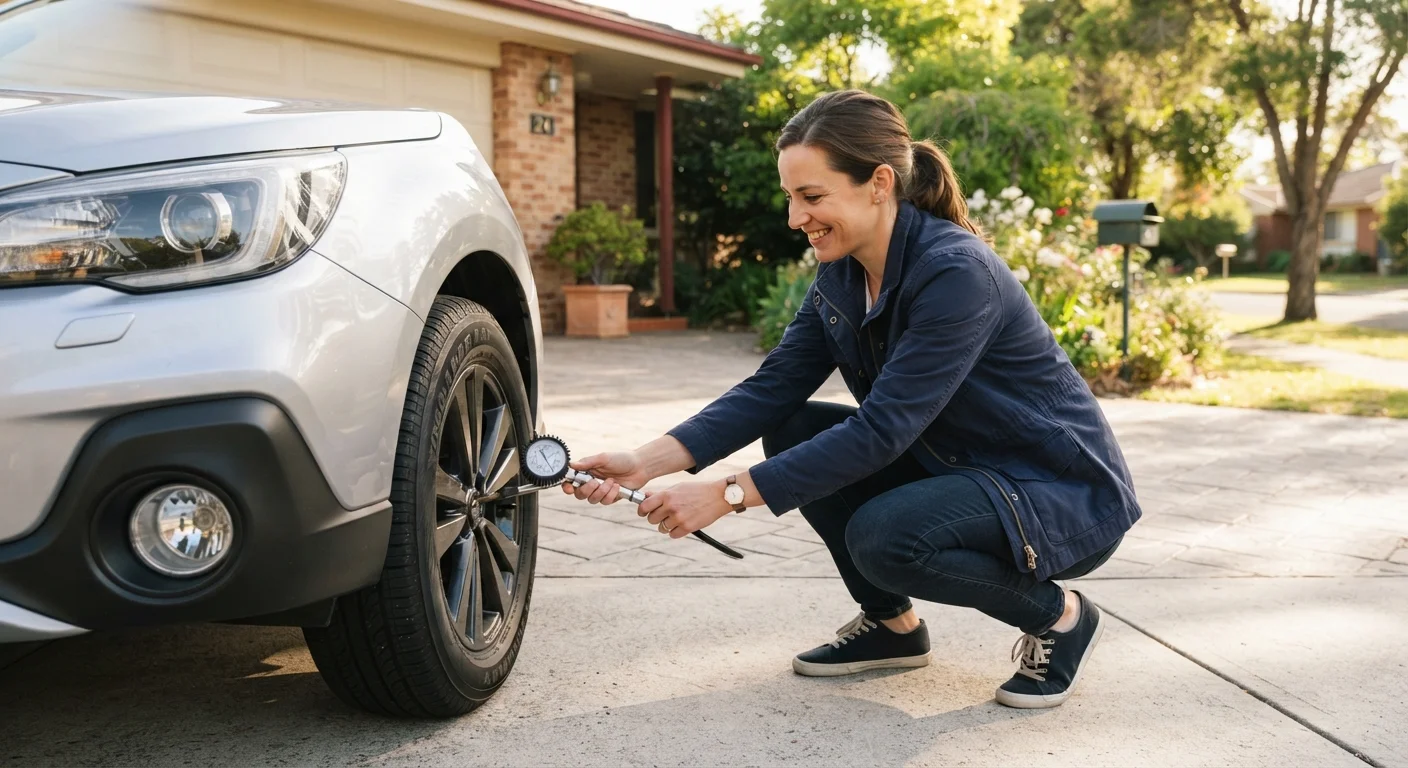
Tire Pressure Gauge
Measures tire PSI accurately so you can inflate or deflate tires to the manufacturer's recommended level.
Flashlight or Work Light
Illuminates dark areas under the hood or beneath the vehicle when checking for leaks or damage.
Tread Depth Gauge or Penny
Measures remaining tire tread to determine whether tires are safe for continued use.
Microfiber Cloth
Cleans light lenses, mirrors, and windshields to ensure maximum visibility before departure.
Jump Starter Pack
Provides a self-contained battery boost if the vehicle fails to start, removing the need for another vehicle nearby.
How to Use This Checklist
Each item is labeled by priority: must items are non-negotiable for safe operation; should items are strongly recommended for every trip; and nice-to-have items improve preparedness but are less time-sensitive.
Start outside the vehicle and work clockwise - front-left tire, across the front, down the passenger side, across the rear, and back along the driver's side. This physical pattern ensures nothing is accidentally skipped. Then move inside for mirror adjustments and the dashboard check.
When to Delay the Trip Entirely
If your inspection reveals a safety-critical problem - such as a severely underinflated or damaged tire, inoperative headlights, or a brake fluid leak - the right decision is to delay departure and address the issue first. No destination is worth the risk of operating a compromised vehicle. Arrange repairs through a qualified mechanic and reschedule when the vehicle is confirmed roadworthy.
If this is your first time performing a pre-trip inspection and you're uncertain what normal looks like for your specific vehicle, the owner's manual is the most reliable reference for fluid capacities, recommended tire pressure, and warning light definitions. For a thorough look at how a professional evaluates a vehicle's condition, the pre-purchase inspection guide offers useful context on what trained eyes prioritize.
Tires & Wheels
Lights & Visibility
Fluids & Under the Hood
Mirrors, Belts & Interior
Never Ignore a Persistent Dashboard Warning Light
Warning lights for oil pressure, brake system, engine temperature, or low tire pressure are not advisory - they signal a condition that could worsen rapidly while driving. If a red or amber warning light stays on after startup, do not dismiss it as a sensor quirk. Have the vehicle diagnosed by a qualified mechanic before operating it on public roads.
Brake Concerns Require a Professional
If you notice a soft or spongy brake pedal, grinding noises when braking, or the vehicle pulling to one side under braking, do not proceed with the trip. Brake system failures are among the leading contributors to serious collisions. See our guide on brake warning signs for more context.
This checklist is provided for general informational purposes only. It is not a substitute for professional mechanical inspection. If you are uncertain about any aspect of your vehicle's condition, consult a qualified mechanic before driving.