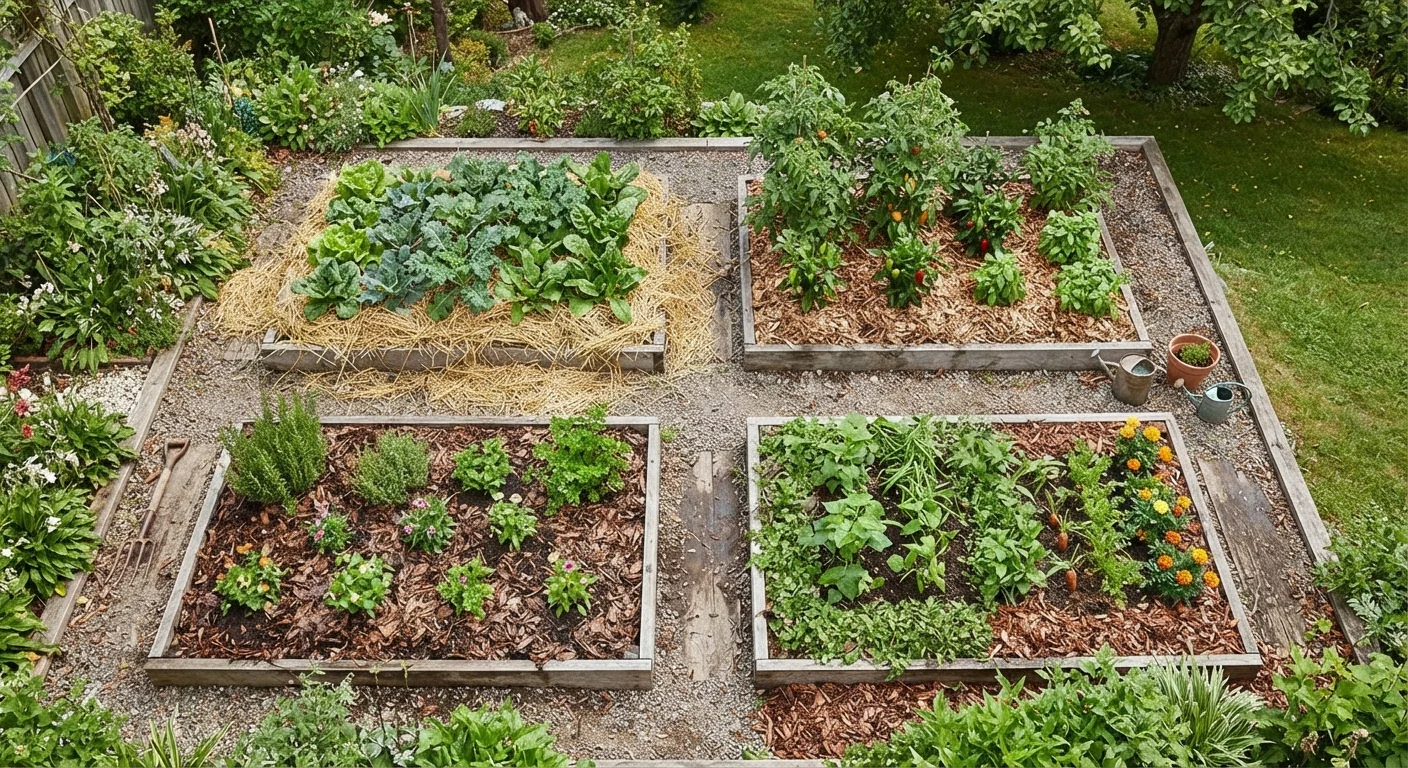
Why Mulch Type and Depth Both Matter
Mulch is one of the most versatile tools a gardener has — but its benefits depend entirely on using the right material at the right depth. Broadly, mulches fall into two categories: organic (materials that decompose, such as wood chips, straw, and leaves) and inorganic (materials that don't break down, such as gravel and rubber). Both suppress weeds and regulate soil temperature, but only organic mulches feed your soil as they break down.
Depth is equally important. A layer that's too thin — under 2 inches — won't suppress weeds reliably and dries out quickly. Too thick — over 4 to 5 inches for most materials — restricts oxygen flow to roots, traps excess moisture against stems, and can actually harm the plants you're trying to protect. The general rule is 2 to 4 inches for most garden applications, with some variation by material.
Avoid "Volcano Mulching" Around Trees
Piling mulch in a mound against a tree trunk — a common mistake sometimes called volcano mulching — traps moisture against the bark, promotes rot, and invites insects. Always spread mulch in a flat, even layer and leave a clear gap around the base of trees, shrubs, and perennial stems.
Whether you're gardening in raised beds or directly in the ground, mulch plays a different role depending on your setup. Our guide on raised beds vs. in-ground planting covers how drainage and soil control affect your mulching strategy.
Comparing Common Mulch Types
Here's how the most widely used mulch types stack up across the criteria that matter most to home gardeners.
| Straw | Shredded Leaves | Wood Chips | Gravel | Rubber Mulch | |
|---|---|---|---|---|---|
| Improves soil over time | Yes | Yes — significantly | Yes — slowly | No | No |
| Weed suppression | Good | Good when shredded | Excellent | Good | Good |
| Recommended depth | 2–3 inches | 2–3 inches | 3–4 inches | 2–3 inches | 2–3 inches |
| Best application | Vegetable beds | All garden beds | Trees & shrubs | Paths, dry gardens | Paths only |
| Longevity | One season | One season | 2–4 years | Many years | Many years |
| Cost | Low | Free | Low to moderate | Moderate | Moderate to high |
Understanding these differences helps you match the material to the job. A mulch that's excellent under fruit trees may be a poor choice in a vegetable bed where you're replanting each season.
Organic Mulches: What They Do for Your Soil
Straw is lightweight, easy to spread, and decomposes in a single season — making it ideal for vegetable gardens where you'll be turning the soil annually. It insulates well and doesn't mat down like hay. Avoid hay, which contains weed seeds.
Shredded leaves are arguably the most underused mulch available. They're free, break down into rich leaf mold, and support beneficial soil microbes. Run dry leaves through a lawn mower to shred them; whole leaves can mat and block water penetration. Apply 2 to 3 inches.
Wood chips (including bark mulch) decompose slowly, making them cost-effective over time. They're best suited to trees, shrubs, and perennial beds — not vegetable gardens, where their slow breakdown can temporarily tie up soil nitrogen. Apply 3 to 4 inches in a ring around trees, keeping chips at least 6 inches away from the trunk.
Compost is technically a mulch when applied as a surface layer. It feeds the soil immediately but breaks down quickly and provides minimal weed suppression on its own. It works best combined with another mulch on top.
Refresh Mulch Annually in Organic Beds
Organic mulches break down — that's what makes them beneficial — but it also means they need topping up. Check depth each spring; if it's fallen below 2 inches, add a fresh layer. You don't need to remove old mulch first; the decomposed material beneath is already improving your soil.
Inorganic Mulches: Durability Without Soil Benefit
Gravel and stone are long-lasting, drain freely, and work well in rock gardens, desert-climate plantings, or around ornamental plants that prefer drier conditions. They absorb heat, which can stress plants in hot climates but extend the growing season in cooler ones. They don't improve soil and are difficult to remove once in place.
Rubber mulch, typically made from recycled tires, lasts for many years and doesn't blow away easily. It's sometimes used in playground areas or pathways. However, it adds no nutrients, can heat up significantly in direct sun, and is not recommended for vegetable gardens or areas where soil health is a priority. Research on its long-term environmental impact is ongoing.
Landscape fabric is often sold as a weed barrier but has real limitations in garden beds: it degrades over time, can prevent organic matter from reaching the soil, and becomes difficult to plant through. It's most useful under gravel paths, not in planting beds.
2–4 inches
Ideal mulch depth for most garden beds
University extension programs consistently recommend this range to balance weed control, moisture retention, and root oxygenation.
6 inches
Minimum clearance from tree trunks
Keeping mulch away from trunks prevents moisture buildup that can lead to fungal disease and pest damage, according to arboricultural guidance.