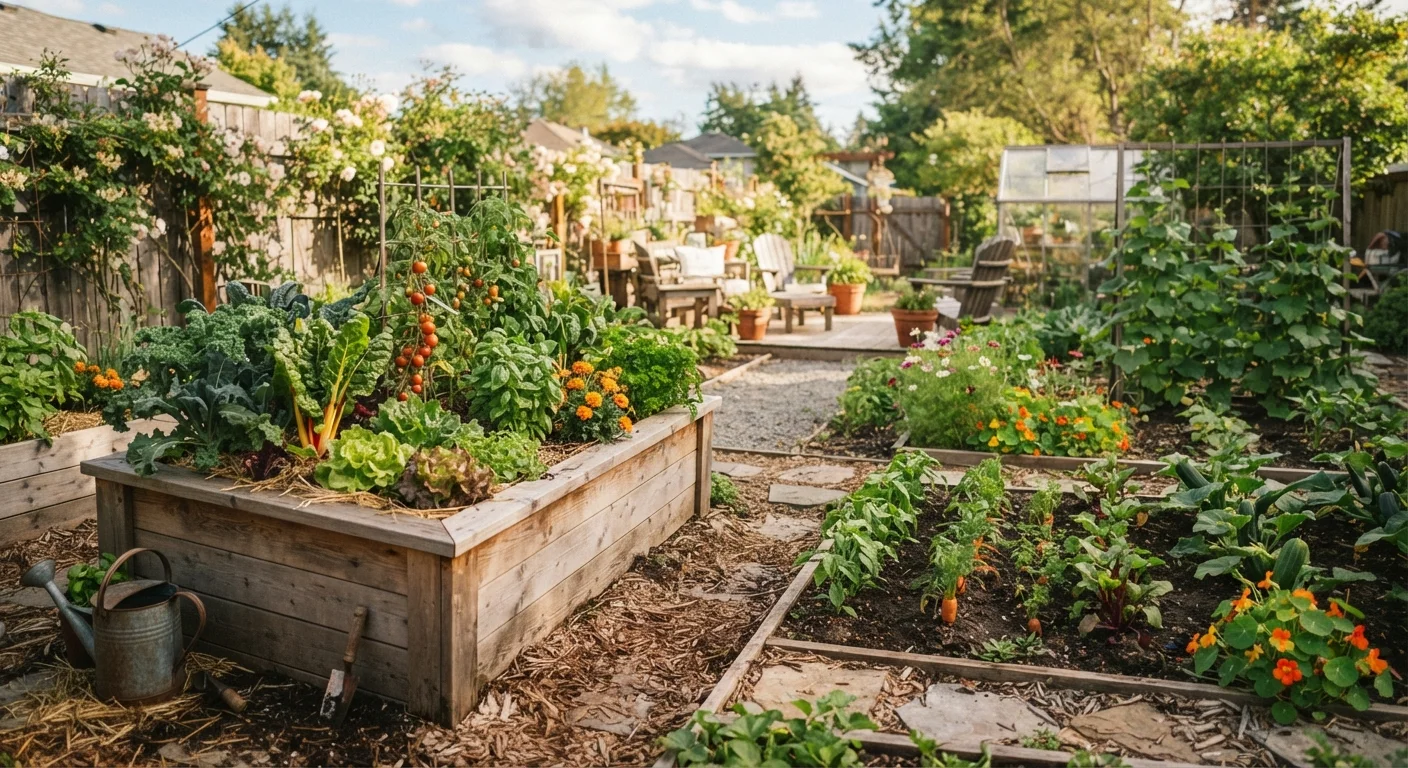
Cost and Setup: What You're Actually Committing To
The most immediate difference between raised beds and in-ground gardening is the upfront investment. Building a raised bed requires materials — lumber, hardware cloth for pest protection, and enough quality soil mix to fill the frame. A single 4×8 bed can run anywhere from modest to considerable depending on material choices, and filling it with a quality blend of compost, topsoil, and drainage material adds to that total. Costs vary widely by region and supplier.
In-ground planting, by contrast, often starts with just a shovel and some compost. If your yard has workable native soil, you can begin amending and planting relatively quickly without buying lumber or hauling in large volumes of fill. The trade-off is time: building healthy in-ground soil through organic amendments and cover crops typically takes multiple seasons to show full results.
If you're starting from scratch, our ground-up vegetable garden primer walks through site selection and soil prep for both approaches.
| Criterion | Raised Beds | In-Ground Planting |
|---|---|---|
| Upfront cost | Higher (materials, fill soil) | Lower (tools, amendments) |
| Soil control | Complete from day one | Depends on native conditions |
| Drainage | Excellent by design | Variable; may need improvement |
| Season length | Extended; warms faster | Standard for your climate |
| Scalability | Limited by cost and space | Easy to expand |
| Physical accessibility | High if built at proper height | Requires bending and kneeling |
| Weed pressure | Lower initially | Generally higher |
| Long-term soil improvement | Requires annual topping-up | Builds naturally over time |
Soil Quality, Drainage, and Root Health
Raised beds give you a clean slate. You control what goes into the frame — which means you can create near-ideal conditions for vegetables right away. Good drainage is built in, because water moves freely through a raised mix and doesn't pool the way it can in heavy clay. Roots rarely encounter hardpan, rocks, or compaction.
In-ground gardens depend heavily on what's already there. Sandy soils drain too fast and need organic matter added regularly. Clay soils compact, drain poorly, and can suffocate roots during wet periods. With consistent amendment — compost, mulch, and minimal tillage over several years — in-ground soil can become extraordinarily productive. That improvement, once made, tends to be durable.
Whichever method you choose, mulching plays a major role in retaining moisture and moderating soil temperature. Understanding your mulch options helps you get more from either setup.
6–8 inches
Minimum raised bed depth for most vegetables
University cooperative extension programs generally recommend at least 6–8 inches of soil depth for shallow-rooted crops; root vegetables need 12 inches or more.
3–4 feet
Ideal raised bed width for no-reach gardening
Keeping beds no wider than 3–4 feet means you can reach the center from either side without stepping in and compacting the soil.
50%+
Compost share recommended in raised bed mix
Many extension horticulturists recommend a mix that's at least half compost by volume to ensure fertility, drainage, and moisture retention in raised beds.
Season Length, Maintenance, and Long-Term Practicality
Raised beds warm up faster in spring because the soil mass is exposed on all sides to air and sunlight. This can give you a two- to three-week head start on planting compared to in-ground plots in the same climate — meaningful for gardeners in shorter-season regions. In fall, raised beds also hold warmth slightly longer.
Maintenance differs in character, not necessarily in total effort. Raised beds need periodic topping-up with compost as the mix settles and breaks down. They also dry out faster in summer, which means more frequent watering or a dedicated drip system. Drip irrigation can be a practical fit for raised beds, though it adds another layer of setup and cost.
In-ground beds, once established, tend to be more self-sufficient in terms of moisture retention — especially in clay-heavy soils. Weeding pressure is often higher, though, because the open ground gives weed seeds easy access. Regardless of which system you use, plant spacing matters: overcrowding is one of the most common mistakes new gardeners make and affects yield in both settings.
What About Contaminated Soil?
If your property has a history of industrial use, old painted structures, or heavy vehicle traffic, native soil may contain lead or other contaminants. Raised beds filled with imported, tested soil are generally recommended in these situations as a precaution. If you have concerns about soil safety, contact your local cooperative extension office or an environmental testing lab — they can advise on appropriate testing and remediation options.