The Nutrient Lock-Out Problem
Imagine feeding your plants a perfectly balanced fertilizer every week — and still watching them struggle. Yellowing leaves, stunted growth, and poor flowering despite diligent feeding are classic signs that pH, not nutrients, is the real problem. When soil pH strays outside a plant's preferred range, essential nutrients like nitrogen, phosphorus, iron, and manganese become chemically bound to soil particles. The nutrients are physically present, but the plant's roots cannot absorb them.
This is why understanding pH often matters more than fertilizer choices. A well-fed plant in badly mismatched soil will consistently underperform a lightly fed plant grown in the right pH range.
6.0–7.0
Optimal pH range for most garden vegetables
This range reflects general horticultural guidance supported by cooperative extension services across the United States.
10×
Acidity change per full pH unit on the scale
Because pH is logarithmic, a shift from 7.0 to 6.0 represents a tenfold increase in hydrogen ion concentration, not a simple one-point difference.
4.5–5.5
Preferred pH for blueberries
Blueberries are among the most pH-sensitive common garden crops, requiring distinctly acidic conditions to absorb iron and produce fruit reliably.
How pH Shapes What Plants Can Absorb
Different nutrients become available or unavailable at specific pH levels. Phosphorus, critical for root development and flowering, is most accessible between pH 6.0 and 7.0. Below pH 5.5, iron and manganese become so soluble they can actually reach toxic levels in some plants. Above pH 7.5, iron, zinc, and boron lock up, causing deficiency symptoms even in nutrient-rich soil.
Soil biology is also tied to pH. The beneficial bacteria that break down organic matter and convert nitrogen into plant-usable forms are most active between pH 6.0 and 7.0. Strongly acidic soil slows this microbial activity, reducing natural fertility regardless of what you add on top.
Test Before You Treat
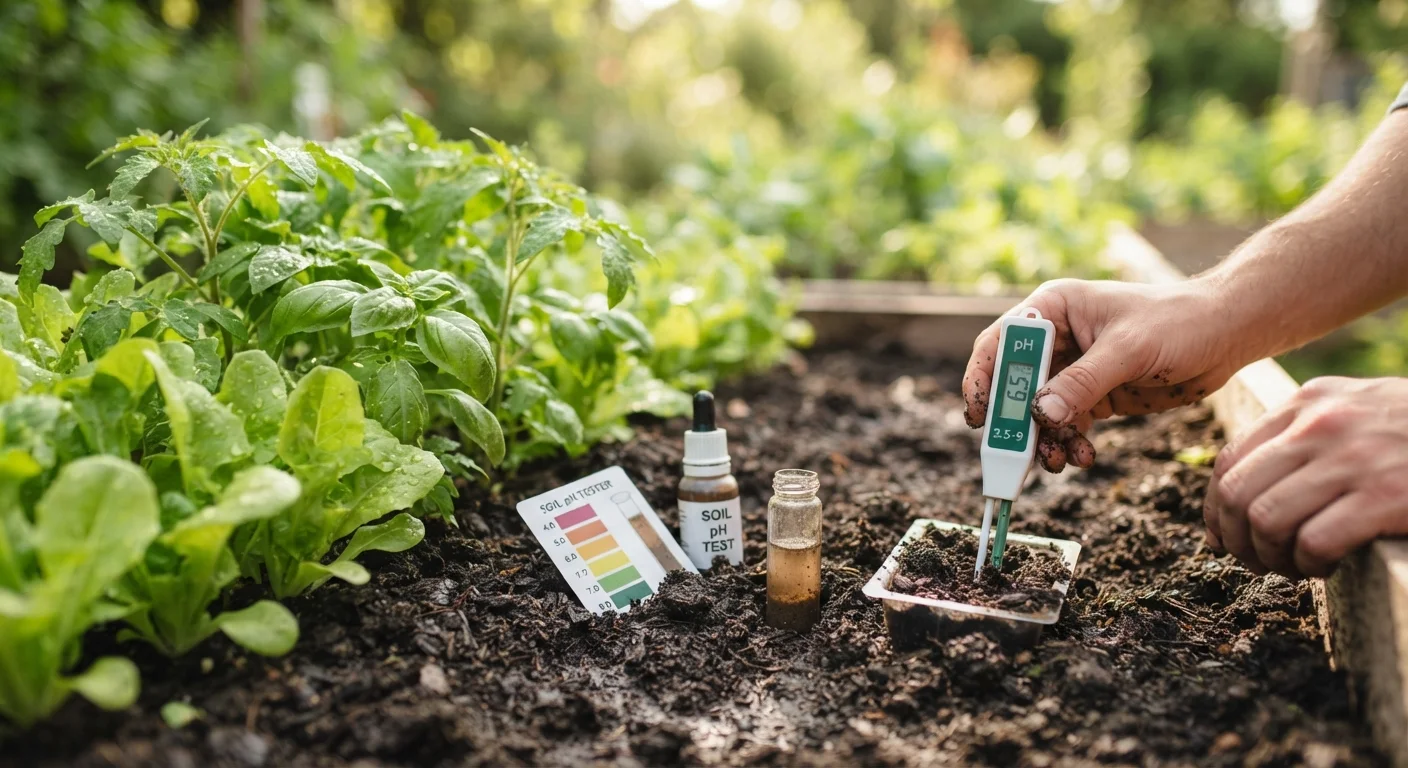
Never add lime or sulfur based on guesswork. A soil test confirms your current pH and tells you exactly how much amendment to apply for your soil type. Over-liming is a common mistake that can push pH too high and create a new set of nutrient problems. Most cooperative extension services offer affordable testing kits or mail-in options.
What Shifts Soil pH — and How to Correct It
Several factors influence your soil's natural pH. Rainfall, parent rock material, organic matter decomposition, and years of certain fertilizers all play roles. Sandy soils tend to be more acidic; soils rich in limestone tend to be alkaline. Understanding your regional baseline helps — the same way microclimates and local geography shape what grows well in your yard.
To raise pH (make soil less acidic): Apply ground limestone (calcitic or dolomitic lime). Dolomitic lime also adds magnesium, which benefits many soils. Application rates vary by soil type and current pH — always follow test-based recommendations.
To lower pH (make soil more acidic): Elemental sulfur is the most common amendment. Soil bacteria convert it to sulfuric acid over several months. Peat moss and composted pine bark also have mild acidifying effects and improve soil structure at the same time.
Significant pH shifts take patience. Test annually, amend in stages, and retest before assuming work is complete.
Matching Plants to Your Soil's Natural pH
One underused strategy is growing plants that naturally match your soil rather than constantly fighting its chemistry. If your soil tests consistently acidic (around pH 5.0–5.5), blueberries, rhododendrons, azaleas, and camellias will thrive with minimal intervention. Near-neutral soils support the widest range of vegetables, herbs, and flowering perennials.
This kind of plant-to-soil matching pairs well with thoughtful garden planning overall. Just as companion planting strategies leverage natural relationships between plants, working with your soil's natural chemistry — rather than against it — reduces effort and produces more resilient results.
Getting Started: Test Before You Amend
The single most useful thing you can do before changing your soil is test it. Many gardeners amend without knowing their baseline, and some inadvertently make conditions worse. Your local cooperative extension service often offers low-cost soil testing with tailored recommendations — a worthwhile first step for any serious garden project.
Once you know your pH and your target plants' preferences, you have a clear, actionable plan. Soil chemistry may not be as visible as mulching or watering, but it may be the most consequential factor in your garden's long-term success.