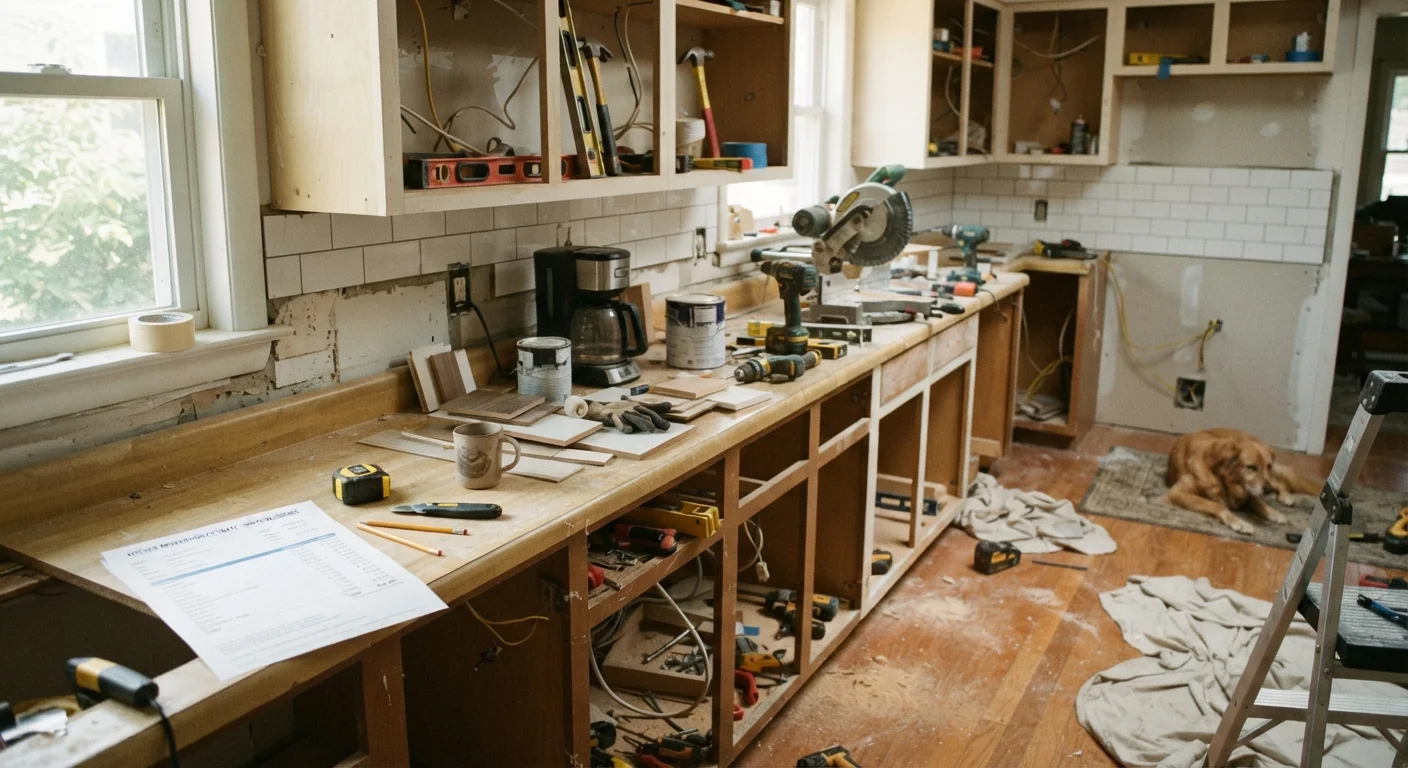
Why Kitchen Budgets Fall Apart Before Work Even Starts
Kitchen renovations are the most financially complex home improvement projects most homeowners ever undertake. They involve multiple trades, long lead times for materials, and more decision points than almost any other room. That complexity makes them uniquely vulnerable to budget overruns—and most of those overruns follow recognizable patterns.
Understanding where money quietly disappears is the first step toward keeping your project on track. The mistakes below aren't rare or unusual. They show up repeatedly in kitchens across every budget range, and they're almost always avoidable with earlier planning and better information.
Building a budget without a contingency reserve.
Why it happens: Homeowners anchor to a target number and allocate every dollar to visible items like cabinets and appliances, leaving nothing for the unexpected.
Making design changes after demolition has begun.
Why it happens: Seeing the real space often sparks new ideas, and it feels like a small adjustment to change a tile choice or move an island a few inches.
Relying on a single contractor estimate as your budget baseline.
Why it happens: Getting multiple bids feels time-consuming, and a single quote from a trusted referral seems sufficient.
Underestimating labor costs relative to materials.
Why it happens: Online budgeting tools often focus on material prices, so homeowners research countertop costs thoroughly while barely accounting for installation, plumbing rough-in, or electrical work.
Ignoring hidden conditions behind walls and under floors.
Why it happens: What you can't see feels abstract during planning, so it's easy to assume the structure is sound until proven otherwise.
Skipping or undervaluing the permit process.
Why it happens: Permits add time and fees, and some contractors suggest they're unnecessary for cosmetic work—even when structural or mechanical changes are involved.
Planning Habits That Protect Your Budget
Once you've identified the mistakes that sink kitchen budgets, you can build habits that counteract them. Start with a full written scope of work before requesting any bids—vague project descriptions produce vague (and ultimately useless) estimates. Require that every contractor bid against the same itemized list so you're comparing apples to apples.
Don't Treat Your Contingency Fund as Optional
Many homeowners set a contingency budget in planning and then quietly raid it to afford an upgraded countertop or appliance package. Once that buffer is gone, any surprise—a corroded water line, undersized electrical panel, or damaged subfloor—turns into debt or a stalled project. Keep your contingency fund completely separate from your finishes budget and only access it for genuine surprises.
Build your contingency fund as a non-negotiable line item, not an afterthought. Most renovation professionals suggest reserving 15–20% of your total project budget for surprises. If you're renovating an older home or suspect aging plumbing and wiring, lean toward the higher end of that range.
Finalize every material selection—tile, hardware, appliances, countertop—before demolition begins. Swapping a countertop material after cabinets are installed doesn't just cost the price difference; it can mean rebidding fabrication, adjusting cabinet heights, and delaying the entire project by weeks.
For a broader view of which kitchen and home upgrades tend to deliver the most financial value, see our guide to home improvement ROI. And if a bathroom project is next on your list, the bathroom renovation start-to-finish guide covers the same planning discipline for a different room's unique challenges.
This article is for general informational purposes. Project costs, timelines, and outcomes vary significantly by region, home condition, and contractor. Always consult licensed professionals and verify local permit requirements before beginning any renovation work.