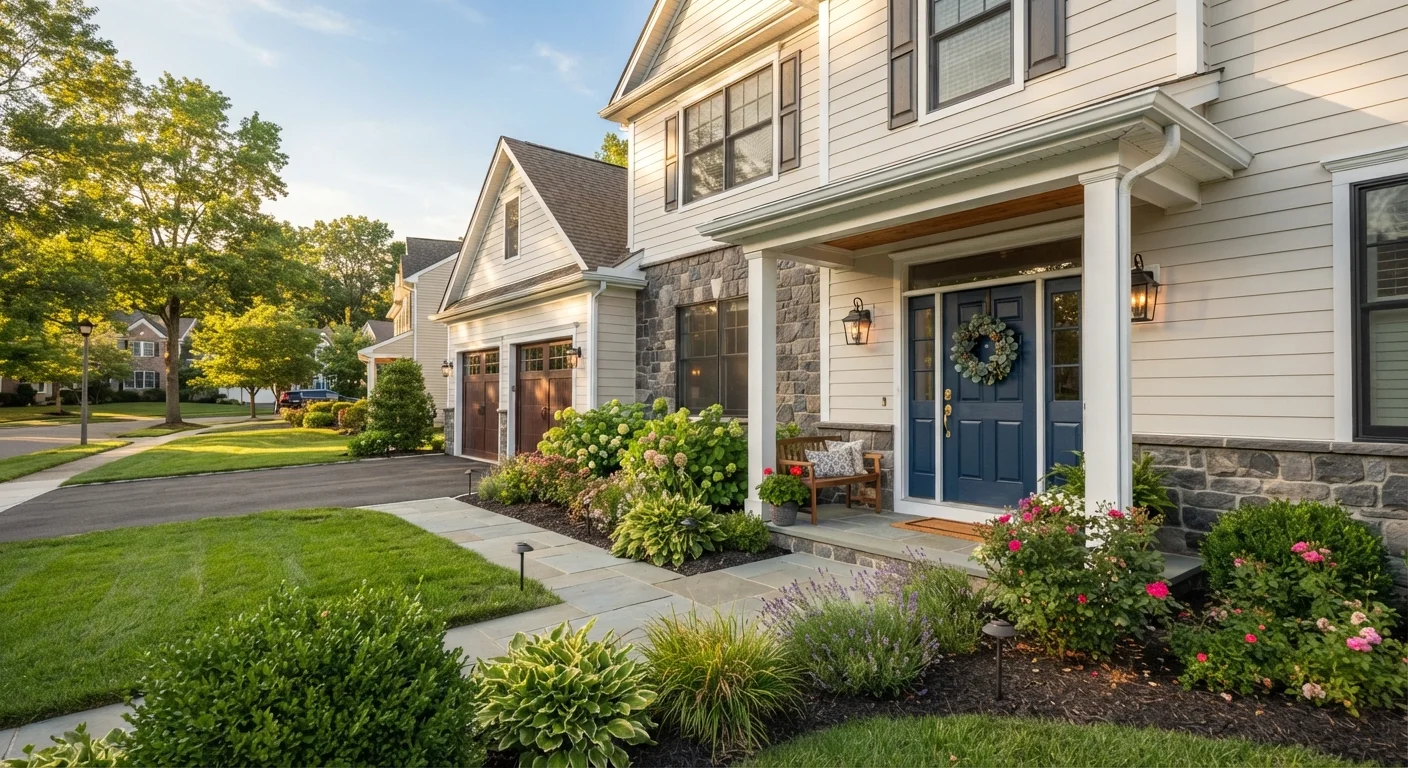
Why ROI Varies Wildly by Project Type
Homeowners often assume that spending more on a renovation means earning more back at resale. In practice, return on investment (ROI) — the percentage of project cost recouped in added home value — is shaped by factors far beyond the price tag: local market norms, project scope, and whether the upgrade serves broad buyer appeal or only personal taste.
Industry data gathered annually by remodeling trade publications consistently shows that no project returns 100% of its cost on average, and many popular renovations fall well below 70%. Understanding which upgrades outperform — and why — helps you prioritize where your money actually works.
| Highest average recoup category | Exterior improvements (garage doors, entry doors, siding) (Remodeling Cost vs. Value industry reports, multiple years) |
| Typical kitchen minor remodel recoup | Approximately 70–80% of project cost (Industry cost-vs.-value benchmarks) |
| Swimming pool average recoup | Often below 50% in most U.S. markets (Varies significantly by region and climate) |
| No project guarantees full cost recoup | Average ROI across all projects is under 100% (General industry consensus) |
| Biggest ROI risk factor | Over-improving for the neighborhood price tier (Real estate appraisal principle) |
Before committing to any major project, a pre-renovation audit can surface hidden issues that would erode your investment before the first nail is driven.
Improvements That Consistently Deliver Strong Returns
Certain categories of upgrades tend to recoup a greater share of costs because they address what buyers most commonly prioritize: curb appeal, functionality, and move-in readiness.
Garage Door Replacement
A new garage door is one of the highest-recoup projects in most annual cost-vs.-value analyses, often recovering 90% or more of its cost. Because it dominates the front facade, a quality door makes a strong first impression without requiring a full exterior overhaul.
Minor Kitchen Remodel
Targeted updates — cabinet refacing, new hardware, updated countertops, and modern fixtures — tend to outperform full gut renovations on a cost-recouped basis. A full kitchen overhaul can easily run over budget before the project is complete; see why kitchen renovations run over budget for the decisions that inflate costs most.
Entry Door Replacement
Replacing a worn steel or fiberglass entry door is a modest investment that consistently shows strong recoup rates. Like the garage door, it boosts curb appeal and signals to buyers that the home has been cared for.
Deck or Patio Addition
Outdoor living features have grown in buyer demand. A well-built wood or composite deck typically recoups 60–70% of cost and can accelerate a sale in markets where outdoor space is valued.
Energy Efficiency Upgrades
Insulation, air sealing, and HVAC improvements may not feel glamorous, but they reduce utility costs — a measurable selling point. These improvements also work best when coordinated as a system; our guide to energy efficiency upgrades that work together explains how to sequence them for maximum effect.
~90%+
Typical garage door replacement recoup rate
Garage door replacement has ranked among the top-returning projects in remodeling cost-vs.-value analyses for multiple consecutive years.
<50%
Average pool installation ROI in most markets
Pools carry high installation and ongoing maintenance costs, and buyer appeal varies significantly by region and household demographic.
60–70%
Typical deck addition cost recouped
Demand for outdoor living space has increased buyer interest in decks, though recoup rates vary by materials and regional market.
Projects That Frequently Disappoint at Resale
Some renovations that homeowners love rarely recover their costs because they reflect personal preference more than universal buyer value.
Return on Investment (ROI)
In home improvement, ROI is the percentage of a project's cost that is recouped through increased home value at resale. A project costing $10,000 that adds $7,000 in value has a 70% ROI.
Cost vs. Value
A framework used to compare the average cost of a renovation project against the average value it adds at resale, typically reported as a percentage. It is a useful benchmark, not a precise prediction.
Curb Appeal
The visual attractiveness of a property as seen from the street. High curb appeal creates a strong first impression and can meaningfully influence buyer interest and perceived value.
Conditioned Space
Interior areas of a home that are heated and cooled by the home's HVAC system. Additions that are not fully conditioned (like sunrooms) may be valued differently than standard living space in appraisals.
Deferred Maintenance
Upkeep tasks that have been postponed over time, such as roof repairs, HVAC servicing, or foundation work. Buyers and inspectors typically discount or flag deferred maintenance, which can offset gains from cosmetic improvements.
Luxury Master Suite Additions
Expanding a master suite with a spa bathroom and walk-in closet can cost six figures. Unless the home is already in a luxury price bracket where buyers expect those features, the cost rarely translates to a proportional value increase.
Swimming Pools
Pools are expensive to install, costly to maintain, and actively discourage some buyers (particularly those with young children or in cooler climates). In most U.S. markets, a pool returns well under 50% of its cost.
Sunroom Additions
Sunrooms are appealing but expensive for the square footage added, and because they are not climatically equivalent to conditioned living space, they rarely translate to full appraised value. They also come with ongoing maintenance considerations around seals and glazing.
If you've encountered the belief that renovations always pay off, our coverage of renovation myths that lead homeowners astray addresses that and other common misconceptions directly.
Making the Right Choice for Your Home and Market
ROI averages are useful benchmarks, not guarantees. A project that recoups 80% nationally might perform differently in your specific neighborhood, price tier, or regional market. Before investing, consider three practical filters:
- Comparable sales: Review nearby homes that have sold recently. If buyers in your area aren't paying a premium for the feature you're adding, your ROI will likely reflect that.
- Remaining deficiencies: Spending on luxury upgrades while the roof, HVAC, or electrical system is aging can backfire during inspection — buyers will discount for deferred maintenance regardless of new finishes.
- How long you plan to stay: If you'll occupy the home for years, personal livability matters alongside resale math. The calculus looks different for someone planning to sell within 18 months.
For homeowners weighing whether a property even makes sense to improve versus sell or move, the broader question of renting vs. buying is worth revisiting before committing to significant capital expenditure.
This article provides general educational information about home improvement return on investment. It does not constitute financial, appraisal, or real estate advice. Consult a licensed real estate professional or appraiser for guidance specific to your property and market.