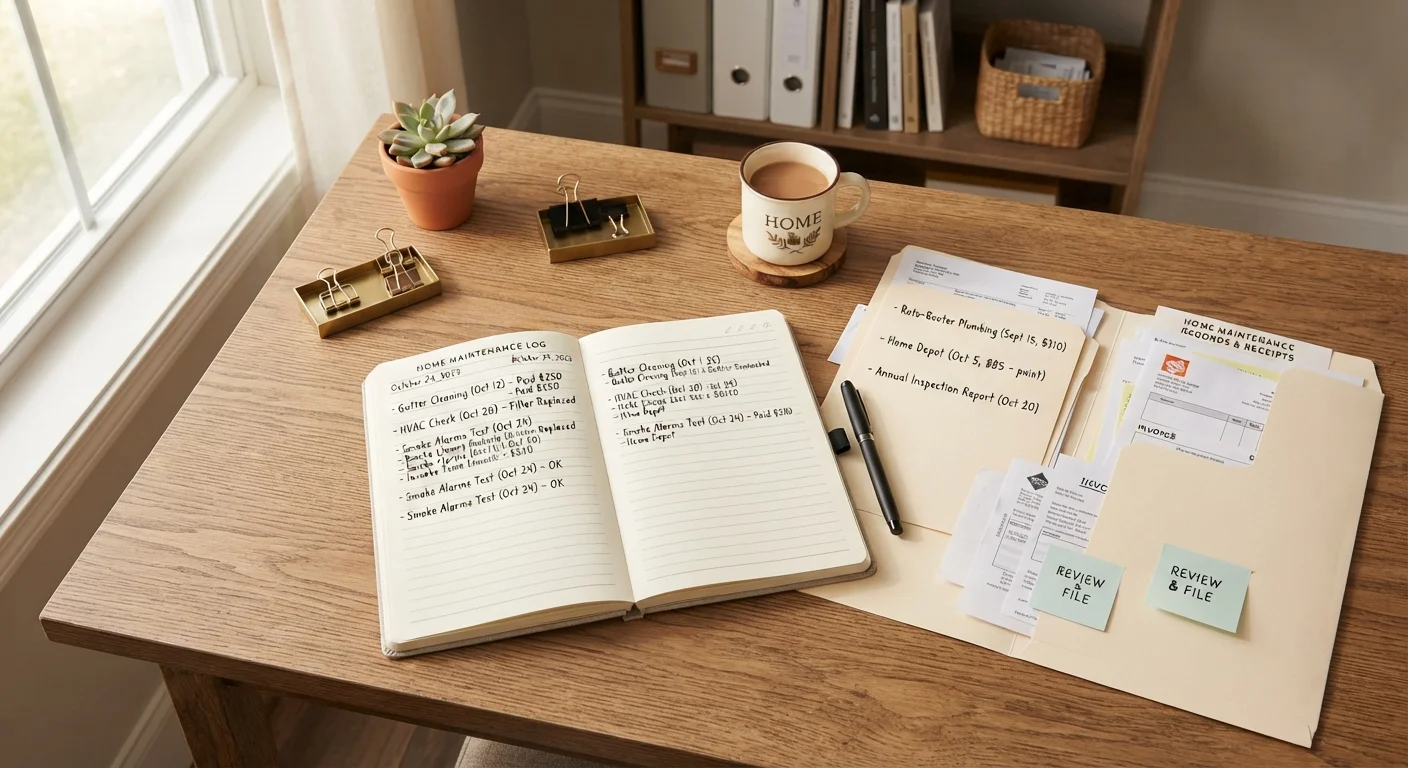
What a Home Maintenance Log Actually Is
A home maintenance log is a running record of every significant repair, inspection, service call, and upgrade performed on your home. Think of it as a medical chart for your house — it documents what was done, when, who did it, and what it cost. This isn't a complicated system. A dedicated notebook, a shared spreadsheet, or a simple folder app can all work equally well.
At minimum, each entry should capture four things: the date, a brief description of the task or repair, the name of any contractor or service provider involved, and the approximate cost. If you keep receipts, warranties, or permit documentation, note where those are filed. Over time, even a sparse log becomes a genuinely useful reference.
If you're just getting started with home ownership, our guide for first-time owners covers the essential systems you'll want to start tracking from day one.
Why the Record Matters More Than You Might Think
Most homeowners don't realize how useful a maintenance history is until they need it and don't have it. Here are a few situations where a log pays off directly:
- Diagnosing recurring problems. If your HVAC has needed service three times in two years, a log makes that pattern obvious — and helps a technician understand what's already been tried.
- Planning and budgeting. Knowing that your water heater was installed eight years ago or your roof was last inspected four years ago lets you anticipate upcoming costs rather than scramble when something fails. Our seasonal maintenance guide can help you build a forward-looking schedule alongside your log.
- Supporting a home sale. Buyers and their inspectors appreciate documented upkeep. A log that shows consistent care can reduce negotiation friction and reinforce your asking price.
- Insurance and warranty claims. Some warranty coverage requires proof that a system was serviced according to manufacturer recommendations. A dated log entry can provide that documentation.
~15 years
Typical lifespan of a residential water heater
The U.S. Department of Energy notes that most tank-style water heaters last 10–15 years, making installation date a key detail to log.
1%–4%
Of home value spent annually on maintenance
A commonly cited rule of thumb in personal finance guidance suggests budgeting 1–4% of a home's value per year for upkeep and repairs — a log helps you track whether you're on pace.
Best Practices for Setting Up and Maintaining Your Log
Log every repair and service call within a day or two of completion.
Memory fades quickly, and details like the contractor's name or the exact part replaced are easy to forget. Prompt logging keeps your record accurate and complete without requiring extra effort later.
Include both professional work and significant DIY tasks.
Many homeowners only log contractor visits, but major DIY projects — repainting a room, replacing weatherstripping, caulking the tub — are equally worth recording. They demonstrate care and provide context for future work.
Store warranty documents and permits alongside or referenced in your log.
A log entry is most useful when you can quickly locate the supporting paperwork. Warranties can run 10 or more years, and permit documentation may be required if you later renovate or sell.
Review your log at least once a year to anticipate upcoming maintenance.
A log reviewed regularly becomes a planning tool, not just an archive. Spotting that your water heater is approaching the end of its typical service life lets you budget proactively rather than face an emergency replacement.
Use a consistent, simple format so the log remains easy to update.
Overly complicated systems get abandoned. The best format is the one you'll actually stick with — whether that's a lined notebook, a Google Sheet, or a home management app.
Once your log is underway, pair it with a yearly checklist to make sure nothing slips. Our annual maintenance checklist covers safety checks, appliances, plumbing, and more — a natural companion to your ongoing record.
Quick Actions to Get Started Today
You don't need a perfect system to begin. Starting imperfectly today is far more useful than waiting until you find the ideal format. Even a single page of notes covering what you know about your home right now — appliance ages, recent repairs, the last time your furnace was serviced — is a meaningful foundation.
Renters benefit from logs too. Documenting repair requests and landlord responses protects you and creates a timeline if disputes arise later.