Seasonal inspections catch small problems before they become expensive repairs.
Most checklist items are DIY-friendly and require only basic tools.
Timing maintenance to the season protects your home's most vulnerable systems.
Keeping a maintenance log helps you track what's been done and plan ahead.
Some tasks—especially electrical, gas, and structural—require a licensed professional.
A season-by-season breakdown of essential home inspections and upkeep tasks every homeowner should know.
Why Seasonal Maintenance Is Worth the Effort
A home is a system of interconnected parts, and each season puts different stresses on that system. Winter strains your heating equipment and pipes; summer taxes cooling systems and sun-exposed surfaces; spring and fall are your best windows to repair the damage each extreme leaves behind. Building a habit of seasonal inspections means you're catching issues when they're small—a cracked caulk line, a slow drain, a worn weatherstrip—before they become a leaking wall or a flooded basement.
If you're new to owning property, see our guide for first-time homeowners to build a foundation of essential systems knowledge. And once you've worked through this checklist, consider keeping a home maintenance log so nothing falls through the cracks year to year.
Spring Inspections (March–May)
Inspect the roof from the ground or with binoculars for missing, curled, or cracked shingles after winter weather. Our roof maintenance guide covers what to look for safely.Must
Clean gutters and downspouts of debris that accumulated over fall and winter, and confirm downspouts direct water at least 6 feet from the foundation.Must
Check exterior caulking around windows, doors, and penetrations; reapply where cracked or missing to prevent water intrusion.Must
Test smoke and carbon monoxide detectors by pressing the test button; replace batteries if needed.Must
Turn on outdoor hose bibs slowly and check for leaks that may have developed from winter freezing.Must
Schedule an HVAC tune-up before cooling season begins so any issues are caught before peak summer use.Should
Inspect window and door screens for tears; repair or replace so you can ventilate without inviting insects.Nice to have
Summer Inspections (June–August)
Check attic ventilation and insulation levels; inadequate airflow in summer can overheat the attic and shorten shingle life significantly.Must
Inspect the exterior foundation for new cracks or signs of settling; hairline cracks can be monitored, but wider or stair-step cracks in masonry warrant a professional assessment.Must
Flush your water heater tank to remove sediment buildup that reduces efficiency; review our water heater basics guide before starting.Should
Check deck or patio surfaces for splintered boards, loose fasteners, or deteriorating ledger connections; address structural concerns before entertaining season.Should
Clean dryer vent ductwork from exterior to interior to reduce fire risk from lint accumulation.Must
Trim vegetation that has grown against the house, siding, or roof overhangs to deter pests and moisture retention.Should
Fall Inspections (September–November)
Clean gutters again after leaves have fallen fully; install gutter guards if repeated clogging is an ongoing problem.Must
Have your heating system serviced by a qualified HVAC technician before cold weather arrives.Must
Drain and store garden hoses and shut off exterior hose bibs from the interior shutoff valve to prevent pipe freeze damage.Must
Inspect weatherstripping on exterior doors; replace if light is visible around the frame or the strip feels brittle.Must
Check the chimney flue and fireplace damper for debris, nesting, or creosote buildup if you use a wood-burning fireplace; schedule a professional cleaning if needed.Should
Prepare the garden for winter by following our fall garden prep checklist before the first frost.Nice to have
Seal gaps around pipes, cables, and vents that penetrate exterior walls to prevent pest entry and heat loss; review energy efficiency upgrades for how air sealing fits a broader system.Should
Winter Inspections (December–February)
Monitor the attic after heavy snow for signs of ice dams (icicles forming at the eaves and water staining on ceilings), which indicate heat loss and poor attic insulation.Must
Check under sinks and in cabinets on exterior walls during cold snaps for signs of pipe condensation or freezing; know where your main water shutoff is located.Must
Replace HVAC filters on schedule—typically every 1–3 months depending on filter type—to maintain airflow and indoor air quality during months when windows stay closed.Must
Test GFCI outlets in bathrooms, kitchen, garage, and exterior locations by pressing the test and reset buttons to confirm they trip and restore correctly.Should
Walk the interior looking for condensation or frost on windows, which can indicate humidity imbalances or failing window seals.Should
Use the slower season to review your annual maintenance checklist and plan any deferred work for spring.Nice to have
Review your homeowner's insurance policy and update your home inventory documentation, noting any renovations completed during the year.Nice to have
Tools and Resources to Have on Hand
You don't need a professional toolkit to complete most of these inspections. A few basic supplies make the work easier and safer.
Required
Binoculars
Inspect the roof and upper exterior from the ground without climbing—safer for most homeowners.
Required
Caulk gun and exterior-grade caulk
Seal gaps around windows, doors, and exterior penetrations during spring and fall inspections.
Required
Gutter scoop or garden trowel
Remove debris from gutters during spring and fall cleaning.
Required
Flathead and Phillips screwdrivers
Tighten fasteners, remove access panels, and test outlets as part of routine inspections.
Required
Flashlight or headlamp
Inspect attic spaces, crawl spaces, under sinks, and inside cabinets where light is limited.
Optional
HVAC filter stock
Keep a supply of the correct filter size on hand so replacements happen on schedule.
Optional
Moisture meter
Detect elevated moisture levels in walls, ceilings, or wood framing that aren't yet visible as stains.
Stay Safe on Ladders and Roofs
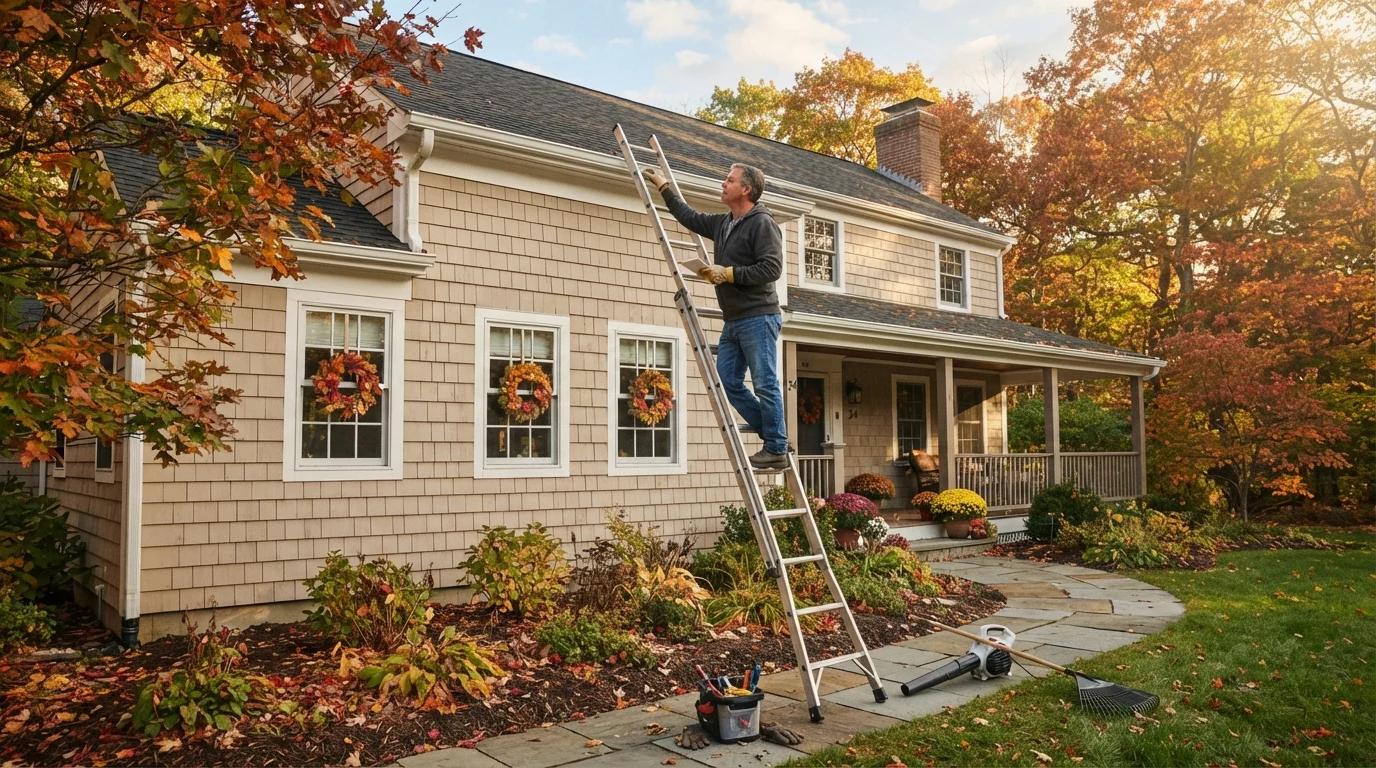
Ladder falls are among the most common causes of serious home-related injuries. Always have a second person present when using a ladder, ensure it's rated for your weight, and place it on stable, level ground. For anything involving the actual roof surface—walking on shingles, clearing heavy snow loads, or inspecting a steep pitch—hire a licensed roofing professional rather than attempting the work yourself.
Key Safety and Permitting Reminders
Routine maintenance and inspections are largely safe for capable DIYers—but some tasks cross into territory that requires professional involvement. Anything touching your home's electrical panel, gas supply lines, structural framing, or roof at height should be assessed by a licensed contractor. Many repairs also require permits; unpermitted work can create safety hazards and complications if you sell. See our article on permits and inspections for a fuller picture of when official sign-off is required.
For a deeper look at spotting hidden problems early, our article on reading your home's warning signs explains what stains, sounds, and odors may be telling you.
Gas, Electrical, and Structural Work Requires Professionals
This checklist covers inspections and maintenance any capable adult can perform safely. However, any work involving your electrical panel, gas appliances, furnace heat exchangers, or load-bearing structural elements must be handled by a licensed contractor. Attempting these repairs without proper training creates serious risks to your household and may violate local building codes. When in doubt, get a professional assessment before proceeding.
The content on this site is for informational purposes only and is not a substitute for professional advice. Always consult a qualified professional for guidance specific to your situation.