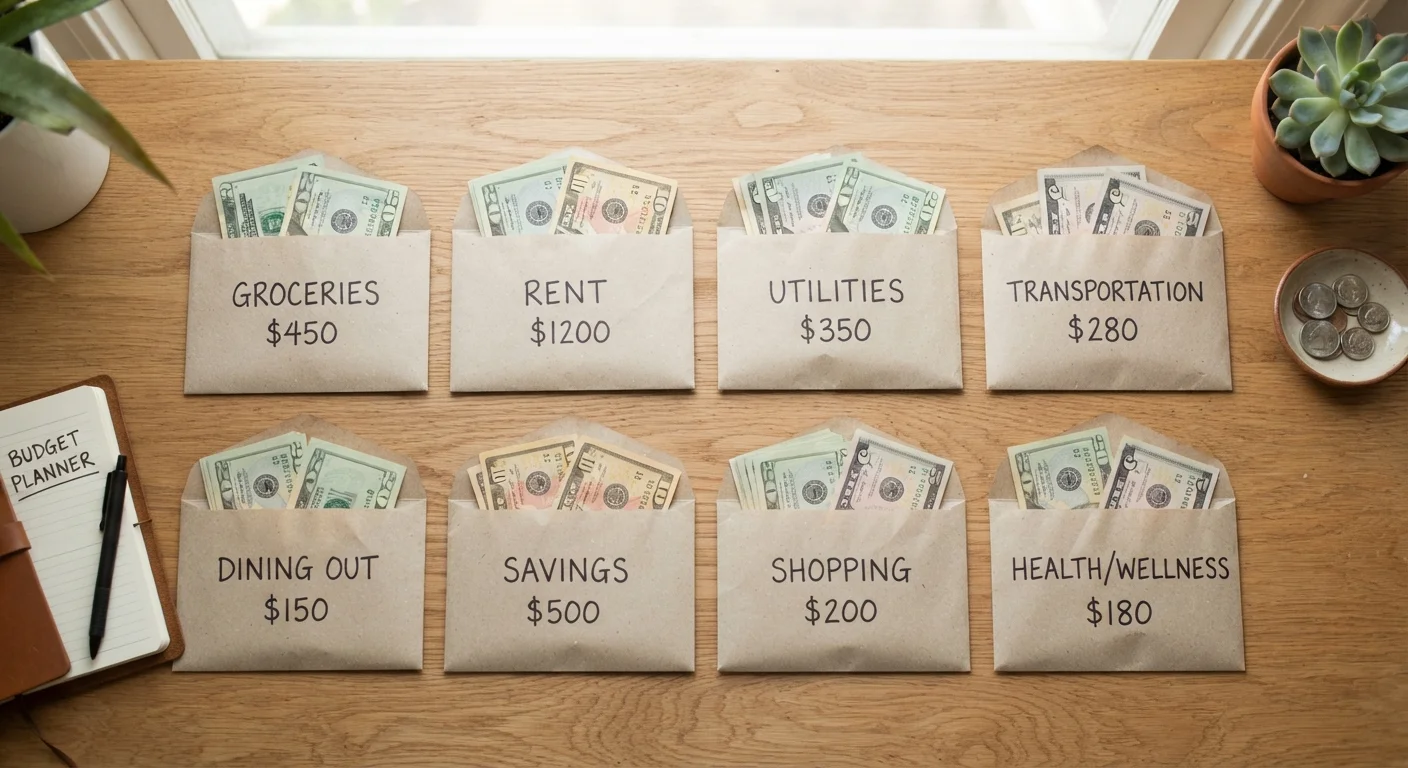
How the Envelope Method Works
The mechanics are straightforward. At the start of each pay period, you withdraw the amount you've budgeted for variable expenses and physically divide it into labeled envelopes. Each category gets its own envelope — and its own hard limit.
For example, if you budget $400 for groceries each month, $400 in cash goes into the grocery envelope. You spend from that envelope alone. When it's gone, grocery shopping stops — or you make a deliberate choice to pull cash from somewhere else.
Fixed recurring expenses — rent, utilities, loan payments — are typically left outside the envelope system and paid electronically as usual. The envelopes target the spending that most people struggle to control: food, entertainment, clothing, personal care, and similar day-to-day categories.
Start With Your Three Biggest Variable Categories
Don't try to create an envelope for every conceivable expense on day one. Pick the two or three categories where you most often overspend — typically groceries, dining, and entertainment — and build the habit there first. You can expand to more categories once the system feels natural.
This approach is a close cousin of zero-based budgeting, where every dollar gets a job before it's spent. See how the two methods compare in our overview of zero-based vs. percentage-based budgeting.
Why Physical Cash Changes Spending Behavior
Research in consumer psychology consistently finds that paying with cash feels more "painful" than swiping a card — a phenomenon sometimes called the pain of paying. That friction is actually the point. When you hand over physical bills, the transaction registers in a way that a tap-to-pay moment often doesn't.
For people whose overspending is habitual rather than calculated, that psychological feedback is powerful. The envelope sitting on your counter tells you, at a glance, whether you're on track or running thin. There's no log-in required, no scrolling through transactions.
“The goal of a budget isn't restriction — it's intention. When you give every dollar a name before you spend it, you're making a plan instead of reviewing a mistake.”
— Personal Finance Editorial Team, Editorial guidance on household budgeting practices
The envelope method also naturally surfaces spending leaks that card users often miss entirely. Small, frequent purchases that barely register on a statement become visible when you're physically handing over bills every time.
Who Benefits Most From This System
The envelope method suits specific situations particularly well:
- Recovering overspenders: People who consistently exceed their grocery or dining budget despite good intentions often respond better to a physical limit than a digital one.
- Cash-income households: Freelancers, gig workers, and tipped employees who already receive cash benefit from a system built around it.
- Beginners building spending awareness: New budgeters often find it easier to understand their money habits when those habits are visible and concrete.
- Couples coordinating shared variable spending: A shared envelope for household expenses can reduce friction around joint purchases. Our guide on budgeting as a couple explores how to structure this.
Going Digital: Envelope Budgeting Without the Cash
For households that rarely use physical cash, envelope budgeting apps replicate the system digitally. You create virtual envelopes within the app, assign dollar amounts, and track every transaction against the relevant category. The same "empty envelope" stop signal applies — it's just on a screen rather than in your hand.
The trade-off is that the psychological friction of cash disappears. A digital envelope requires more self-discipline to honor because there's no physical money leaving your hand. Some people bridge this by keeping a small amount of cash for their highest-risk category — say, dining out — while managing everything else digitally.
Whichever format you choose, the core discipline is identical: pre-commit your money to categories before you spend it, and treat each category's limit as a real constraint. For a broader look at how envelope budgeting fits into a full household financial plan, see our guide on building a budget that actually lasts.
18%
Less spent when paying with cash vs. cards
Behavioral economists have found that cash transactions can result in notably lower spending compared to card payments, attributed to the tangible nature of physical money.
~33%
Americans living paycheck to paycheck
Multiple surveys over recent years have consistently found that a significant share of U.S. households have little buffer between income and monthly expenses, highlighting the need for structured spending systems.
This article provides general financial education and is not personalized financial advice. Consider consulting a qualified financial professional for guidance specific to your situation.