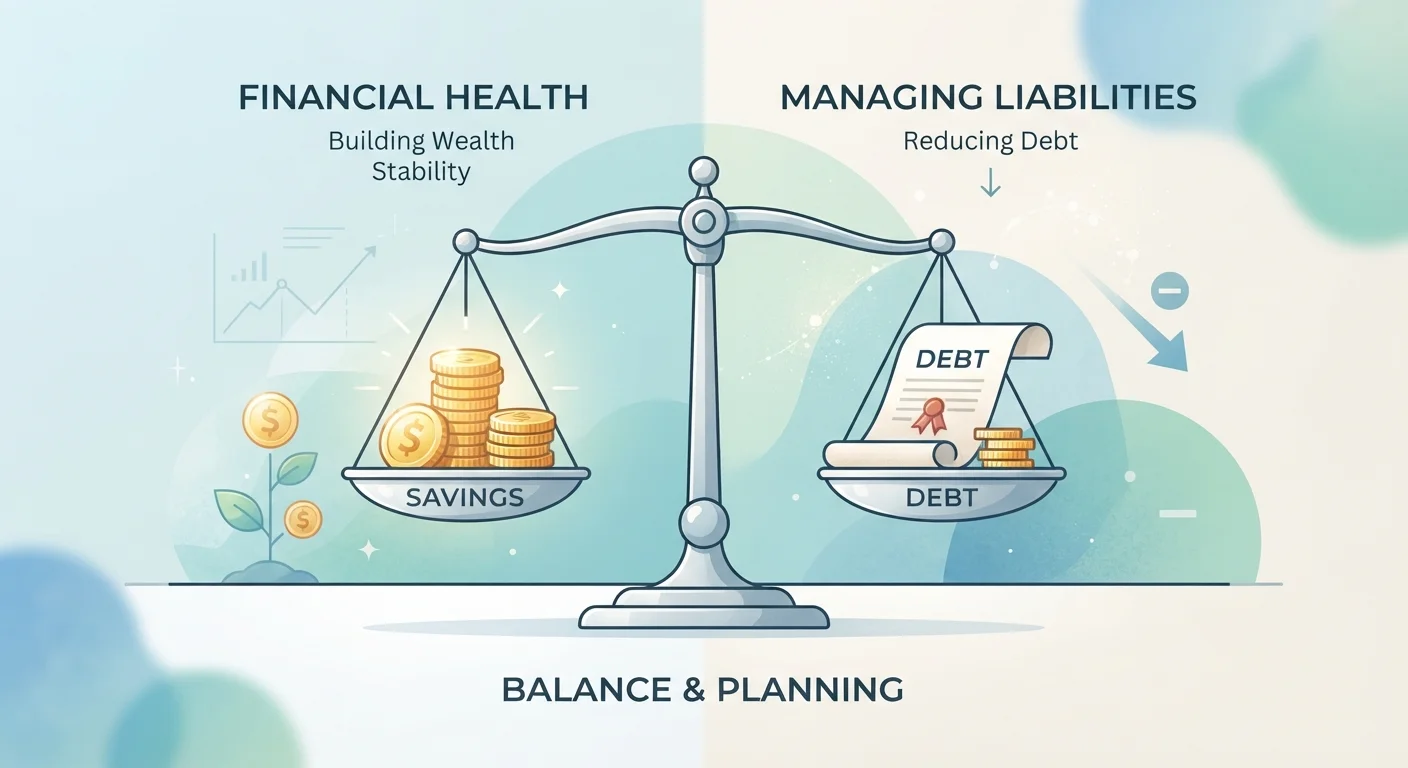
Why This Isn't Always an Either-Or Decision
Personal finance advice often frames debt repayment and saving as competing priorities — pay off debt first, then save, or vice versa. In practice, life rarely accommodates that kind of clean sequencing. People face multiple financial pressures simultaneously: a credit card balance, a thin savings cushion, a retirement plan with an employer match, and a car repair that could arrive any month.
The question isn't whether paying off debt or saving is inherently better. It's whether your specific financial picture makes a simultaneous approach more sensible than a purely sequential one. Several concrete situations tip the scales toward doing both at once. Understanding those situations is the foundation of making an informed choice.
For a broader look at how saving and debt interact across your financial life, see this comprehensive overview of the two topics together.
~28%
Average credit card interest rate in recent years
Federal Reserve data has shown U.S. credit card rates climbing well above 20%, making high-interest debt one of the costliest financial burdens for households.
56%
Americans who carry credit card debt month to month
According to Bankrate survey data, more than half of U.S. credit card holders carry a balance, underscoring how common the debt-versus-savings tension is.
~33%
Workers who don't contribute enough to get their full employer 401(k) match
Research from Vanguard's 'How America Saves' reports has consistently found a meaningful share of eligible employees leave matching contributions unclaimed each year.
When the Case for Doing Both Is Strongest
Three scenarios consistently justify splitting dollars between debt repayment and savings rather than concentrating everything on one goal:
1. You Have No Emergency Buffer
Without any savings reserve, a single unexpected expense — a medical bill, a car repair, a job disruption — can push you straight back into debt. Even a modest emergency fund can break that cycle. Building a small cushion while continuing debt payments reduces the chance that one setback undoes months of progress.
2. Your Employer Offers a 401(k) Match
An employer match on retirement contributions is, in effect, additional compensation. Passing it up to accelerate debt payoff means leaving earned money on the table. Even if your debt carries a meaningful interest rate, the math often favors capturing a 50% or 100% employer match before redirecting those dollars elsewhere. This is general educational context — a qualified financial adviser can help you evaluate the specifics of your plan.
3. Your Debt Carries a Low or Moderate Interest Rate
Not all debt is equally urgent. A mortgage, a federal student loan, or a 0% promotional balance carries a very different cost than a high-interest credit card. When interest rates are low, the opportunity cost of diverting money away from savings or retirement accounts is reduced. Exploring the trade-off between investing and debt repayment can sharpen this analysis further.
Start With the Numbers, Then Add Context
Compare your debt's interest rate to what a savings account or retirement contribution could realistically return. If your debt rate is significantly higher, prioritizing payoff is mathematically stronger. If it's lower — or if an employer match is involved — the calculation shifts. Write both numbers down before deciding how to allocate your next dollar.
When Focusing on Debt First Makes More Sense
There are also clear situations where concentrating resources on debt repayment before building significant savings is the more defensible approach.
High-interest debt — credit cards with rates in the high teens or above — functions as a guaranteed cost. Every dollar that doesn't go toward paying it down is effectively earning a negative return. If the interest rate on your debt substantially exceeds anything your savings could realistically earn, maintaining large savings balances alongside that debt carries a real financial cost.
Income instability can complicate this picture. People with irregular earnings often benefit from a larger emergency reserve precisely because their cash flow is unpredictable. Managing money on a variable income requires adapting these trade-offs to a less predictable financial context.
If high-interest debt is your primary obstacle, a structured payoff roadmap can help you work through it systematically. And comparing debt avalanche versus debt snowball strategies can help you choose a method that fits your situation.
Building a Workable Split
For those who conclude that doing both makes sense, the practical challenge is deciding on proportions. There's no universally correct ratio — what matters is that your allocation reflects your actual interest rates, income stability, and financial goals.
A common starting point is to: meet all minimum debt payments first, direct enough to retirement accounts to capture any employer match, set aside a defined amount for emergency savings until a target is reached, and then direct remaining discretionary dollars toward accelerated debt repayment.
Automating these allocations can reduce friction and improve consistency. Automating your finances has advantages, but also trade-offs worth understanding before you set it up. The budgeting basics hub offers practical tools for building the underlying framework. Some people also find the pay-yourself-first approach a useful structure for prioritizing savings without ignoring debt obligations.
This article is for general informational purposes only and does not constitute personalized financial, tax, or investment advice. Readers should consult a qualified, licensed financial professional before making decisions about debt repayment, savings, or investment strategies.