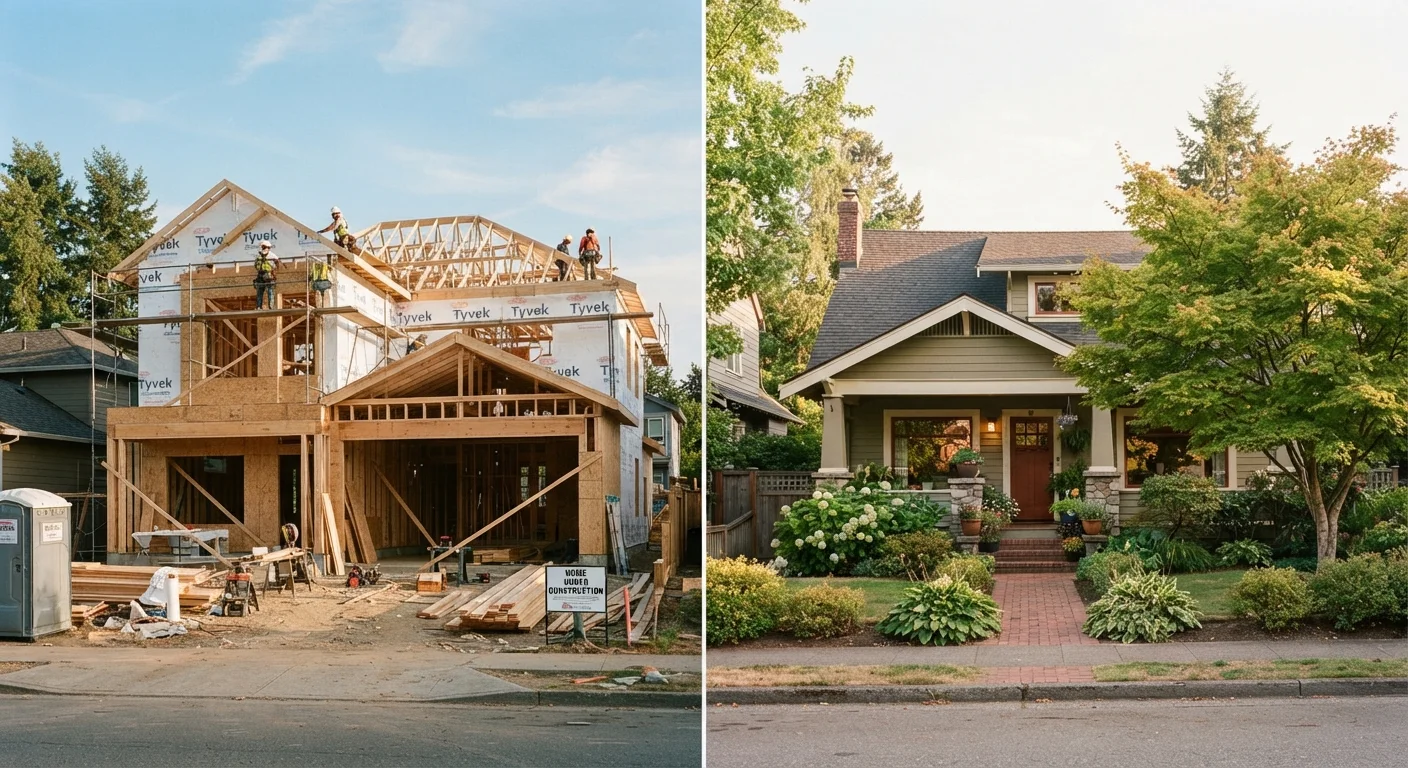
How Each Path Begins
Both routes start with the same financial foundation: getting pre-approved for a mortgage. But from that point forward, the processes diverge quickly.
With an existing home, you work with a buyer's agent to search listings, tour properties, and identify a target. Once you make an offer, a negotiation typically follows — covering price, closing costs, and contingencies like inspection and financing. The process is relatively linear and well-established.
With new construction, you're often choosing a floor plan before walls go up. You may tour a model home, select a lot, and sign a contract with a builder — sometimes more than a year before you move in. Builders frequently have their own sales representatives, and while you can hire a buyer's agent to represent your interests, the dynamic is different from a traditional seller negotiation. It's worth noting that the builder's contract is typically written to protect the builder, not you. Having a real estate attorney review it before signing is strongly advisable.
For a broader look at the full home-buying journey, see The Home Buying Process, From Offer to Closing Day.
Timelines, Inspections, and Due Diligence
Timeline is often the starkest difference between the two paths.
An existing home purchase, once an offer is accepted, typically moves to closing within 30 to 60 days. During that window, buyers complete a home inspection — a critical step that can reveal issues with the roof, foundation, HVAC system, plumbing, or electrical. Findings from the inspection can be used to renegotiate the price or request repairs. What you see is largely what you get, though older homes may have surprises that even a thorough inspection doesn't catch.
New construction timelines are far less predictable. A spec home (already under construction) may be available in weeks. A fully custom or pre-sale build can take 12 to 18 months or longer — subject to supply chain delays, labor shortages, and weather. Buyers should build flexibility into their housing plans and avoid locking in lease terminations too early.
Inspections still matter with new builds. Many buyers assume a brand-new home needs no inspection, but construction errors do occur. Scheduling an independent inspector at key milestones — framing, rough-in, and final walkthrough — gives buyers an objective second set of eyes before the builder closes out the project.
| New Construction | Existing Home | |
|---|---|---|
| Typical Timeline to Close | 6–18+ months | 30–60 days |
| Price Negotiability | Limited; leverage through upgrades/concessions | Direct price negotiation common |
| Inspection Process | Milestone inspections during build | Single pre-closing inspection |
| Customization | Floor plan, finishes, and features selectable | As-is; renovations done post-purchase |
| Warranty Coverage | Builder warranty typically included | No standard warranty; negotiated or purchased separately |
| Immediate Maintenance Risk | Low in early years | Varies; older systems may need attention soon |
| Contract Complexity | Builder contract favors developer; review carefully | Standard purchase agreement; well-established terms |
If you're also weighing whether to own at all, Renting vs. Buying a Home examines the broader financial and lifestyle trade-offs.
Negotiation, Costs, and What You Can Control
With existing homes, price negotiation is central. Buyers can offer below asking, request seller concessions, or make their offer stand out with fewer contingencies. In a competitive market, that flexibility may be limited — but the tools exist.
With new construction, the list price is rarely negotiable in the same way. Builders protect their pricing to avoid setting precedent across a development. Instead, leverage often comes in the form of upgrade allowances, closing cost contributions, or rate buydowns offered by the builder's preferred lender. Buyers should evaluate these incentives carefully — using a builder's lender isn't always the most favorable option, and comparing rates independently is worthwhile.
Get Independent Financing Quotes
Builder incentives tied to their preferred lender can look attractive but may not represent the lowest overall cost. Before committing, obtain at least one independent mortgage quote to compare rates and fees on an equal basis. Even a small rate difference can meaningfully affect total interest paid over the life of a loan.
Ongoing costs differ too. New homes typically come with builder warranties covering structural components, systems, and workmanship for defined periods. Existing homes carry no such warranty unless negotiated, though a home warranty product can sometimes be included in the sale — though coverage terms vary widely and are worth reading carefully before relying on.
For context on how the supply of each home type affects your options and pricing power, New Construction vs. Existing Homes: How Supply Shapes Market Dynamics provides useful background.
Which Path Fits Your Situation?
The better choice depends heavily on your priorities. If you need to move within two months, new construction is rarely a realistic option. If you want a specific floor plan with modern energy efficiency and have the patience to wait, building new may be worth the complexity.
Buyers drawn to existing homes should budget for potential near-term repairs and maintenance — especially in homes over 20 years old. A detailed inspection and a realistic contingency fund are essential. Buyers drawn to new construction should scrutinize the builder's contract, understand what happens if completion is delayed, and confirm what customizations are truly included versus upcharged.
In either case, working with a licensed real estate professional who has experience in the specific path you're pursuing will help you avoid the most common mistakes. The process differences between new and existing aren't just logistical — they reflect fundamentally different risk profiles that deserve equal consideration.
This article is for general informational purposes only and does not constitute financial, legal, or real estate advice. Consult a licensed real estate professional or attorney for guidance specific to your situation.