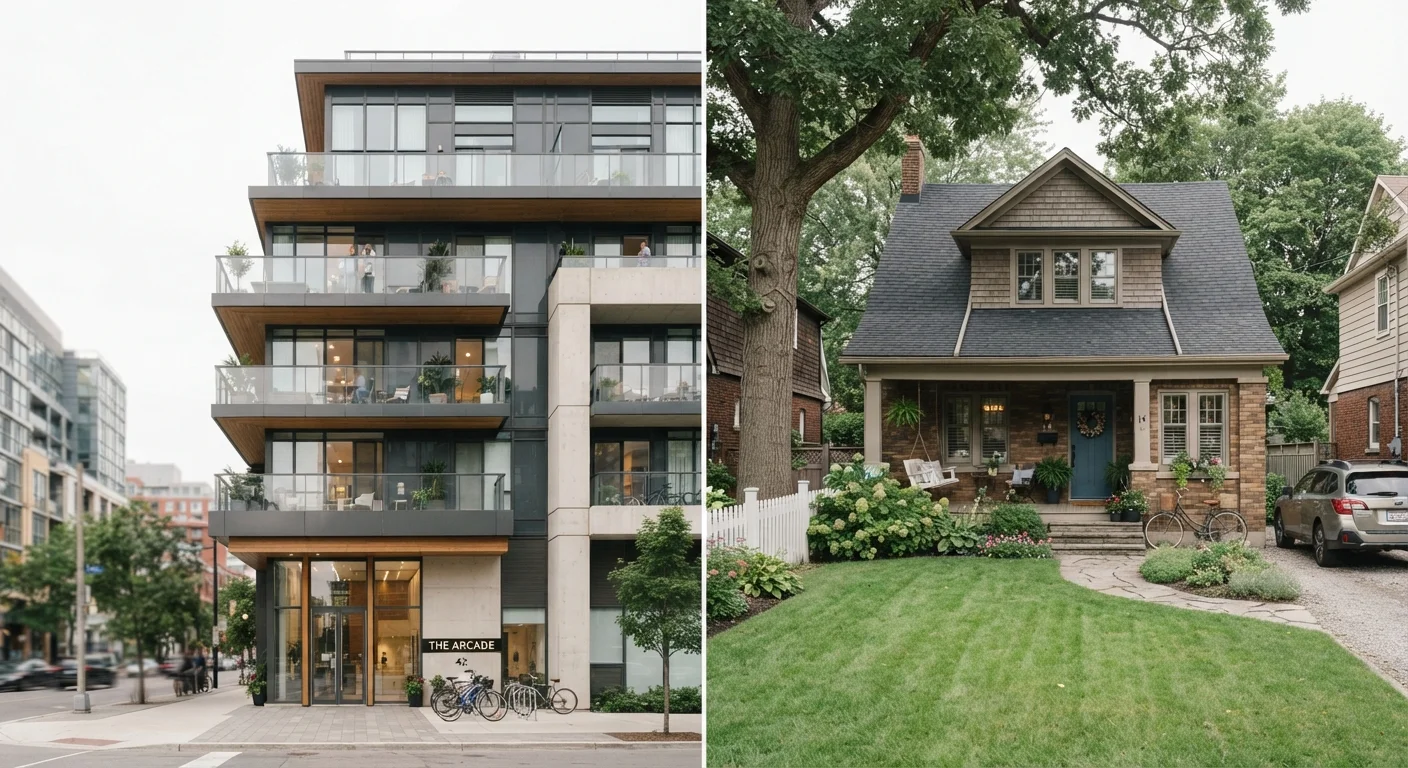
Why This Decision Is More Complex Than Monthly Payments
The most common framing of the rent-vs.-buy debate — comparing a monthly rent payment to a mortgage payment — misses most of what actually matters. Buying a home involves a down payment (typically 3–20% of the purchase price), closing costs (commonly 2–5%), property taxes, homeowners insurance, and ongoing maintenance. Renting involves a security deposit and, in some cases, renters insurance — which is far more affordable.
Before running any numbers, it helps to understand the fundamentals of your local housing market, since the rent-or-buy calculation shifts significantly depending on where you live. For a deeper dive into researching local conditions, see our guide on sizing up a local housing market before committing to either path.
| Renting | Buying | |
|---|---|---|
| Upfront costs | Security deposit (1–2 months rent) | Down payment + closing costs (5–25% of price) |
| Monthly cost predictability | Stable within lease term | Fixed mortgage, but variable taxes/maintenance |
| Equity building | None | Yes, over time with market conditions |
| Flexibility to relocate | High — lease end or notice period | Low — selling takes time and money |
| Maintenance responsibility | Landlord's responsibility (typically) | Owner's full responsibility |
| Legal protections | Landlord-tenant law, Fair Housing Act | Homeowner rights, foreclosure protections |
| Wealth-building potential | Indirect (invest savings) | Direct via equity (not guaranteed) |
The Financial Case for Each Option
Homeownership is often described as an investment, and over long time horizons, it frequently is — but that outcome is not guaranteed. Home values fluctuate with market conditions, and the true cost of homeownership extends well beyond the mortgage. Maintenance alone is commonly estimated at 1–2% of the home's value per year.
Renting, meanwhile, is not "throwing money away." You are paying for housing, which is a basic necessity. Rent payments also provide something homeownership does not: predictable short-term costs and the freedom to relocate without selling an asset. Renters who invest the difference between their rent and a comparable ownership cost may build comparable wealth, depending on market returns and the local price-to-rent ratio.
The break-even point — when buying becomes cheaper than renting over the same period — typically falls between three and seven years, but varies widely. In high-cost metros, it can stretch significantly longer. Understanding mortgage structures also matters here; the difference between fixed-rate and adjustable-rate mortgages affects total interest paid and long-term financial planning.
3–7 years
Typical break-even horizon for buying vs. renting
Financial analysts generally estimate this range, though it varies widely by city and market conditions.
1–2%
Annual home maintenance cost as share of home value
A widely cited rule of thumb among housing economists and real estate professionals for budgeting ongoing ownership costs.
2–5%
Typical closing cost range for home buyers
The Consumer Financial Protection Bureau cites this range as a general estimate for buyer closing costs at settlement.
Renter Protections and Stability You May Not Know About
Renters have more legal standing than many people realize. Landlord-tenant law — which varies by state and municipality — governs security deposit limits, required notice periods for rent increases or eviction, habitability standards, and anti-discrimination protections under the Fair Housing Act. Renters cannot be evicted without due process, and landlords are generally required to maintain livable conditions.
Lease structure also affects how much stability you have. A fixed-term lease locks in your rent and tenancy rights for a set period, while a month-to-month arrangement offers more flexibility but less security. Understanding the trade-offs between lease types can help renters negotiate terms that match their needs.
Document Everything as a Renter
When you move in, photograph the unit's condition thoroughly and share it with your landlord in writing. Keep copies of all correspondence, lease agreements, and rent payment records. This documentation protects you if disputes arise over security deposits or alleged damage at move-out — rights that landlord-tenant law is designed to uphold.
Lifestyle and Timing Factors That Drive the Decision
Financial math aside, life circumstances often determine which option is realistic. Job mobility, family size, relationship status, and proximity to work and schools all shift the calculus. Buyers give up flexibility — selling a home takes time, money, and favorable market conditions. Renters can relocate with relatively little friction, which matters during career transitions or uncertain life stages.
If you are ready to explore buying, the home purchase process involves more steps than most first-timers expect — from mortgage pre-approval to closing. And if you are weighing a specific property type, understanding new construction versus existing homes can help set realistic expectations on timing and negotiation.
For those navigating shifting market conditions, the rent-or-own framework in a shifting market offers additional perspective on how economic conditions affect the comparison.
This article provides general information about housing decisions and is not personalized financial, legal, or real estate advice. Readers should consult qualified professionals — including a licensed real estate agent, financial adviser, or attorney — before making decisions specific to their circumstances.