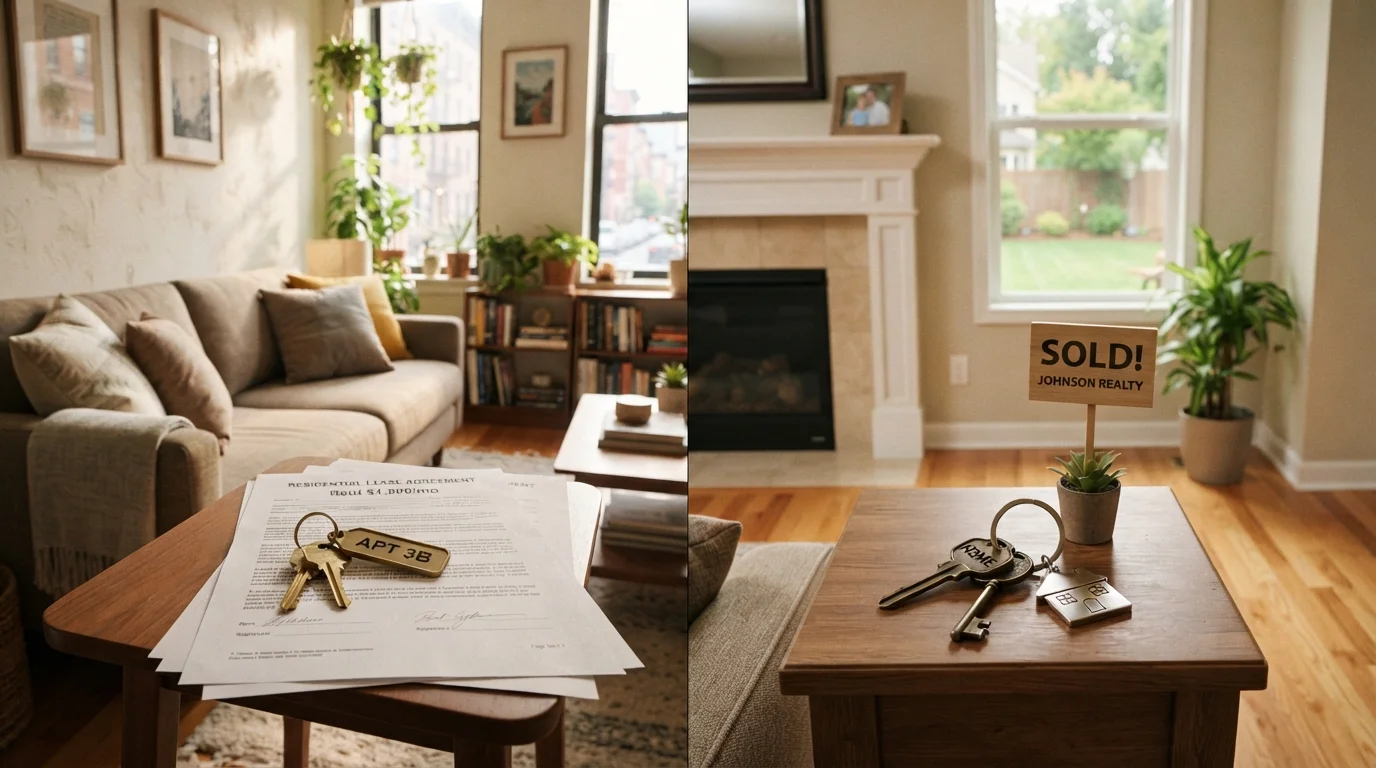
The Myth That Renting Is Always a Waste
"Rent is just throwing money away" is one of the most repeated — and most misleading — ideas in personal finance. When you rent, you are paying for housing, flexibility, and freedom from maintenance costs. That is not waste; it is a trade-off. The question is whether that trade-off suits your situation right now.
Buying a home is not inherently smarter. When you purchase, a large portion of your early mortgage payments goes toward interest, not equity. Add property taxes, homeowner's insurance, closing costs (typically 2–5% of the purchase price), and ongoing maintenance — commonly estimated at 1% of the home's value per year — and the actual cost of owning climbs well above the monthly mortgage figure. For a full picture of those ongoing expenses, see The True Cost of Homeownership Beyond the Purchase Price.
Neither path is universally superior. The right answer depends on your finances, your timeline, and your life plans — not on a bumper-sticker rule.
| Criterion | Renting | Buying |
|---|---|---|
| Upfront costs | Security deposit + first/last month | Down payment + closing costs (5–20%+) |
| Monthly cost predictability | Fixed for lease term; may rise at renewal | Fixed mortgage; taxes and insurance vary |
| Equity building | None | Yes, over time as principal is paid down |
| Maintenance responsibility | Landlord handles most repairs | Owner responsible for all costs |
| Flexibility to move | High — exit at lease end | Low — selling takes time and costs money |
| Customization | Limited by lease terms | Full freedom to renovate and modify |
| Tax considerations | No property tax; limited deductions | Mortgage interest may be deductible (consult a tax professional) |
| Break-even timeline | Immediate flexibility | Typically 5–7 years to offset transaction costs |
The Financial Case for Each Path
Buying builds equity — the portion of the home's value you own outright — as you pay down principal and, in many markets, as property values appreciate over time. That equity can eventually be tapped through a sale or home equity products, and a paid-off home dramatically lowers housing costs in retirement. However, appreciation is not guaranteed, and markets can — and do — decline.
Renting, by contrast, keeps your upfront capital free. A renter who invests the difference between a mortgage payment and a lower rent, month after month, can accumulate wealth through other vehicles. The critical variable is whether that discipline actually happens. The financial outcome of renting versus buying is highly sensitive to local market conditions, individual investment behavior, and how long you stay.
5–7 years
Typical break-even horizon for buying vs. renting
Industry professionals and housing economists commonly cite this range as the minimum ownership period needed to offset transaction costs and begin building net financial advantage over renting.
2%–5%
Typical buyer closing costs as a share of purchase price
The Consumer Financial Protection Bureau notes that closing costs generally fall in this range, though they vary by loan type, location, and lender.
~1%
Annual home maintenance cost estimate (of home value)
A widely used rule of thumb among housing professionals suggests budgeting roughly 1% of a home's value each year for ongoing maintenance and repairs, though older homes often require more.
One factor many buyers underestimate: transaction costs. Buying and then selling within a few years can easily erase any equity gained, particularly when factoring in agent commissions (often 5–6% of sale price) and closing costs on both ends. As a general rule of thumb used widely in the industry, plan to own for at least five to seven years before buying begins to make clear financial sense over renting in a comparable home.
Renters also face hidden costs worth budgeting for — from application fees to renter's insurance. The Hidden Costs of Renting Most Tenants Don't Budget For walks through the expenses that catch many tenants off guard.
Lifestyle and Flexibility: The Often-Overlooked Variables
Financial math alone rarely settles this decision. Life circumstances — job mobility, relationship changes, family size, health — shift in ways that make housing flexibility genuinely valuable.
Renting makes it far easier to move for a better job, to be closer to family, or simply because your needs have changed. A lease, especially a month-to-month arrangement, creates minimal long-term obligation. If you are weighing lease structures, Month-to-Month Lease vs. Fixed-Term Lease: How to Weigh the Trade-Offs breaks down how each type affects your flexibility and cost.
Ownership, on the other hand, creates roots — which is a feature, not a bug, for the right person at the right time. It provides stability for families who want consistent school districts, the freedom to renovate, and the psychological benefit of a space that is truly yours. It also introduces responsibilities: when the furnace fails at midnight in January, you are the one who calls — and pays — for the repair.
For first-time renters still getting oriented to what renting actually involves, Renting Your First Apartment: What No One Tells You Before You Sign offers a practical foundation before you commit to a lease.
This article provides general educational information about housing decisions and does not constitute financial, legal, or investment advice. Consult a qualified financial adviser or real estate professional before making decisions based on your individual circumstances.