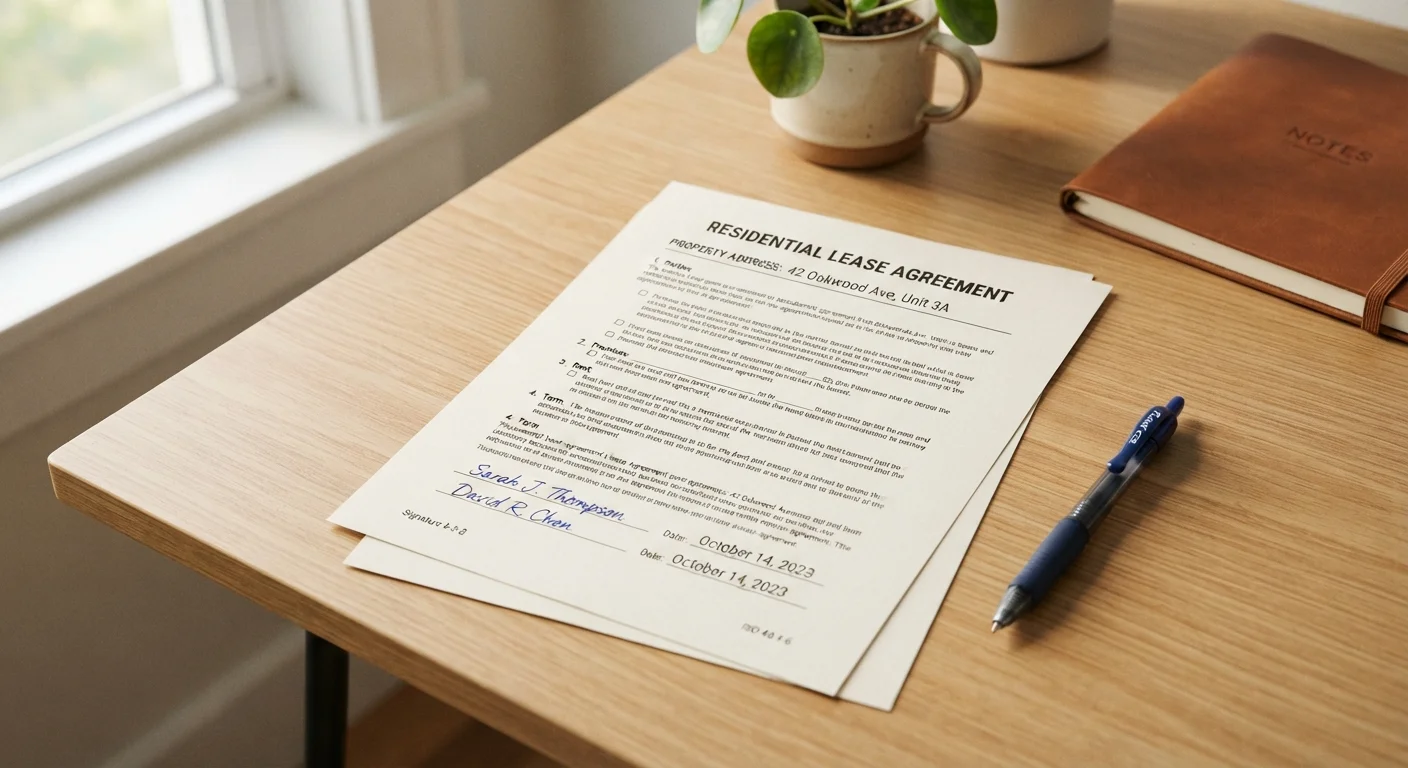
The Basics: Parties, Term, and Rent
Every lease opens with foundational provisions that define the agreement itself. These establish who is legally responsible, how long the tenancy lasts, and what rent is owed — and when.
Parties to the lease lists everyone who is a legal signatory. Each adult who signs is fully liable for the entire rent, not just a share. If a roommate stops paying, the landlord can pursue any or all named tenants for the full amount.
Lease term specifies start and end dates. A standard residential lease runs 12 months. For a side-by-side look at how this compares to a rolling arrangement, see our article on fixed-term versus month-to-month leases.
Rent amount and due date must be clearly stated. Look for a grace period clause — typically three to five days — which delays late fees if payment arrives shortly after the due date. Some states require a minimum grace period by law.
Security Deposits, Fees, and What Landlords Can Deduct
The security deposit clause is one of the most contested parts of any tenancy. It should specify the exact deposit amount, the bank or account where funds are held (required in some states), and the timeline and conditions for return.
Landlords may deduct for unpaid rent and damage that goes beyond normal wear and tear — but they cannot deduct for routine aging of the unit. Common disputes arise over carpet replacement and paint. If a landlord fails to return the deposit or provide an itemized deduction list within the state-mandated window (often 14–30 days), many states allow tenants to sue for double or triple the withheld amount.
Non-refundable fees — such as pet fees or administrative fees — must be explicitly labeled as non-refundable in the lease. An unlabeled deposit may be treated as refundable under state law.
Rules You Need to Read: Subletting, Guests, and Alterations
Middle clauses of a lease often contain restrictions tenants overlook until they need to act on them.
Subletting and assignment clauses define your ability to rent your unit to someone else. Most leases require written landlord consent, and some prohibit it outright. Violating this clause can result in eviction. For a deeper look at the differences and risks involved, see subletting versus lease assignment.
Guest policies set limits on how long visitors may stay — commonly 7 to 14 consecutive days — before they are considered unauthorized occupants. This clause is meant to prevent unregistered long-term residents.
Alterations clause governs changes to the unit, from painting walls to installing shelving. Most leases prohibit structural changes without approval and require restoration at move-out. Some landlords will approve minor alterations in writing — always get that permission documented.
Early Termination, Renewal, and Your Exit Rights
Knowing how a lease ends is as important as knowing how it begins. Check these three provisions carefully before you sign.
Early termination clause defines what it costs to exit before the lease expires. A common structure requires 30–60 days' notice plus a buyout fee — often one or two months' rent. Without this clause, you may owe rent for every remaining month unless the landlord re-rents the unit (landlords in most states have a legal duty to mitigate their losses by actively seeking a new tenant).
Automatic renewal clauses convert the lease to a new fixed term if you don't provide notice by a specific deadline — sometimes 60 to 90 days before the end date. Missing that window can lock you in for another year. Mark this date on your calendar immediately after signing.
Notice to vacate requirements apply even when a lease expires normally. Most states require at least 30 days' written notice. For best practices on keeping a paper trail throughout your tenancy — including move-out documentation — see how to communicate with your landlord.
If you are signing a lease for the first time, our guide on renting your first apartment covers many of these concepts in greater depth alongside other first-timer essentials.
This article is for general informational and educational purposes only and does not constitute legal advice. Lease terms and landlord-tenant laws vary significantly by state and locality. Consult a licensed attorney or local tenant rights organization for guidance specific to your situation.