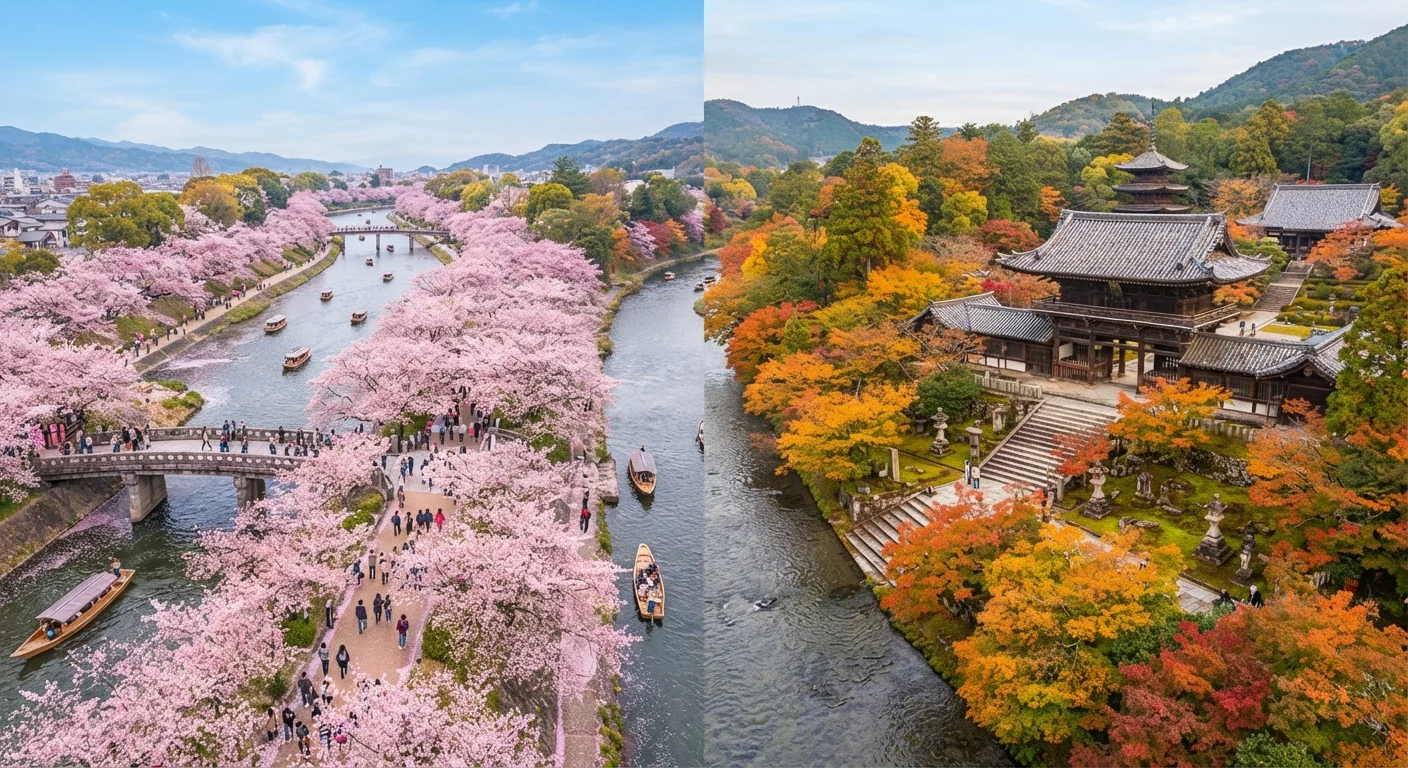
What Cherry Blossom Season Actually Looks Like on the Ground
There's a reason millions of travelers target late March through mid-April in Japan — the sakura bloom is one of the most visually arresting natural events on the planet. Parks like Maruyama in Kyoto and Ueno in Tokyo transform into pink-canopied gathering spaces, and the cultural tradition of hanami (flower-viewing picnics) means locals are fully invested in the experience alongside tourists.
But the reality on the ground carries trade-offs worth understanding before you book. Popular spots during peak bloom can feel genuinely overcrowded. Streets near Philosopher's Path in Kyoto or the Meguro River in Tokyo can be shoulder-to-shoulder on weekends. Hotel prices in major cities during peak sakura weeks routinely run 40–70% higher than shoulder-season rates, and rooms at well-located properties often sell out months in advance.
Bloom timing also isn't guaranteed. The cherry blossom forecast — tracked by the Japan Meteorological Corporation and widely reported — changes year to year depending on winter temperatures. A late winter can push peak bloom into early April; an unusually warm one pulls it forward. Travelers locked into fixed dates may arrive to find the blossoms either not yet open or already past peak. Building two to three days of flexibility into your trip significantly improves your odds of catching full bloom.
| Criterion | Cherry Blossom Season | Rest of the Year |
|---|---|---|
| Typical timing | Late March – mid-April | May–February (varies by season) |
| Hotel availability | Sells out months ahead | Generally easier to book |
| Accommodation pricing | Significantly elevated | More competitive rates |
| Crowd levels at icons | Very high, especially weekends | Moderate to low (varies) |
| Scenic highlight | Pink sakura canopies | Autumn foliage, snow, festivals |
| Weather reliability | Mild but bloom timing variable | Highly season-dependent |
| Cultural immersion ease | Rich but rushed atmosphere | More relaxed pacing |
Japan Outside Sakura Season: A Different Kind of Rewarding
Japan doesn't become a lesser destination when the cherry blossoms fall. Each season carries its own distinct character, and many experienced Japan travelers argue that koyo — the autumn foliage season running roughly mid-November through early December — rivals sakura for sheer beauty, with rich crimson and gold maples framing the same temples and mountain landscapes.
Summer in Japan brings energetic matsuri festivals, fireworks displays, and the dramatic landscape of the Japanese Alps for hikers. Winter offers a quieter Japan: snow-covered Nikko shrines, outdoor onsen (hot spring) bathing in Tohoku or Hokkaido, and the famous Sapporo Snow Festival each February. Crowds at iconic sites like Fushimi Inari Taisha or the bamboo groves of Arashiyama are noticeably more manageable, particularly on weekdays.
For travelers interested in genuine cultural immersion — long ryokan stays, unhurried kaiseki meals, conversations with locals — the off-peak rhythm simply permits more of it. Prices reflect this too. Flights to Tokyo or Osaka during off-peak windows are generally less expensive, and accommodation options from guesthouses to luxury ryokan are easier to secure without months-long lead times.
Understanding how peak, shoulder, and off-peak seasons shape your travel experience is useful regardless of your destination — but in Japan, where seasonal tourism is particularly intense, it can genuinely make or break the trip you're hoping to have.
~10 days
Typical peak bloom window per city
Japan's Meteorological Corporation tracks bloom forecasts annually; peak full bloom at any given location generally lasts around one to two weeks before petals fall.
3.5M+
Foreign visitors in peak spring months
Japan Tourism Agency data has consistently shown March and April among the highest-traffic months for inbound international tourism in recent years.
Making the Right Call for Your Trip
Neither version of Japan is the wrong choice — but the right choice depends heavily on what you're actually optimizing for. If the sakura experience sits at the top of your list and you're prepared to book well ahead, navigate crowds with patience, and pay peak-season rates, the payoff is worth it for many travelers. The hanami atmosphere, the night-lit yozakura viewing, and the sheer scale of bloom across a city like Kyoto are difficult to replicate at any other time of year.
If, on the other hand, your priorities center on value, access, and a more spacious travel experience, Japan in autumn, winter, or even early summer delivers richly without the same logistical pressure. Many travelers who visit during sakura season return specifically to see a slower, less touristed Japan — and leave equally moved.
Whichever window you choose, verify entry requirements, check any regional travel advisories, and confirm transportation bookings directly with providers before departure. Japan's rail and accommodation systems reward advance planning in any season.
Bloom Timing Is Never Guaranteed
Cherry blossom forecasts are updated regularly in the weeks before the season, but exact peak bloom dates depend on each winter's temperatures and can shift by one to two weeks from initial projections. If sakura is your primary reason for visiting, build itinerary flexibility into your trip rather than locking every day tightly around forecast dates. Checking a reputable forecast source — such as the Japan Meteorological Corporation's official updates — closer to your departure will give the most accurate picture.