The Myth vs. The Reality of America's Crown Jewels
America's national parks are legitimately extraordinary. But between the jaw-dropping scenery and the bumper-to-bumper traffic, the permit lotteries and the afternoon thunderstorms, there's a lot that doesn't make it onto the highlight reel. Every year, millions of visitors arrive at iconic parks with expectations shaped by social media — and leave with a very different story.
This isn't a reason to avoid these places. It's a reason to go in prepared. As with any destination worth visiting, the gap between expectation and reality is widest for travelers who skip the research. We've looked honestly at seven parks that consistently generate both wonder and frustration, so you know what you're signing up for. For a broader strategy on timing any trip well, see our guide to planning around seasons and crowds.
Yosemite National Park, California
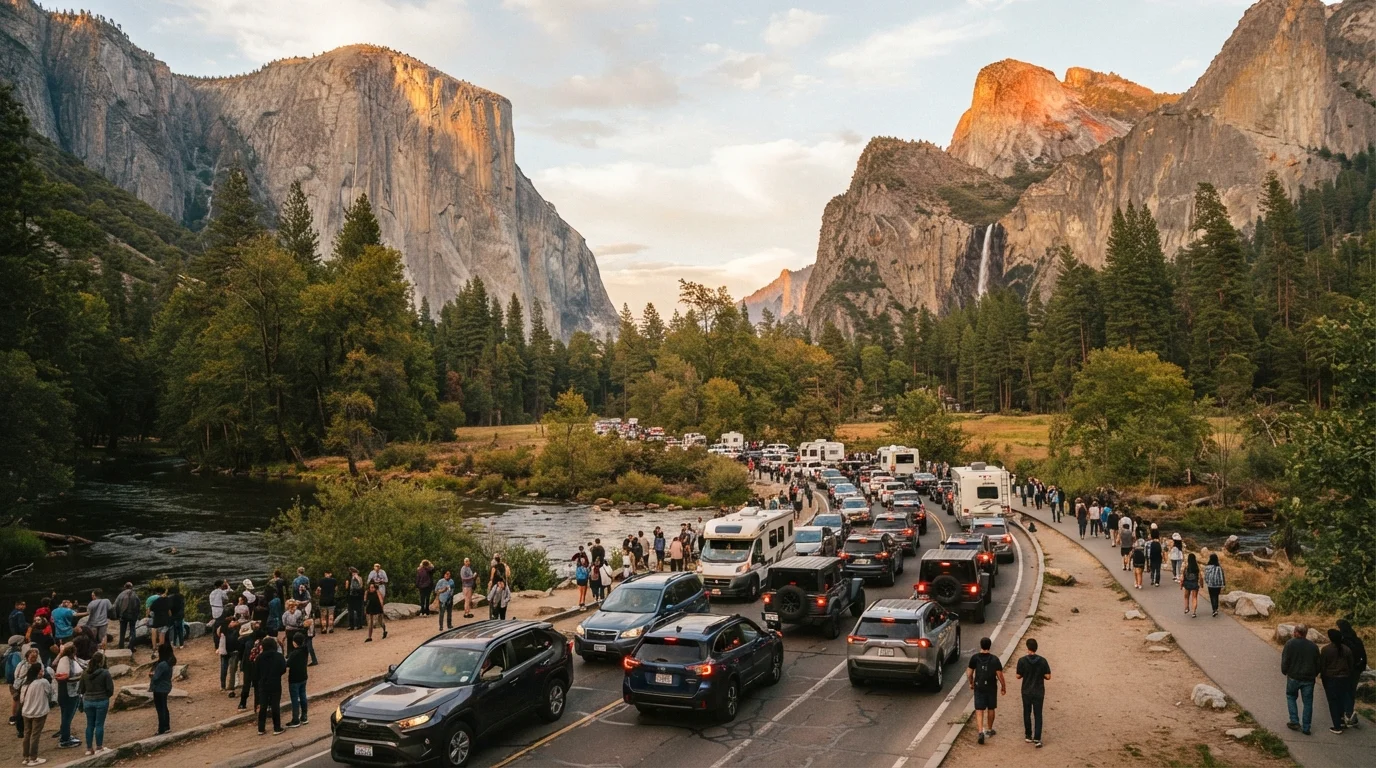
Yosemite Valley is one of the most photographed places on Earth, and in summer it can feel like it. The valley floor — where El Capitan, Half Dome, and Bridalveil Fall are all visible — is just about seven miles long and attracts roughly four million visitors annually. During peak season, parking fills by 9 a.m., shuttle queues stretch long, and the meadows that look serene in photos are flanked by crowds three people deep.
Timed-entry permits are required for driving into the park during busy periods, and the Half Dome cables lottery (for the summit hike) is competitive and runs months in advance. Cell service in the valley is limited and patchy. If you're visiting in July or August without a reservation, have a genuine backup plan.
Yosemite's valley floor can feel more like a theme park than wilderness in peak summer months.
Zion National Park, Utah
Zion's slot canyons and the famous Angels Landing trail have become bucket-list fixtures, and visitor numbers have risen accordingly. The park now requires a permit to hike the upper section of Angels Landing — a lottery system that many applicants don't win. The Narrows, Zion's iconic river hike through a slot canyon, involves walking directly in the Virgin River; flash flood risk is real and unpredictable, and the park closes the route without much notice when upstream conditions warrant it.
Private vehicles are prohibited on Scenic Drive during most of the year; the free shuttle system is the only option, and in summer, waits can be substantial. Springdale, the gateway town just outside the entrance, is expensive and books up fast.
Flash flood closures in the Narrows can happen with little warning — always check conditions that morning.
Grand Canyon National Park, Arizona
The South Rim view is legitimately staggering. It's also shared with around six million visitors a year. What surprises many first-timers: the scale of the canyon makes it deceptively hard to reach the river from the rim. The Bright Angel Trail to the Colorado River is a roughly 10-mile round trip with nearly 5,000 feet of elevation change — most of that on the way back up, in heat that can exceed 110°F at the canyon floor in summer. The National Park Service explicitly discourages rim-to-river-and-back day hikes in summer.
Phantom Ranch at the canyon bottom — the only lodging below the rim — requires reservations that are booked through a lottery system, often a year or more in advance. Cell service on the South Rim is limited; inside the canyon, there is none.
The NPS explicitly warns against rim-to-river day hikes in summer — the canyon's heat is genuinely dangerous.
Glacier National Park, Montana
Going-to-the-Sun Road — the spectacular 50-mile mountain highway bisecting Glacier — is the park's centerpiece, and it requires a vehicle reservation to drive between approximately late May and mid-September. The reservation window opens in advance and sells out quickly. Without one, you're limited to the park's shuttle or entry before 6 a.m./after 3 p.m. on certain segments.
Glacier also has grizzly bear country: bear spray is strongly recommended and widely considered essential by rangers. Wildfire smoke is an increasingly common factor in late summer, sometimes obscuring views entirely for days at a time. The park sits at high elevation and early-season snowpack can keep popular trails inaccessible well into July.
Wildfire smoke can blanket Glacier's famous views for days — late summer carries real visibility risk.
Acadia National Park, Maine
Acadia is the most-visited park in New England and one of the most-visited in the country, concentrated onto a relatively small island. Cadillac Mountain — the first place in the continental U.S. to see sunrise for part of the year — requires a separate timed-entry vehicle permit during the busy season, layered on top of general park entry fees. The permit system caught many visitors off guard when it was introduced and remains a source of confusion.
Bar Harbor, the gateway town, is genuinely charming but becomes extremely congested in July and August. Parking at popular trailheads fills before 8 a.m. Jordan Pond House, the park's only full-service restaurant, typically requires advance reservations weeks out during peak season.
Cadillac Mountain's separate timed-entry permit is a separate booking step many visitors miss entirely.
Rocky Mountain National Park, Colorado
RMNP introduced a timed-entry permit system that covers most of the park during busy summer months. There are two permit windows — one for early morning entry, one for mid-morning — and both sell out fast when they open online. Trail Ridge Road, the park's iconic high-alpine drive, sits above 12,000 feet and can experience snow any month of the year; afternoon thunderstorms are nearly a daily occurrence in July and August and can move in faster than many visitors expect.
Elevation is a real factor: the park's entrance sits around 8,000 feet, and popular hikes climb well above that. Visitors arriving from sea level should budget a day or two for acclimatization before attempting strenuous trails.
High-altitude afternoon thunderstorms at RMNP develop fast — plan to be off exposed ridges by noon.
Great Smoky Mountains National Park, Tennessee/North Carolina
The Smokies are the most-visited national park in the country — consistently drawing more visitors than any other — and they're free to enter, which amplifies demand significantly. Unlike most parks, there's no entrance fee, but that also means no cap on daily visitors, and the main corridor through Gatlinburg and Pigeon Forge can feel overwhelmingly commercial before you even reach the park boundary.
Cell service disappears quickly once you're inside. The park's most popular waterfall trails are heavily trafficked and parking is scarce; arriving by 7 a.m. is not an exaggeration if you want a parking spot at Laurel Falls or Alum Cave. Black bear sightings are genuinely common and require calm, practiced behavior — keep your distance and never approach or feed them.
The Smokies attract more visitors than any other U.S. national park — and they're free, so crowds reflect it.
Go In Eyes Open — and You'll Be Fine
None of the surprises in this list should deter you from visiting these parks. What they should do is reshape how you plan. Book permits the moment they open, study the weather patterns for your specific travel window, and download offline maps before you lose signal at the trailhead. If the permit lottery doesn't go your way or the crowds feel overwhelming, it's also worth knowing that quieter American destinations can offer equally rich experiences with far less friction.
Download Everything Before You Leave Signal
Cell service is unreliable or absent across most of these parks. Before you leave your hotel or campground, download your trail maps (apps like AllTrails allow offline access), save your campsite or lodging confirmation, and screenshot the day's weather forecast. It takes five minutes and can prevent genuine emergencies.
The parks on this list surprise visitors precisely because they're so beloved — and demand has outpaced infrastructure. That tension isn't going away. But travelers who arrive with accurate expectations, a contingency plan, and genuine flexibility tend to leave with exactly the experience they came for.