Start With a Realistic Total Budget
Before you book a single flight or scroll through accommodation photos, you need one number: your total available trip budget. This single step separates travelers who return home financially intact from those who come back stressed and in debt.
Your total budget should cover six core categories: international airfare, accommodation, daily meals, in-country transportation, activities and entrance fees, and an emergency cushion of roughly 10–15% of your total. Our pre-trip budget checklist walks through each category so nothing gets missed. If you've never built a spending plan before, this plain-language budgeting walkthrough is a useful starting point.
Budget for Your Real Self, Not Your Ideal Self
Be honest about your spending tendencies. If you know you'll want to visit a museum or two and eat at a sit-down restaurant every few days, budget for that reality — not an idealized frugal version of yourself you may not stick to. A realistic budget you actually follow beats an optimistic one you blow through by day four.
Be honest about your spending tendencies. If you know you'll want to visit a museum or two and eat at a sit-down restaurant every few days, budget for that reality — not an idealized frugal version of yourself you may not stick to.
Choosing a Destination That Fits Your Dollars
Destination choice is your single most powerful budget decision. The U.S. dollar stretches dramatically further in parts of Southeast Asia, Central America, Eastern Europe, and parts of South America than it does in Western Europe, Scandinavia, or Japan. A comfortable daily budget in Lisbon might be roughly double what the same experience costs in Lisbon's counterpart in another region.
For a first international trip, consider destinations with: well-established tourist infrastructure (so logistics are manageable), a range of accommodation options across price points, reliable and affordable public transportation, and a strong street food or market culture. Check the Destinations Guide for honest overviews of what various countries actually cost and involve on the ground.
Also factor in entry requirements. Visa fees, required vaccinations, and travel advisories can affect both your budget and your safety. Always verify current entry requirements through official government sources — the U.S. State Department's travel pages are the authoritative starting point.
Accommodation: Where Budget Travelers Actually Sleep
The days of budget travel meaning grim, threadbare rooms are largely over. Today's options span well-run hostels with private rooms, family-owned guesthouses that offer far more character than chain hotels, and short-term apartment rentals that give you a kitchen and cut meal costs. The common thread among experienced budget travelers: location and cleanliness matter more than brand recognition.
A few practical pointers:
- Staying one or two metro stops from the most central tourist area can reduce nightly rates by 20–40% in many cities.
- Hostels in many destinations have evolved into social hubs with reliable Wi-Fi, luggage storage, and communal kitchens — genuinely useful amenities.
- Read recent guest reviews carefully and focus on mentions of safety, cleanliness, and responsiveness of staff rather than star ratings.
Safety Comes Before Savings on Accommodation
Cutting accommodation costs is smart — but not at the expense of staying somewhere unsafe or in a poorly connected area. Research neighborhood safety for your specific destination using recent traveler accounts and official travel advisories. A slightly higher nightly rate in a well-located, secure area is often worth it, particularly for first-time travelers.
Handling Money and Currency Abroad
How you access and spend money abroad has a real dollar impact. Airport currency exchange kiosks and hotel desks typically offer the worst rates — sometimes 10–15% below the mid-market rate. In most destinations, withdrawing local currency from an ATM affiliated with a local bank gives you a much closer-to-market rate, though your home bank may charge a flat withdrawal fee.
A few habits that protect your travel fund:
- Always choose to pay in the local currency when prompted by a card reader or ATM — selecting USD triggers DCC, a conversion service that benefits the merchant, not you.
- Notify your bank and card issuer before departure to prevent fraud blocks on your account.
- Carry a small amount of local cash for markets, small vendors, and transit situations where cards aren't accepted.
For a full breakdown of exchange options and fee structures, see our guide to currency exchange and foreign transaction fees.
Getting Around Without Draining Your Wallet
In-country transportation is one of the most underestimated budget line items for first-time international travelers. Relying on ride-hail apps or taxis for every trip adds up fast. In most destinations, local public transit — metro systems, buses, regional trains — covers the practical distance between tourist areas reliably and at a fraction of the private transport cost.
For longer distances within a region, overnight trains or buses are a particular favorite among experienced budget travelers: you're moving between cities while sleeping, effectively turning transport time into accommodation savings. Many European and Southeast Asian rail networks offer advance-purchase fares that are genuinely affordable.
Before you travel, research whether your destination offers a transit pass for visitors — many major cities do, and they typically pay for themselves within two or three days of use. See our Trip Planning hub for destination-specific transport guides.
Eating Well on a Tight Travel Budget
Food is where many first-time budget travelers both succeed and struggle. The temptation to default to tourist-row restaurants with English menus is understandable — but it's almost always the most expensive and least authentic option available.
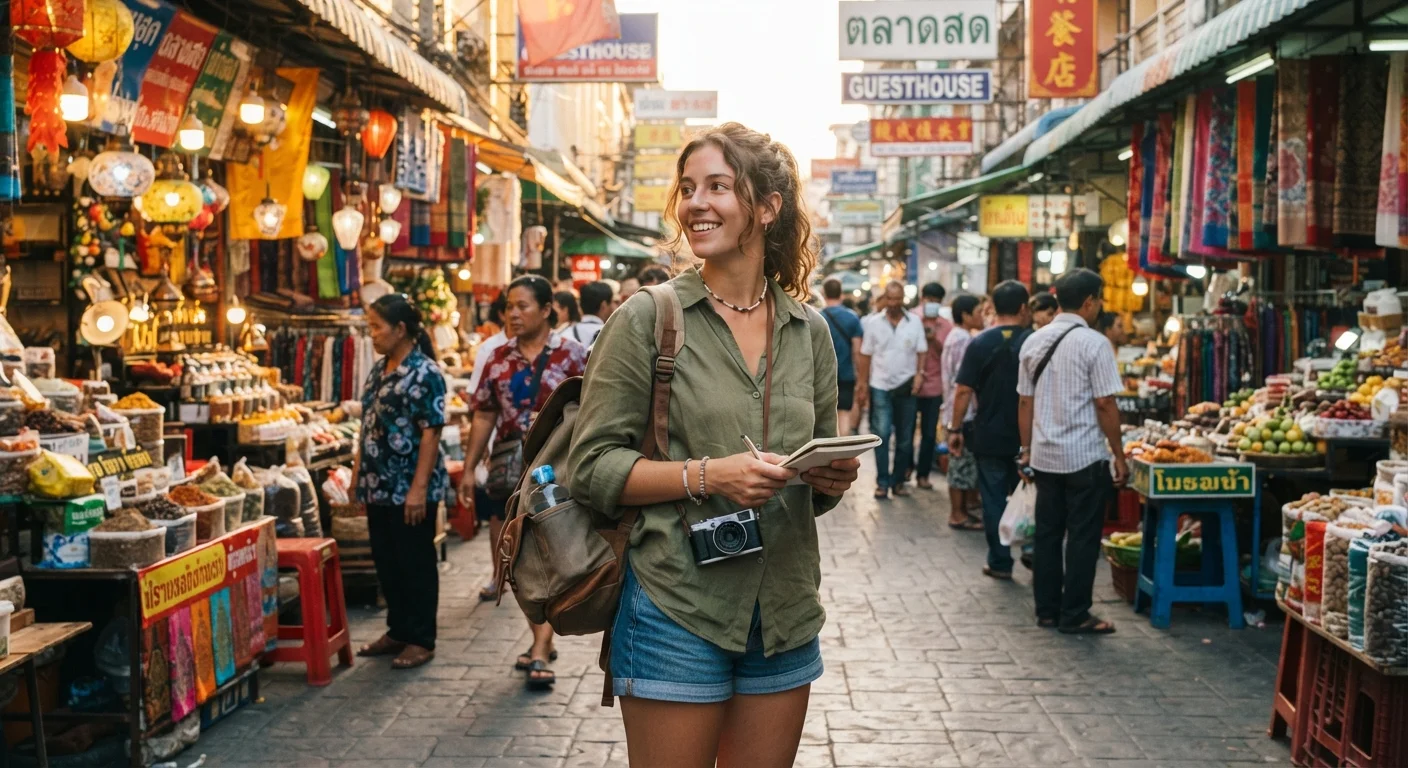
Markets, street stalls, and neighborhood bakeries or cafés are typically where locals eat, and where your dollar goes furthest. In many destinations, a full, satisfying meal from a market vendor costs a fraction of what a sit-down tourist restaurant charges. Buying breakfast items — bread, fruit, yogurt — from a local grocery store is another easy daily saving that adds up over a two-week trip. Our guide to eating well abroad on a budget covers this approach in depth.
Ready to see the full picture? The end-to-end budget travel resource takes you from trip planning through to tracking what you actually spent — a useful next read once you've got these fundamentals in place.
Watch for Hidden Costs That Blow Budgets
Checked baggage fees on international budget carriers, city tourist taxes, mandatory resort fees, and activities that require advance-purchased tickets can all add meaningful costs that didn't appear in your initial research. Before you finalize your budget, scan for these line items specific to your destination and the airlines or properties you're considering.