Why Restaurants Shouldn't Be Your Default Abroad
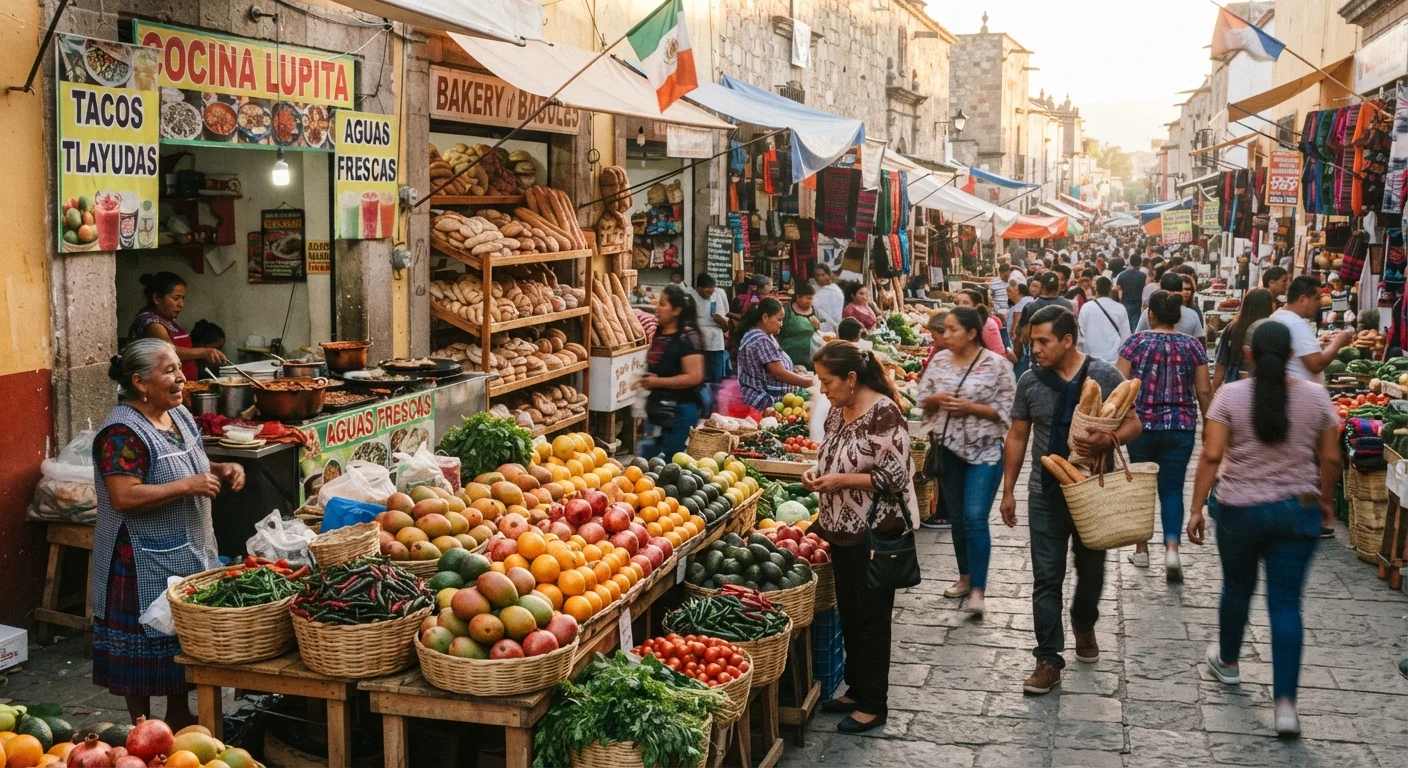
Most Americans default to restaurants for every meal when traveling internationally — partly out of habit, partly out of uncertainty about alternatives. But in most of the world, eating every meal at a sit-down restaurant is not how locals eat, and it is not necessary to have a rich, satisfying food experience. Markets, bakeries, street stalls, and supermarkets are where everyday life happens, and they're often more interesting than tourist-facing restaurants anyway.
The financial case is straightforward: three restaurant meals per day in a moderately priced European or South American city can easily reach $70–$100 per person. Replacing two of those with market and street food options can bring that number closer to $25–$40 — a meaningful difference over a ten-day trip. If you're traveling internationally on a budget for the first time, food is often the single most controllable daily expense once accommodation and transport are booked.
This isn't about deprivation. It's about reorienting where you look for quality — and finding it in the places locals actually go.
Tourist-Area Restaurants Inflate Prices Dramatically
Restaurants within two blocks of major landmarks routinely charge two to three times what locals pay a short walk away. A quick ten-minute detour into a residential street or neighborhood market district can yield dramatically better food at far lower prices. Use local food apps or ask your accommodation host where neighborhood residents actually eat.
What You Need Before You Start
A little preparation goes a long way before you start applying this approach on the ground. Review the prerequisites and tools below so you're set up to shop and eat flexibly from your first day.
What you will need
Reusable shopping bag
Carries market and grocery purchases without relying on single-use plastic bags, which are banned or charged for in many countries.
Small insulated pouch or zip-lock bags
Keeps cheese, deli items, or leftovers fresh for a few hours when you're out exploring.
Pocket knife or travel utensil set
Lets you prep picnic-style meals — slicing bread, cheese, or fruit — without needing a kitchen.
Local food or mapping app
Helps locate neighborhood markets, supermarkets, and well-reviewed local eateries away from tourist zones.
Research the local food landscape before you leave home
Every destination has its own food infrastructure — and knowing it ahead of time shapes your entire strategy. Look up whether your destination has large supermarket chains, covered indoor markets (mercados), open-air street markets, or a strong street food culture. Southeast Asian cities, for example, are renowned for cheap, high-quality street food eaten standing up. Western European cities often have excellent supermarkets alongside weekly farmers' markets. Latin American destinations frequently center on central market halls where hot prepared food is sold alongside fresh produce.
Identify the neighborhood or district where locals shop rather than tourists. Reddit travel communities and local food blogs are useful research tools for this.
Set a realistic daily food budget before the trip
Knowing your ceiling helps you make intentional choices rather than reactive ones. A reasonable framework many travelers use: allocate one sit-down restaurant meal per day, and self-cater or street-eat the other two. Depending on destination, this can bring daily food spending to $20–$40 per person rather than $60–$90 if every meal is a tourist restaurant. See our end-to-end budget travel resource for help building your overall trip budget, including food.
Don't forget to budget a small buffer for spontaneous market finds — a wedge of local cheese, fresh pastries, or a bottle of regional wine are often the most memorable parts of a trip.
Shop at supermarkets and local markets for breakfast and light meals
Breakfast is the easiest meal to self-cater on any trip. A local supermarket or bakery typically offers far better value than a hotel breakfast or café in a tourist zone. Pick up fruit, yogurt, local bread, and packaged items on your first full day and restock every two to three days. Many European and Latin American supermarkets also sell excellent prepared foods — rotisserie chicken, fresh pasta, marinated olives — that travel well for a picnic lunch.
At open-air or indoor markets, look for stalls selling prepared hot food alongside the produce vendors. These are typically priced for local workers and represent some of the most authentic eating experiences available anywhere.
Lean on street food strategically — and safely
Street food is not a compromise — it is often the most culturally accurate and freshest food available in a destination. Tacos al pastor in Mexico City, banh mi in Vietnam, gözleme in Turkey, and arancini in Sicily are beloved by locals and travelers alike for good reason. Choose stalls where you can see food cooked to order and where there is steady local foot traffic, which signals freshness and quality.
[important_callout]Street food works especially well for lunch, when you're already out exploring and don't want to lose momentum on a sit-down meal. Most street food items cost a fraction of what a restaurant version would, and you're eating the same dish the locals eat.
Time your one restaurant meal at lunch, not dinner
If you're going to sit down at a proper restaurant — and you absolutely should, at least occasionally — make it lunch. Set menus and fixed-price lunches are a global tradition: France's formule, Spain's menú del día, Brazil's prato feito, and Japan's teishoku all offer multi-course or full meals at prices that can be 30–50% lower than the same restaurant's dinner menu.
[tip_callout]This approach lets you enjoy the full restaurant experience — tablecloths, wine, local specialties — without the dinner surcharge. You then self-cater a lighter dinner from market finds back at your accommodation.
Pack portable snacks to eliminate impulse purchases
Airports, train stations, tourist attractions, and long travel days create snack emergencies. Without something on hand, you end up spending $8 on a granola bar or $12 on a mediocre café sandwich. Pack a small supply of compact, non-perishable snacks from home — nuts, dried fruit, or energy bars — and replenish from local supermarkets as you go. This is especially relevant for families traveling with children.
Staying well-nourished also helps you make better food decisions. Arriving at a restaurant ravenous and exhausted is a reliable way to overorder and overspend. For ideas on keeping meals nutritionally balanced while traveling, our guide to balanced everyday eating offers useful grounding without turning food into a chore.
Making It Work Across a Full Trip
The rhythm that works for most travelers is simple: self-catered or street food for breakfast and lunch, one intentional sit-down meal per day (ideally at midday), and a light self-catered dinner on most evenings. This isn't a rigid rule — some days you'll want two restaurant meals, and that's fine. The goal is to make market and street food your baseline, not your fallback.
Over a longer trip, keeping a running mental tally of what you're spending on food helps you stay on track. If your overall travel budget is stretched, food is the most flexible lever you have — unlike flights or accommodation already paid for. And eating across markets, bakeries, and local lunch spots as you explore a destination isn't just economical: it's often the part of a trip people remember most vividly.
This article provides general travel and food information for educational purposes. Food safety conditions, market availability, and local dining customs vary by destination. Always verify food and water safety guidance for your specific destination through official government travel resources before you travel.