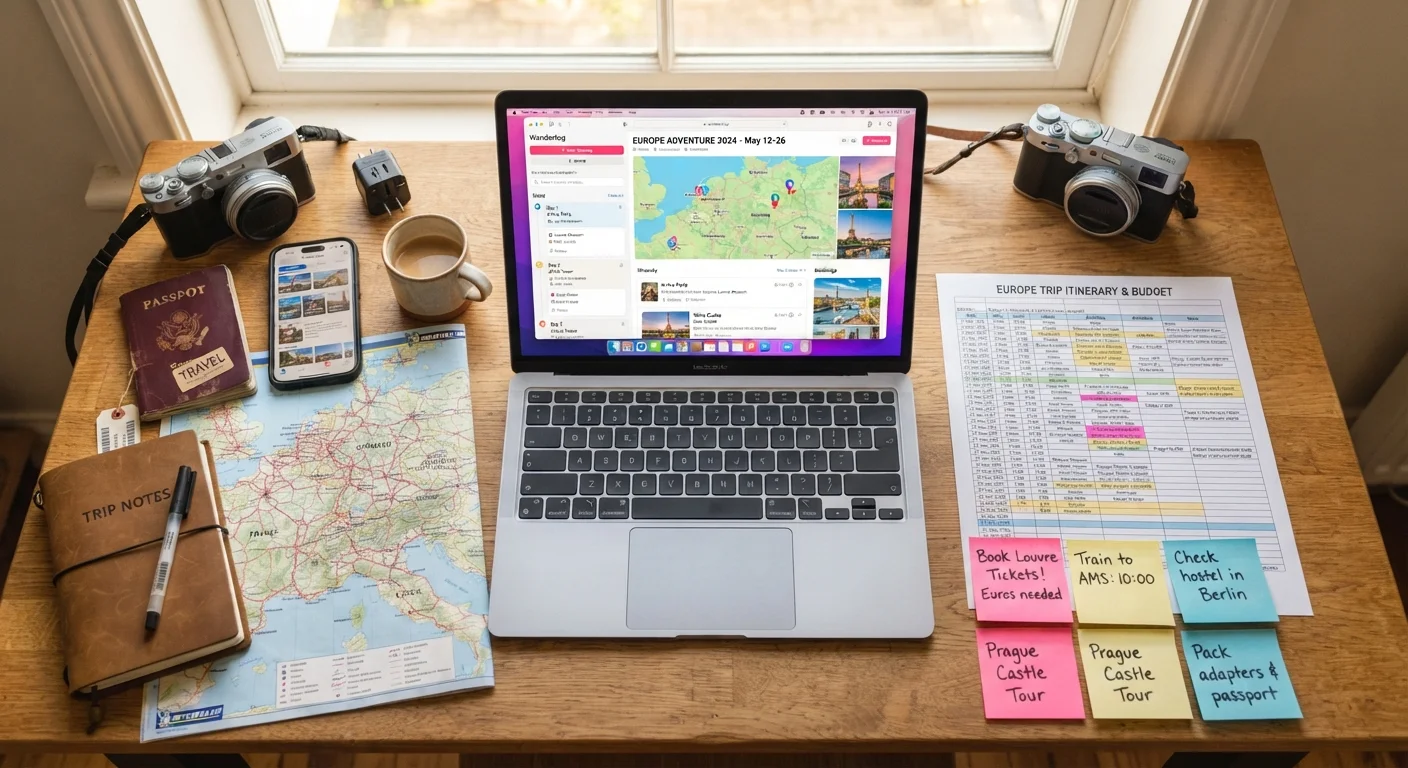
What Each Approach Actually Offers
Travel planning apps — think itinerary builders, flight trackers, and trip organizers — promise to centralize everything: reservations, maps, alerts, and sharing, all in one interface synced across your devices. Spreadsheets, by contrast, are blank canvases. You decide the structure, the categories, the formulas. One is a polished pre-built tool; the other is raw, flexible infrastructure.
Understanding the core difference helps you pick the right fit for your planning style — or decide when to use both. For a broader view of what solid trip prep looks like from start to finish, see the anatomy of a well-planned trip.
| Travel Apps | Spreadsheets | |
|---|---|---|
| Setup time | Quick, guided templates | Longer, fully manual |
| Customization | Limited by app structure | Fully customizable |
| Budget tracking | Basic logs, limited formulas | Deep, formula-driven control |
| Offline access | Varies by app; can be unreliable | Always works when downloaded |
| Real-time alerts | Automatic flight/booking updates | Manual updates only |
| Collaboration | Built-in sharing features | Cloud sheets allow sharing |
| Cost | Free to paid subscription | Free (spreadsheet software) |
| Learning curve | Low for most users | Moderate; formula knowledge helps |
Organization and Ease of Setup
Apps come with pre-built templates: flight fields, hotel entries, activity slots. That structure is a genuine time-saver if you want a working itinerary in 20 minutes. Many will even auto-import confirmation emails, reducing manual data entry considerably.
Spreadsheets take longer to set up initially, but the payoff is a system that does exactly what you need — nothing more. If your trip involves complex multi-city routing, currency conversions, or detailed per-person cost splits, a well-built spreadsheet often handles nuance better than a rigid app template.
Start With a Hybrid Template
If you're unsure where to begin, try building a simple spreadsheet for your budget and daily schedule, then use a free app to track live bookings. This hybrid approach captures the strengths of both without committing fully to either. Revisit after your first trip and trim whichever layer you didn't actually use.
Flexibility, Budget Tracking, and Offline Reliability
Budget tracking is where spreadsheets consistently outperform apps. You can build custom formulas, track category spending, model different scenarios, and see your full financial picture in one view. Apps tend to offer basic spending logs, but few match the granular control a spreadsheet allows — a point worth considering if you're exploring smart strategies to travel well without overspending. For a deeper comparison of digital vs. manual budget tracking, tracking spending by hand vs. using an app covers the trade-offs clearly.
Offline reliability is another spreadsheet strength. A downloaded file opens anywhere, no signal required. Many apps offer offline modes, but functionality varies and cached data can go stale. If you're heading somewhere with spotty connectivity, a locally saved spreadsheet is simply more dependable.
Collaboration and Real-Time Updates
Planning a group trip? Apps often have a clear edge. Shared itineraries, push notifications for flight changes, and collaborative editing features make coordination considerably easier when multiple people are involved. Real-time flight alerts in particular can be trip-savers — no spreadsheet will ping you when your gate changes.
Cloud-based spreadsheets (like shared Google Sheets) close this gap somewhat, supporting simultaneous editing and comments. But they still require manual updates when bookings change, whereas a well-connected app handles that automatically. If your group has mixed tech comfort levels, a shared spreadsheet may actually generate less friction than asking everyone to download and navigate a new app.
Your approach to planning also interacts with when you book — whether far ahead or last-minute. See planning a trip far in advance vs. booking last minute to think through how your timeline affects your organizational needs.
Choosing Your System — or Combining Both
The most effective planning setups often use apps for what they do well (live booking management, alerts, and mobile access) and spreadsheets for custom budgeting and itinerary logic. Once you're on the road, maintaining your plan is a separate skill — keeping your trip on track once you've left home covers how to manage itinerary changes and contingencies mid-trip.
Whatever system you choose, the real variable is consistent use. A detailed spreadsheet you abandon on day two is no better than an app you never fully set up. Start simple, build in only what you'll actually maintain, and adjust as your trips get more complex.