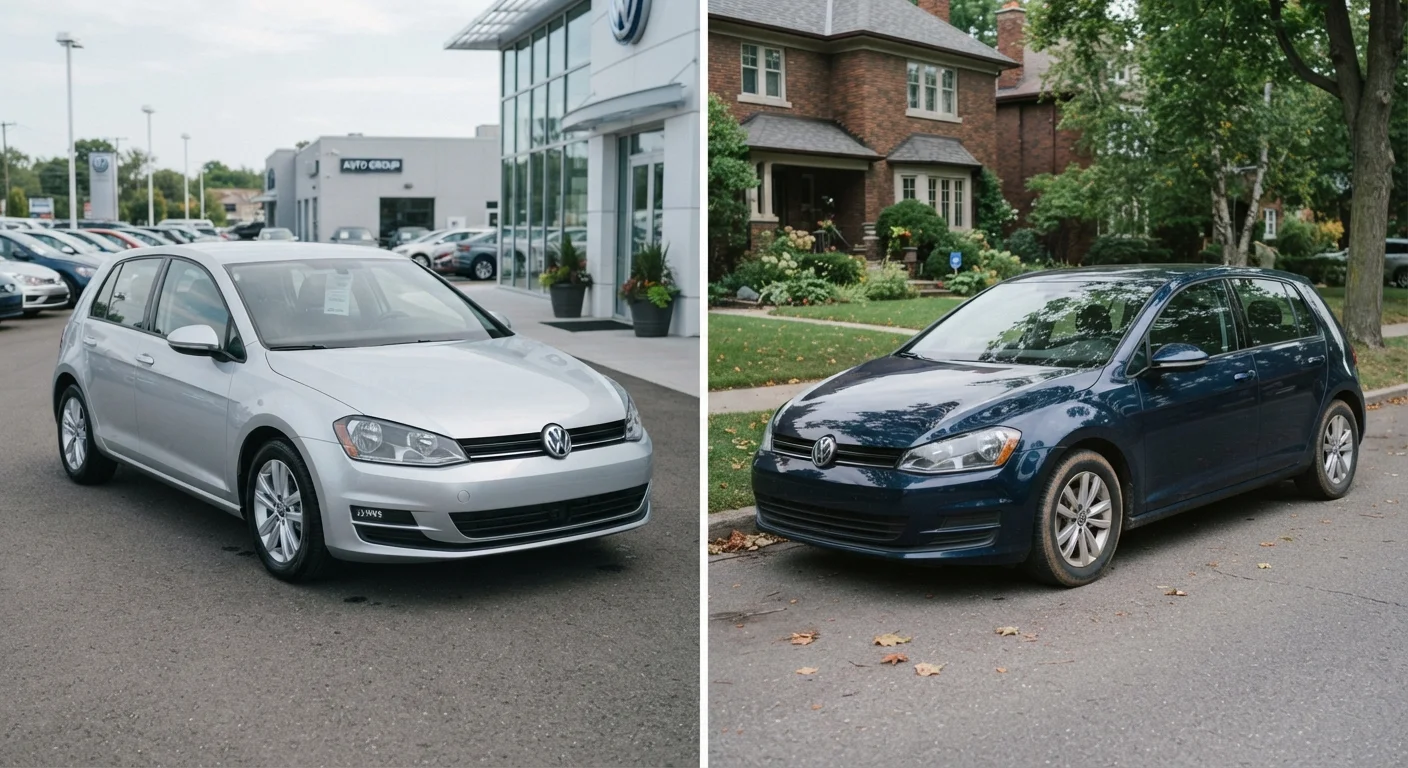
The Depreciation Reality
Depreciation is the single biggest financial factor separating new from used, and it almost always favors the used buyer in the short term. New vehicles can lose a significant portion of their value within the first year of ownership, and the steepest decline typically occurs before the three-year mark. A buyer who purchases a two- or three-year-old vehicle in good condition essentially lets the original owner absorb that loss.
That said, depreciation cuts both ways at resale. A used car you buy today has a shallower depreciation curve ahead of it, which limits further value loss but also means less equity to roll into your next vehicle. The longer you plan to own, the less this matters - a car driven for a decade loses nearly all its value regardless of when you bought it.
For a fuller picture of costs beyond purchase price, see the real cost of owning a car - depreciation is only one line item.
| Criterion | New Car | Used Car |
|---|---|---|
| Purchase price | Higher upfront cost | Lower upfront cost |
| Depreciation exposure | Steepest in first 1-3 years | Prior owner absorbed early loss |
| Warranty coverage | Full manufacturer warranty | Varies; may be none |
| Financing rates | Often lower; subsidized offers available | Typically higher rates |
| Vehicle history | No prior owners or history | Requires verification |
| Insurance cost | Generally higher premiums | Often lower premiums |
| Technology & safety features | Latest available standards | Depends on model year |
| Repair risk (near-term) | Low - covered under warranty | Higher - depends on condition |
Warranties, Risk, and the Unknown
A new car comes with a manufacturer warranty - typically a bumper-to-bumper coverage period plus a longer powertrain warranty. This shifts repair risk away from the owner during the most reliable years of the vehicle's life. You know exactly what you're getting: zero prior owners, no accident history, and components at the start of their service life.
Used cars introduce uncertainty. A vehicle history report and a pre-purchase inspection by an independent mechanic can reduce that uncertainty substantially, but they don't eliminate it. Older or higher-mileage vehicles may have no remaining factory warranty, meaning repair costs fall entirely on the new owner.
Certified Pre-Owned (CPO) programs occupy a meaningful middle ground. Manufacturer CPO vehicles must pass a multi-point inspection and come with extended warranty coverage. What CPO certification actually covers varies by manufacturer, so it's worth reading the fine print before assuming parity with a new-car warranty.
~20%
Typical first-year depreciation on a new vehicle
Industry estimates commonly place new vehicle depreciation between 15% and 25% in the first year, varying by make, model, and market conditions.
3-5 years
Period of steepest cumulative depreciation
Automotive data sources generally show the sharpest cumulative value loss occurring within the first three to five years of a vehicle's life.
CPO
Middle-ground option with inspection and warranty
Certified Pre-Owned programs require vehicles to pass a manufacturer-defined multi-point inspection and include extended warranty coverage, though terms vary by brand.
Financing, Insurance, and Monthly Cost
Lenders and manufacturers frequently offer lower interest rates on new vehicles than on used ones. Manufacturer-subsidized financing promotions can bring rates down considerably, which narrows the effective cost gap between new and used more than the sticker prices suggest. Run the full loan calculation - total interest paid over the loan term - not just the monthly payment, to compare accurately.
Insurance also differs. New cars generally cost more to insure because replacement parts and repair costs are higher, and lenders typically require comprehensive and collision coverage. Older used vehicles may allow you to carry a leaner policy, though this depends on the vehicle's value and your lender's requirements.
The car-buying process from start to finish covers how to structure financing before you set foot in a dealership - a step that applies equally whether you're buying new or used.
What Actually Tips the Decision
For most buyers, the decision comes down to three questions: How long will you own the vehicle? How much repair risk are you comfortable absorbing? And what does your actual budget - not your maximum financing ceiling - support?
Buyers planning a shorter ownership window of three to five years often find the used market more financially efficient. Those who keep cars for eight to twelve years tend to find new-car ownership more straightforward, since they own the vehicle well past the point where depreciation and warranty coverage matter as much.
If you're exploring the used side, be aware that some listings conceal serious problems behind a low price. Signals that a used car deal may be too good to be true outlines patterns experienced buyers learn to spot before committing.
Neither choice is inherently correct. The right answer is the one that aligns with your realistic financial situation, your tolerance for mechanical uncertainty, and how you actually use a vehicle day to day.
Buying New or Used Online
The channel through which you buy - dealership lot, manufacturer website, or third-party platform - is a separate decision from whether you buy new or used. Both options are available through multiple channels. See buying a car online vs. at a physical dealership for what changes when you skip the lot.