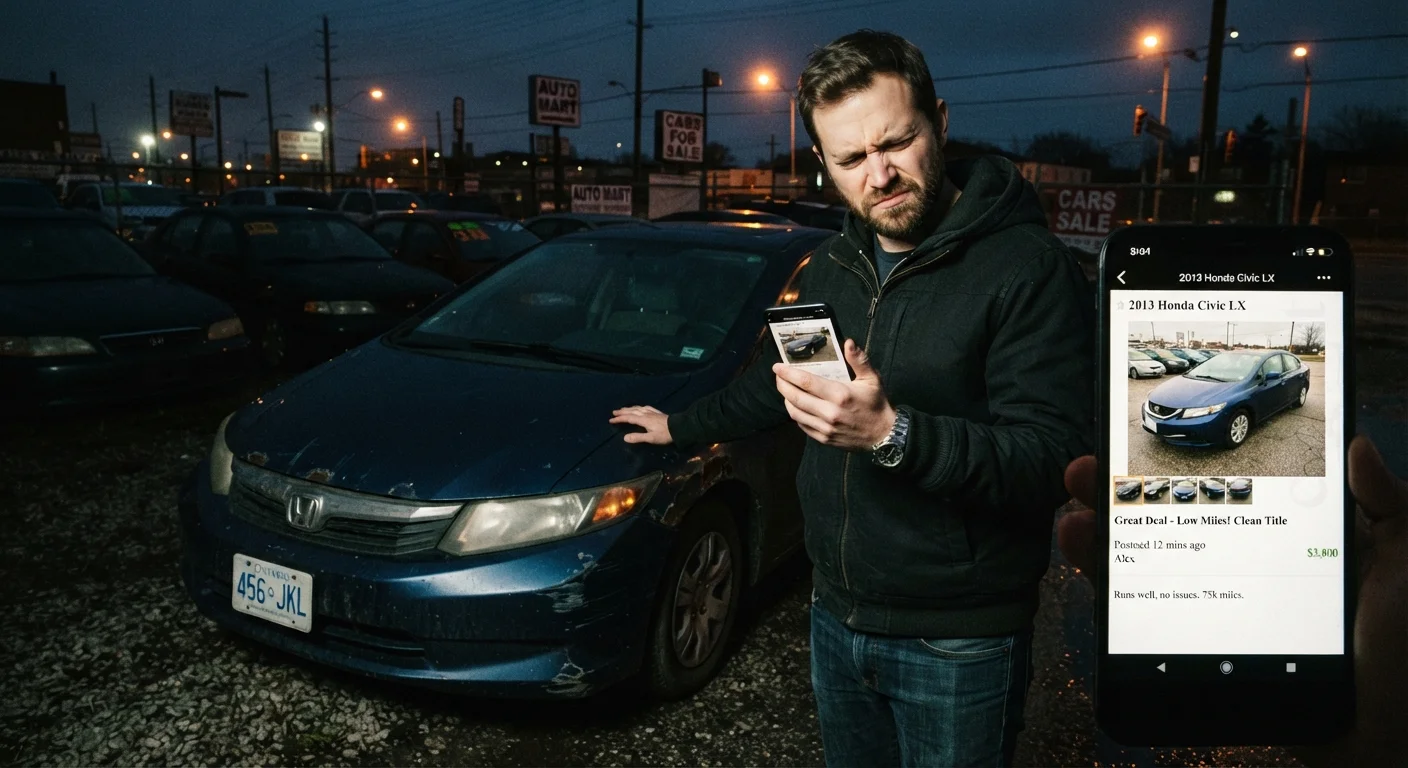
Why Suspicious Deals Are Easy to Miss
Used car shoppers are often operating under real financial pressure. When a listing appears at a price well below comparable vehicles, it's easy to rationalize away the doubts. Sellers who exploit this dynamic know exactly how to frame a deal to lower a buyer's guard.
The warning signs aren't always obvious. Some are buried in how a seller communicates. Others show up only when you slow down and compare the listing against what you'd normally expect. Understanding the patterns that experienced buyers learn to recognize can save you from a costly mistake.
Dismissing a price that's dramatically below market value as simply a great find.
Why it happens: Buyers want to believe they've found a bargain, and confirmation bias makes it easy to rationalize away doubts when the price is appealing.
Skipping a pre-purchase inspection to move quickly on a deal that feels urgent.
Why it happens: Sellers sometimes create artificial urgency - claiming multiple interested buyers or a limited window - to prevent buyers from slowing down.
Accepting a seller's verbal maintenance history without documentation.
Why it happens: Sellers often describe a vehicle's history selectively, and buyers tend to accept reassurances at face value when they trust the person in front of them.
Ignoring mismatched paint, panel gaps, or signs of bodywork that weren't disclosed.
Why it happens: Buyers focused on mechanical condition often overlook visible cosmetic clues that suggest undisclosed collision history.
Proceeding with an online-only purchase without verifying the seller's identity or legitimacy.
Why it happens: Online listings make it easy to fabricate credible-looking ads, and remote buyers have fewer natural checkpoints to catch inconsistencies.
What to Check Before You Ever See the Car
Before arranging a viewing, do your homework on the listing itself. Cross-reference the asking price against established pricing guides - if the gap is wide, that alone warrants serious scrutiny.
Run a vehicle history report using the VIN (Vehicle Identification Number). What a vehicle history report actually tells you title problems, odometer rollbacks, salvage designations, and prior accidents that a seller may not volunteer. A clean report doesn't guarantee a trouble-free car, but a problematic one is a clear reason to walk away.
Never Send Money Before Seeing the Vehicle
Scam listings frequently request deposits or full payment before a buyer can view the car in person, often with an implausible explanation for why the vehicle can't be inspected locally. No legitimate private seller or dealer requires upfront payment as a condition of viewing. If a seller requests a wire transfer, gift cards, or cryptocurrency to hold a vehicle, stop the transaction immediately.
Also pay attention to listing quality. Vague descriptions, refusal to provide the VIN upfront, stock photos instead of actual vehicle images, and contact details that don't match local area codes are patterns worth noting before you invest time in a visit. If you're considering an online purchase, understand how online car buying differs from a traditional lot purchase.
At the Inspection: What You're Really Looking For
A lot of used car problems are visible - if you know where to look. Walk around the vehicle slowly and check for mismatched paint panels, uneven panel gaps, or overspray on trim pieces. These can indicate prior collision repair that wasn't disclosed. Check the interior for water staining or a musty smell, which may point to flood damage.
Check that all dashboard warning lights illuminate at startup and extinguish properly. Lights that have been masked or a seller who dismisses them as minor are both red flags. {{link:/cars-driving/car-maintenance/what-your-dashboard-warning-lights-are-actually-telling-you|Dashboard warning lights communicate real mechanical conditions|Dashboard warning lights} and should never be ignored during a used car evaluation.
~1 in 5
Used cars with undisclosed damage history
Industry analyses of vehicle history data have consistently found that a meaningful share of used vehicles on the market carry accident or damage records not mentioned in listings.
$150-$200
Typical cost of a pre-purchase inspection
A professional pre-purchase inspection from an independent mechanic generally costs between $150 and $200 - a small fraction of what an undisclosed repair could cost after purchase.
No matter how good the car looks, arrange an independent pre-purchase inspection by a qualified mechanic before any money changes hands. This is one of the most reliable ways to surface hidden mechanical issues. A seller who refuses this step or applies pressure to skip it is demonstrating something important about their confidence in the vehicle.
Once you've done your due diligence, understand how the price negotiation process typically works before sitting down to finalize numbers. And before committing, review the questions worth asking any seller - sellers won't always volunteer everything.
This article is for general informational purposes only. It does not constitute legal, financial, or professional automotive advice. Always consult qualified professionals before making purchasing decisions.