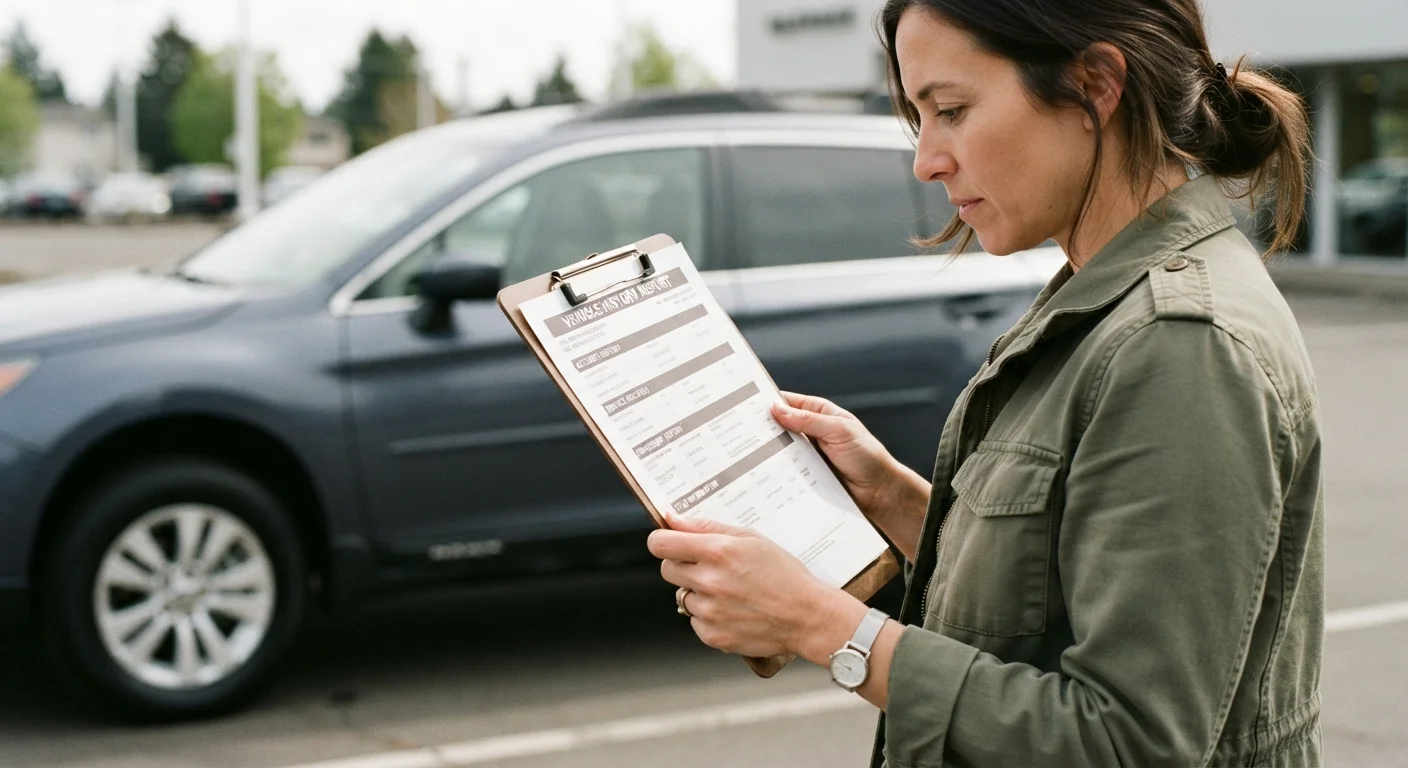
What the Report Actually Contains
A vehicle history report is organized around the car's VIN, a 17-character code that acts like a fingerprint. When you run a report, you're pulling together records from a wide range of contributors: state DMVs, insurance carriers, auto auctions, salvage yards, inspection stations, and in some cases, dealership service departments.
The core sections you'll typically find include:
- Title history: Who has owned the vehicle, in which states, and for how long. Multiple ownership transfers in a short period can be a signal worth investigating.
- Title brands: Designations like salvage, rebuilt, lemon law buyback, or flood are attached to the title when specific events occur. These are among the most important flags to look for.
- Accident and damage records: Events reported to insurance companies, along with noted severity and affected areas of the vehicle.
- Odometer readings: A timeline of mileage readings logged at inspections, title transfers, or service visits. Inconsistencies can indicate tampering.
- Service and maintenance records: Where available, scheduled maintenance visits and repairs logged by participating service centers.
1 in 5
Used vehicles with a potentially problematic history
Industry data from vehicle history report providers has historically suggested roughly one in five used vehicles carries a title brand, reported accident, or other significant event in its history.
17
Characters in every vehicle's unique VIN
Every vehicle sold in the U.S. since 1981 is assigned a standardized 17-character Vehicle Identification Number, which is the key used to retrieve history records.
Red Flags Worth Taking Seriously
Not everything in a report carries equal weight. A minor fender-bender that was repaired properly is very different from a vehicle that was declared a total loss and rebuilt. Here are the entries that deserve the most attention:
Salvage or Rebuilt Titles
If a vehicle carries a salvage or rebuilt title, it has been totaled at some point. Some rebuilt vehicles are repaired competently, but the title designation stays with the car permanently and affects insurability, resale value, and potentially structural integrity. Approach these with significant caution.
Odometer Rollbacks
A chronological mileage history that suddenly drops is a serious red flag. Federal odometer fraud law exists precisely because rolled-back mileage is a known form of consumer deception.
Frequent Ownership Changes
A car that has passed through several owners in a short period may have had recurring problems that frustrated each buyer. It's not automatically disqualifying, but it warrants direct questions. See our questions worth asking before committing to any used car for specifics on how to surface this.
Structural or Airbag Damage
Reports that indicate frame damage or deployed airbags signal a significant collision. Even after repair, structural damage can affect how a vehicle performs in future crashes.
Verify the VIN Before You Pay for a Report
Before purchasing a vehicle history report, confirm the VIN on the report matches the VIN physically on the car - found on the dashboard near the windshield or on the driver's door jamb sticker. A mismatched VIN can mean you're reading the history of an entirely different vehicle.
What the Report Won't Tell You
Understanding a report's limitations is just as important as reading what's in it. Cash repairs, private-party accidents, and maintenance done outside reporting networks leave no trace in any history database. A car could have been in a serious incident and repaired without any insurance involvement - and the report would show nothing.
This is why a vehicle history report should be treated as a starting point, not a final verdict. A pre-purchase inspection by a qualified mechanic can surface physical evidence of damage, poor repairs, or mechanical issues that no database would know about.
Similarly, be aware that reports can contain errors - data submitted incorrectly or linked to the wrong VIN. If something looks off, cross-reference it against what the seller tells you and what a physical inspection reveals. Unexplained gaps or inconsistencies in a report are worth flagging. Some patterns in used car listings that should give you pause are covered in our article on signals that a used car deal may be too good to be true.
Reports May Contain Errors
Vehicle history databases aggregate data from dozens of sources, and data-entry mistakes do occur. If a report shows an event that doesn't match what the seller describes or what a mechanic observes on the car, it's worth investigating the discrepancy directly rather than accepting either version at face value.
How to Use the Report as Part of Your Decision
A vehicle history report is most useful when it's one layer of a broader due diligence process. Here's a practical framework for putting it to work:
- Run the report before you visit. If the seller won't share the VIN in advance, that itself is a signal.
- Review the title history first. Any branded title - salvage, rebuilt, flood - should prompt immediate and thorough follow-up questions or reconsideration.
- Check the odometer timeline. Make sure readings progress logically and match the car's apparent wear and condition.
- Look at accident records in context. Minor reported incidents don't always mean a bad car, but undisclosed major damage is a different matter.
- Pair the report with a physical inspection. A qualified mechanic can assess whether damage noted in the report was properly repaired - and catch problems the report never knew about.
The report gives you documented history. The mechanic gives you physical evidence. Together, they give you a far more complete picture than either would alone.