How the Two Buying Channels Actually Differ
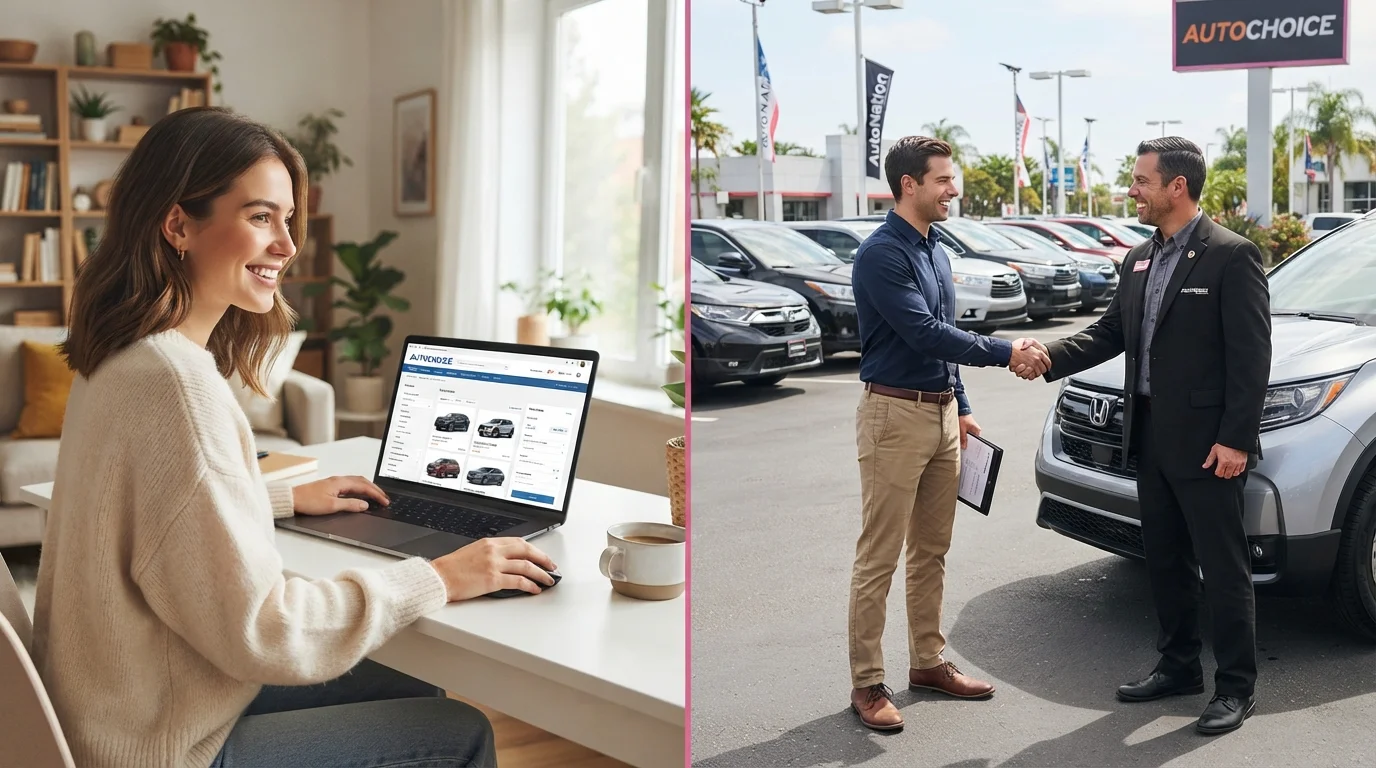
Buying a car online typically means completing most or all of the purchase - selecting the vehicle, reviewing pricing, arranging financing, and signing documents - through a website or app, with the vehicle delivered to your home or a pickup location. In contrast, buying at a physical dealership means visiting in person, inspecting the vehicle, and working through the sales and finance process face-to-face.
The gap between these experiences has narrowed. Many traditional dealers now offer online-first tools, and some online-only retailers have added in-person inspection options. Still, the core differences in what you can verify, negotiate, and control remain meaningful. Understanding those differences - not just the marketing around them - is what helps you make a confident choice.
For a full walkthrough of the steps involved regardless of channel, see The Car-Buying Process, Start to Finish.
Pricing, Negotiation, and Transparency
One of the most frequently cited advantages of online car buying is pricing transparency. Many platforms list a fixed, no-haggle price, which removes uncertainty and eliminates the back-and-forth that many buyers find stressful. What you see is generally what you pay, though you should still scrutinize documentation fees and any add-ons presented at checkout.
Physical dealerships typically operate with more pricing flexibility - which cuts both ways. Prices are often negotiable, and a prepared buyer can sometimes secure a better deal than a fixed online price would offer. However, that same flexibility means an unprepared buyer may pay more. What negotiating a car price actually looks like in practice is a structured process, and understanding it beforehand matters.
| Online Purchase | Physical Dealership | |
|---|---|---|
| Pricing model | Typically fixed, no-haggle | Negotiable, variable |
| Test drive access | Rarely available before purchase | Standard before any commitment |
| Vehicle inspection | Photos and reports only | In-person, hands-on |
| Financing transparency | Often shown upfront online | Presented in finance office |
| Trade-in appraisal | Remote estimate, may adjust later | In-person evaluation on the spot |
| Convenience | High - complete from home | Requires in-person visits |
| Add-on pressure | Lower, often itemized digitally | Common in finance office |
At physical dealerships, the finance office is also where upsells - extended warranties, paint protection, gap insurance - are commonly introduced. Extended warranties and add-ons at the dealership finance desk deserve careful evaluation before you agree to anything.
Inspection, Test Drives, and Vehicle Condition
This is where physical dealerships hold their clearest advantage, particularly for used vehicles. Seeing a car in person - checking panel gaps, feeling the seat comfort, hearing the engine - provides information that photos and written descriptions simply cannot replicate. A test drive also lets you evaluate ride quality, brake feel, and any unusual noises before you commit.
Online purchases typically rely on listing photos, vehicle history reports, and condition disclosures provided by the seller. Some platforms offer third-party inspection reports or allow buyers to arrange an independent mechanic inspection before delivery - a step worth taking when it's available. If you're buying used without seeing the car first, signals that a used car deal may be too good to be true are worth reviewing carefully.
Request an Independent Inspection for Online Used Car Purchases
When buying a used vehicle without seeing it first, ask whether the seller allows a pre-purchase inspection by a licensed mechanic of your choosing. Some online platforms and private sellers accommodate this. If the seller refuses without explanation, treat that as a meaningful red flag. A third-party inspection - typically costing $100-$200 - can surface issues that aren't visible in listing photos and give you meaningful leverage or a reason to walk away.
Financing and Trade-Ins
Financing works in both channels, but the experience differs. Online platforms often show financing options upfront, sometimes with pre-qualification tools that let you see estimated rates without a hard credit inquiry. This transparency can help you compare loan terms before committing. Still, financing through a dealer vs. your own bank or credit union is worth exploring regardless of where you buy - securing your own pre-approval gives you a benchmark to compare against any offer.
Trade-ins present a different challenge online. Remote appraisals are based on the information you provide - mileage, condition, photos - and the final offer may adjust once the vehicle is inspected at pickup or delivery. In-person trade-ins allow a dealer to evaluate the car directly, which can work in your favor if the vehicle is in strong condition. Either way, getting multiple appraisal quotes before committing helps ensure you're not leaving money on the table.
Convenience, Timing, and Who Each Option Suits
Online buying generally takes less calendar time once you've identified the vehicle you want. You can complete paperwork digitally, schedule delivery, and avoid multiple trips to a lot. This makes it appealing for buyers who have already done their research - including thinking through new car vs. used car trade-offs - and are confident in their choice without needing to see it in person.
In-person dealerships suit buyers who want tactile confirmation before committing, who intend to negotiate, or who are considering a used vehicle where condition is harder to verify remotely. They also offer more flexibility if your financing situation is complex or if you expect the trade-in evaluation to require some back-and-forth.
A practical middle path: use online tools for research, pricing benchmarks, and pre-approval, then visit a dealership to test drive and finalize the deal. This hybrid approach lets you enter the showroom informed rather than reactive.