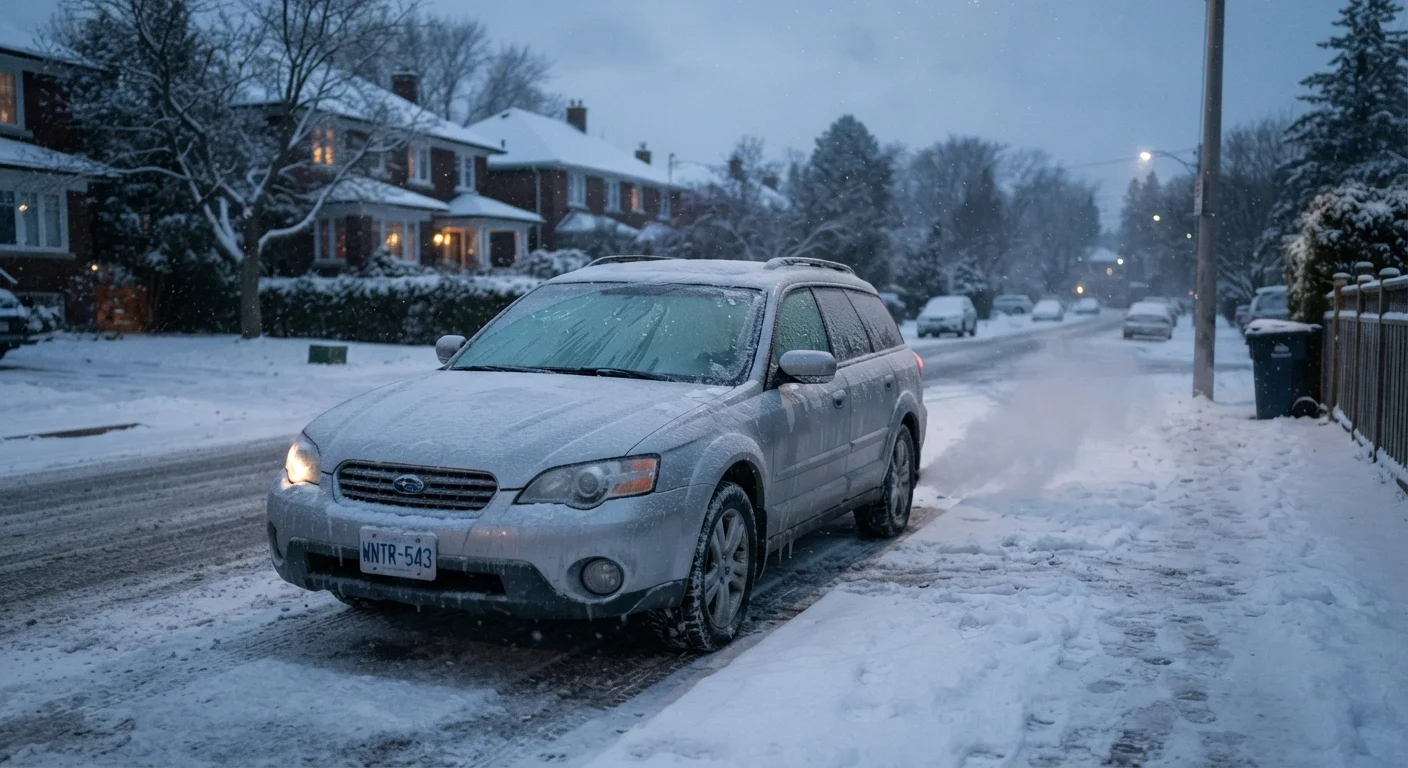
Why Winter Is Hard on Vehicles
Cold temperatures don't discriminate - they affect nearly every system under your hood and beneath your car. What makes winter particularly unforgiving is that multiple vulnerabilities can compound at once: a weakened battery, underinflated tires, and thickened oil all hitting the same morning commute. Understanding which systems are most at risk lets you take targeted steps before problems turn into roadside emergencies.
This guide walks through the vehicle systems most commonly stressed by cold weather, explains what's happening at a mechanical level, and outlines what drivers can do to stay ahead of it. For a broader seasonal approach, see our seasonal car maintenance checklist covering everything from fall prep to spring recovery.
The Battery
Your car battery is arguably the most cold-sensitive component you own. At 32°F, a battery loses roughly 20% of its capacity compared to performance at 80°F. By 0°F, that loss can reach 50% - while simultaneously, your engine requires more power to crank over cold, thickened oil.
Batteries older than three to five years are at highest risk. A battery that performed adequately through summer may simply not have enough reserve capacity to start the car on a January morning. Have your battery load-tested before cold weather arrives; this is different from a simple voltage check and gives a more accurate picture of remaining capacity. For a deeper look at how your electrical system actually works, see our piece on car battery myths that leave drivers stranded.
A battery can lose up to 50% of its capacity at 0°F - just when your engine needs the most power.
Tire Pressure
Tires lose approximately 1 PSI (pound per square inch) of pressure for every 10°F drop in outside temperature. That's a straightforward physics reality: cold air is denser and takes up less volume. A tire inflated to the correct pressure on a 70°F day may be 4-5 PSI underinflated when temperatures fall to 20°F.
Underinflated tires reduce traction, increase rolling resistance, and wear unevenly - all of which are more dangerous on winter roads. Check tire pressure with a gauge when tires are cold (before the car has been driven), and inflate to the vehicle manufacturer's recommended PSI found on the sticker inside the driver's door jamb, not the maximum PSI printed on the tire sidewall.
Tires lose about 1 PSI per 10°F temperature drop - a shift that happens invisibly overnight.
Engine Oil
Motor oil is designed to flow quickly and coat engine components the moment you start your car. In cold weather, oil thickens, and that initial flow is slower - meaning critical engine parts run with less lubrication during the first moments of operation. This is when a disproportionate amount of engine wear occurs.
Using the oil viscosity grade specified in your owner's manual is important year-round, but becomes especially critical in winter. Some manufacturers recommend a lower winter viscosity grade (such as 0W-30 versus 5W-30) in very cold climates. If you're unsure what's in your engine or whether it's appropriate for your region, ask a mechanic during an oil change. You can learn more about how engine oil compares to other critical fluids in our Car Fluids 101 guide.
Most engine wear happens in the first seconds after a cold start, when oil is still too thick to circulate freely.
Coolant and the Cooling System
Counterintuitively, your car's cooling system matters just as much in winter as in summer. Engine coolant (also called antifreeze) prevents the water in your cooling system from freezing and expanding - which can crack the engine block or damage hoses and the radiator.
Coolant should be maintained at the correct water-to-antifreeze ratio, typically 50/50, though this varies by climate. An inexpensive coolant tester or test strip can verify your system is protected to the appropriate temperature for your region. Hoses and belts that circulate coolant also become stiffer and more brittle in cold weather, making a pre-winter inspection worthwhile.
A frozen cooling system can crack an engine block - a repair that costs far more than a seasonal coolant check.
Windshield Wipers and Washer Fluid
Standard wiper blades can freeze to the windshield, become stiff and ineffective, or even tear when forced across an icy surface. Winter-specific wiper blades use a rubber boot to prevent ice and snow from accumulating in the blade assembly, maintaining consistent contact with the glass.
Equally important is your washer fluid. Standard summer washer fluid will freeze in the reservoir, lines, and nozzles. Use a washer fluid rated for the lowest temperatures you're likely to encounter - formulas designed for winter use contain antifreeze agents and typically remain effective well below 0°F. Never substitute plain water, which will freeze and can crack the reservoir.
Standard washer fluid freezes solid in cold temperatures - winter-rated fluid is a simple swap that prevents a frustrating failure.
Brakes and Brake Fluid
Brake fluid is hygroscopic, meaning it absorbs moisture from the air over time. Water contamination in brake fluid lowers its boiling point - less of a winter concern - but also causes corrosion in brake lines and calipers. In very cold temperatures, moisture-laden fluid can also contribute to spongy or inconsistent pedal feel.
Beyond the fluid, brake components themselves can be affected by road salt, which accelerates corrosion on rotors and calipers. If your vehicle is regularly exposed to salted roads, occasional undercarriage washing helps reduce long-term damage. If brake pedal feel changes during or after winter months, have the system inspected by a qualified mechanic rather than assuming it's a normal seasonal effect.
Road salt corrodes brake components faster than almost anything else your car encounters.
Staying Ahead of Winter Damage
Most cold-weather failures are predictable - which means they're largely preventable. Having a mechanic inspect your battery, tires, belts, and fluids before the season sets in is the single most effective step an everyday driver can take. For a complete picture of how your car's major systems interact year-round, the complete guide to caring for your car year-round is a useful reference to keep on hand.
Winter also changes how you should drive, not just how you maintain your car. Adjusting your habits for snow and reduced visibility is equally important - our guide on driving in rain, fog, and snow covers the behavioral side of winter preparedness.
Schedule a Pre-Winter Inspection
The best time to catch cold-weather vulnerabilities is before the temperature drops - not after your car won't start. Ask a mechanic to check battery load capacity, tire condition and pressure, all fluid levels and types, belts and hoses, and wiper blades as a package inspection before winter arrives. Many shops offer this as a standard seasonal check and it typically takes less than an hour.
This article is for general informational purposes. For diagnosis or repair of specific vehicle issues, consult a qualified mechanic.