Why Year-Round Car Care Matters
Most vehicle breakdowns aren't random - they're predictable outcomes of deferred maintenance. Heat degrades rubber hoses and coolant. Cold thickens oil and kills aging batteries. Stop-and-go city driving accelerates brake wear. Each season presents its own set of mechanical stressors, and a car that receives attention only when something goes wrong will cost significantly more to own over time.
This guide covers every major system a driver needs to understand: engine, fluids, tires, brakes, and electrical components. Whether you handle some tasks yourself or rely entirely on a shop, knowing what to look for - and when - puts you in control. For a season-by-season task list you can reference alongside this guide, see our seasonal car maintenance checklist.
~$1,200
Average cost of a preventable breakdown
AAA estimates drivers who skip routine maintenance spend significantly more on emergency repairs compared to those who follow service schedules.
25%
Fuel efficiency loss from underinflated tires
The U.S. Department of Energy notes that tires underinflated by just 1 PSI reduce fuel economy by about 0.2%, with losses compounding across all four tires.
3-5 years
Typical car battery lifespan
Battery Council International data suggests most automotive batteries reach end-of-life within this range, with heat and cold accelerating degradation.
Engine and Fluids: Your Car's Lifeblood
The engine relies on a network of fluids - each serving a distinct protective role. Neglecting any one of them can accelerate wear or cause component failure.
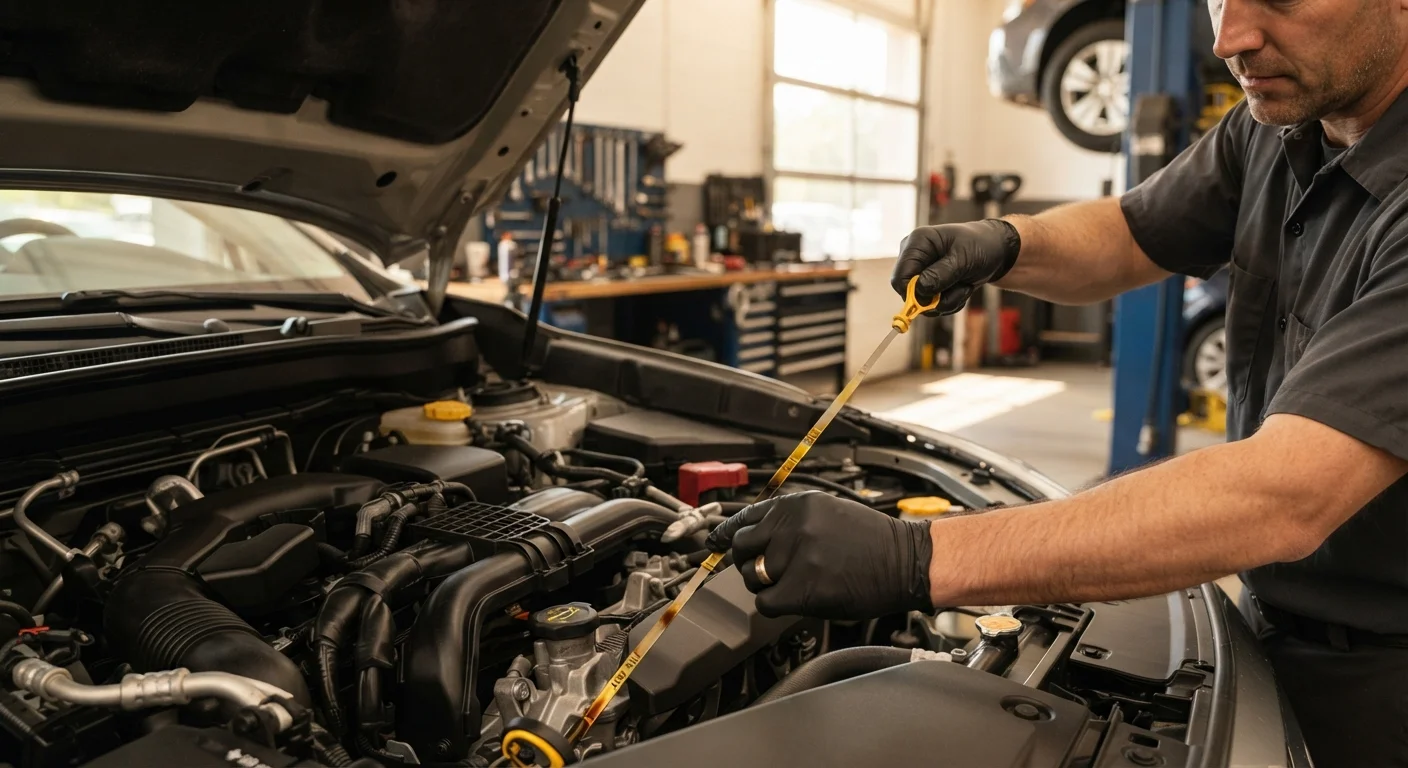
- Engine oil: Lubricates moving parts and carries heat away from the engine. Check the level monthly with the dipstick; follow your owner's manual for change intervals (commonly every 5,000-10,000 miles depending on oil type and driving conditions).
- Coolant (antifreeze): Regulates engine temperature in both heat and freezing conditions. Check the reservoir level when the engine is cold; have the system flushed per your manufacturer's schedule.
- Transmission fluid: Keeps the transmission shifting smoothly. Many modern vehicles use sealed systems, but if your car has a dipstick, inspect it annually.
- Brake fluid: Hydraulic fluid that transfers pedal force to the brakes. It absorbs moisture over time, lowering its boiling point - most manufacturers recommend replacement every two years.
- Power steering and windshield washer fluid: Lower-stakes but easy to check; top off as needed.
Use your oil's color and consistency as a secondary indicator between changes - fresh oil is amber and translucent; very dark, gritty oil on the dipstick suggests it's past its service window.
Oil degrades as it absorbs combustion byproducts and loses its viscosity. Visual checks take seconds and can prompt timely changes before engine wear accelerates.
Store a quality tire pressure gauge in your glove compartment and check all four tires on the same day each month - consistency makes it easy to spot a slow leak.
Slow leaks from minor punctures or valve stem degradation can drop pressure gradually enough to go unnoticed until handling or efficiency is already compromised.
Air filters - both engine and cabin - are often overlooked. A clogged engine air filter reduces fuel efficiency and performance; a dirty cabin filter degrades interior air quality. Both are typically inexpensive and straightforward to inspect.
Tires: Safety Starts at the Contact Patch
Your tires are the only part of your car that touches the road. Their condition affects braking distance, handling, and fuel economy more directly than almost any other component.
Tire Pressure
Check pressure monthly and before long trips - always when the tires are cold (driven fewer than a mile). The correct pressure is listed on the sticker inside the driver's door jamb, not on the tire sidewall. Underinflated tires generate excess heat, wear unevenly, and reduce fuel efficiency.
Tread Depth
The legal minimum tread depth in most U.S. states is 2/32 of an inch, but many safety experts recommend replacing tires at 4/32 for better wet-weather performance. The penny test (Lincoln's head disappears = adequate tread) is a quick field check, though a tread depth gauge is more precise.
Rotation and Alignment
Rotate tires every 5,000-8,000 miles to equalize wear. If your car pulls to one side or the steering wheel is off-center, an alignment check is warranted - misalignment accelerates uneven tread wear and stresses suspension components.
Inspect Tires Before Every Long Trip
Before any drive exceeding 100 miles, check tire pressure and do a quick visual scan for sidewall bulges, cuts, or embedded objects. Highway speeds amplify the consequences of a tire failure. A two-minute pre-trip inspection is a low-effort, high-value safety habit.
Brakes: Knowing When to Act
Brakes are a safety-critical system where delayed attention carries real risk. Most modern vehicles use disc brakes on all four wheels, consisting of brake pads that clamp against rotors to generate stopping friction.
Warning Signs to Recognize
- Squealing or squeaking: Most brake pads include a small metal wear indicator that produces this sound when pads are getting thin.
- Grinding: Metal-on-metal contact - pads are likely worn through. Have the vehicle inspected immediately.
- Soft or spongy pedal: May indicate air in the brake lines or a fluid leak. Do not delay inspection.
- Pulling to one side when braking: Could signal a stuck caliper or uneven pad wear.
- Brake warning light: Never ignore a lit brake system warning light.
Never Ignore a Grinding Brake Sound
Grinding when braking typically means brake pads have worn completely through and metal components are contacting the rotor. Continued driving in this condition can damage rotors beyond resurfacing - turning a pad-replacement job into a significantly more expensive repair - and more critically, can reduce your stopping ability. Have the vehicle inspected by a qualified technician as soon as possible.
Brake pad lifespan varies widely - from 25,000 to 70,000 miles - depending on driving style, vehicle weight, and pad material. City drivers who brake frequently will see faster wear than highway commuters. Annual brake inspections are a reasonable baseline for most drivers.
Electrical, Lights, and Battery
Modern vehicles depend heavily on electrical systems - from starting the engine to powering safety features. The battery is the foundation of this system.
Battery Health
Car batteries typically last three to five years. Cold weather reduces their cranking power significantly; heat accelerates internal degradation. Many auto parts stores will test your battery for free. If your car is slow to start or you notice dim headlights, have the battery and charging system (alternator) tested before it fails completely.
Lights and Fuses
Walk around your vehicle periodically to verify all exterior lights work - headlights, brake lights, turn signals, and reverse lights. A burned-out brake light is both a safety hazard and a traffic stop waiting to happen. Replacing a bulb is often a simple DIY task, though some modern vehicles require panel removal - consult your owner's manual.
Safe electrical systems also support safe driving habits. For a broader look at how your vehicle's condition connects to road safety, explore our safe driving resources.
Your Owner's Manual Is the Authority
Manufacturer-specified service intervals account for your engine type, transmission design, and intended operating conditions. Generic advice - including the content in this guide - is a useful baseline, but your vehicle's owner's manual always takes precedence. If you've lost your copy, most manufacturers provide digital versions through their websites.
When to DIY and When to See a Mechanic
Not every maintenance task carries the same risk or complexity. Understanding where the line falls helps you save money on straightforward jobs while avoiding costly mistakes on technical ones.
Generally Safe for Home Mechanics
- Checking and topping off fluids
- Replacing wiper blades
- Swapping cabin and engine air filters
- Replacing exterior bulbs (on most vehicles)
- Checking tire pressure and tread depth
Best Left to a Qualified Technician
- Brake pad and rotor replacement (especially if rotors need machining)
- Suspension or alignment work
- Transmission service
- Coolant system flushes involving pressurized lines
- Any electrical diagnostics beyond fuse replacement
For a clear-eyed breakdown of where the line falls, our article on DIY car maintenance vs. taking it to a shop covers the tradeoffs in detail. Just as homeowners benefit from knowing which repairs to tackle themselves, car owners gain from the same informed judgment - the same principle applies whether you're maintaining a vehicle or following a seasonal home maintenance schedule.
Don't Delay Brake System Symptoms
Grinding noises, a soft pedal, or a lit brake warning light are not issues to monitor over time - they require prompt professional inspection. Brakes are a primary safety system, and driving on a compromised brake system puts you, your passengers, and others on the road at genuine risk. Schedule an inspection within 24-48 hours of noticing these symptoms.
The most effective maintenance strategy combines owner vigilance - regular visual checks, listening for changes, monitoring warning lights - with scheduled professional service at the intervals your manufacturer recommends. Your owner's manual is the single most authoritative source for your specific vehicle.