Why Skipped Maintenance Costs More Than the Service Itself
Routine maintenance has a straightforward value proposition: small, predictable costs now prevent large, unpredictable ones later. Yet deferred service is among the most common financial mistakes vehicle owners make-not out of negligence, but because the consequences are delayed and invisible until they aren't.
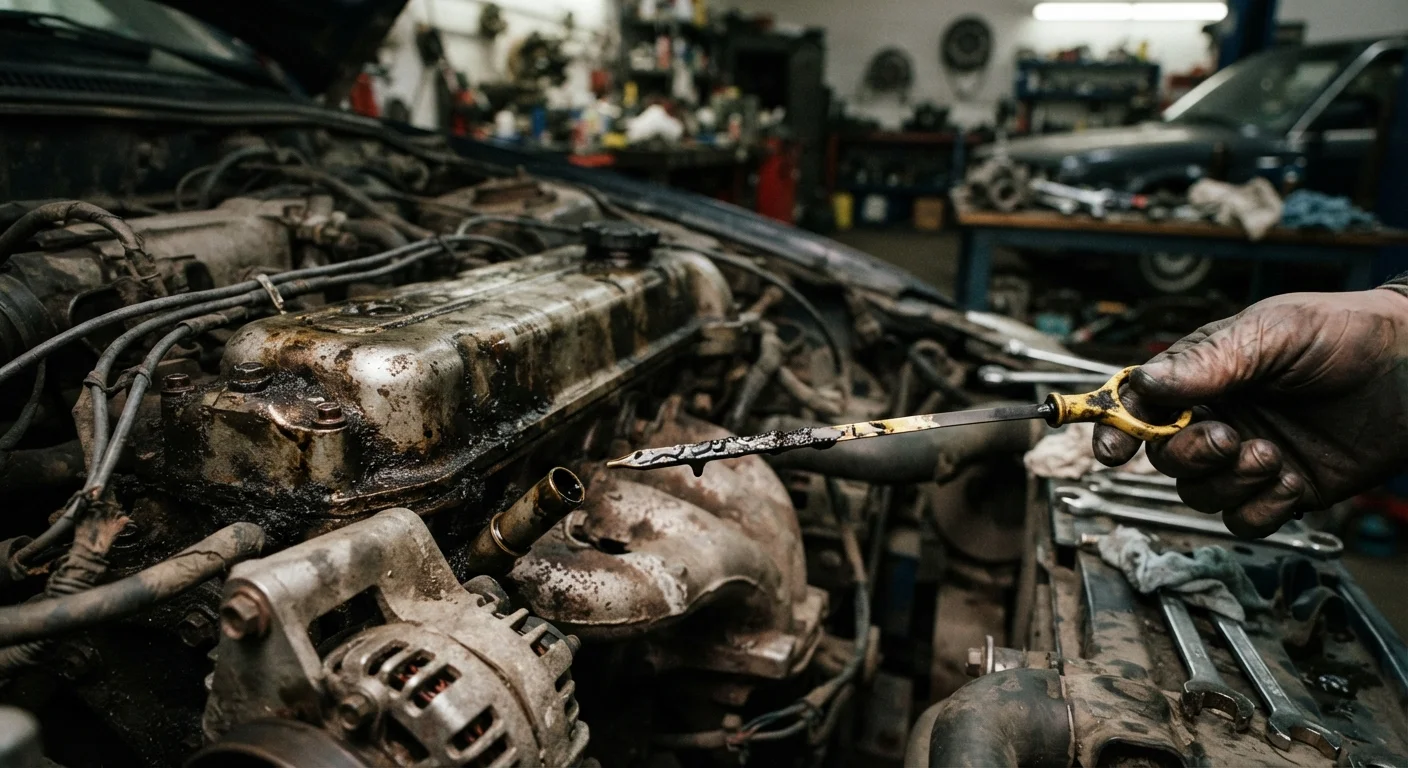
When oil degrades past its service life, it loses viscosity and its ability to form a protective film between moving metal surfaces. Friction increases, heat builds, and microscopic wear accelerates inside the engine. None of this produces an immediate warning. By the time a driver notices reduced performance or hears a knock, the internal damage is already compounding. The same slow-burn pattern applies to coolant breakdown, transmission fluid oxidation, and brake fluid moisture absorption.
The financial reality is that a missed $80 oil change can set the stage for a $2,000 to $5,000 engine repair-an outcome that no driver budgets for. Understanding why these services matter mechanically is the first step toward treating them as necessities rather than optional expenses. For a structured view of what to address season by season, see our seasonal car maintenance checklist.
~$4,000
Average engine repair cost from oil neglect
Industry repair data consistently shows that engine damage caused by oil starvation or degraded lubrication routinely results in repair bills ranging from several hundred to several thousand dollars.
35%
Of roadside breakdowns linked to maintenance lapses
AAA roadside assistance data has indicated that a significant portion of vehicle breakdowns involve issues-such as battery failure, tire problems, or cooling system faults-that are addressable through routine maintenance.
The Most Costly Maintenance Mistakes Drivers Make
The mistakes below share a common thread: they feel harmless in the short term and reveal their true cost only when a repair bill arrives. Each one is avoidable with modest attention to your vehicle's service schedule.
Stretching oil change intervals well beyond the manufacturer's recommended mileage or time limit.
Why it happens: Drivers often assume modern synthetic oils offer unlimited protection, or they delay because the cost feels inconvenient at the moment.
Ignoring coolant, transmission fluid, and brake fluid replacement schedules.
Why it happens: These fluids are invisible during daily driving, so their condition goes unnoticed until a symptom appears-often at the worst time.
Putting off tire rotation because the vehicle seems to drive fine.
Why it happens: Uneven tire wear develops gradually, and most drivers don't notice the handling shift until tread is severely degraded on one axle.
Skipping brake inspections until squealing or vibration forces the issue.
Why it happens: Brake wear is gradual, and drivers normalize small changes in pedal feel or stopping distance without connecting them to deteriorating components.
Failing to keep any record of completed maintenance services.
Why it happens: Drivers rely on memory or assume the shop keeps records on their behalf-neither is reliable across years or multiple service providers.
Deferred Maintenance Can Void Warranty Coverage
Many new-vehicle warranties require documented proof that scheduled maintenance was performed on time and according to manufacturer guidelines. Skipping oil changes, fluid services, or inspections-and lacking records to prove otherwise-can give an automaker grounds to deny a warranty claim on a related repair. Always keep receipts and service logs, and consult your owner's manual for required intervals.
If you're unsure which recommendations from a mechanic are truly urgent versus elective, our guide on evaluating service recommendations can help you ask the right questions.
Building Habits That Keep Maintenance on Track
Consistency is the core of effective vehicle upkeep. Most drivers who fall behind on maintenance don't make a deliberate choice to skip it-they simply lose track. A few simple systems change that.
Low Coolant and Oil Are Not Just Warning Lights
Dashboard warning indicators for oil pressure or coolant temperature signal that damage may already be occurring. Driving even short distances with critically low oil pressure can cause irreversible engine damage within minutes. If either light illuminates, pull over safely and address the issue before continuing-do not treat it as something to handle later.
First, treat your owner's manual as the authoritative source for service intervals, not folklore or generic online advice. Manufacturers specify intervals based on engineering data specific to that engine, transmission, and drivetrain. Second, consolidate services where possible-many shops can perform an oil change, tire rotation, and multi-point inspection in a single visit, reducing the number of appointments needed per year.
Third, decide honestly which tasks fit your skill level. Some maintenance items are accessible for home mechanics; others carry real safety risk if done incorrectly. Our breakdown of DIY versus shop maintenance offers a clear-eyed look at where the line typically falls. Whatever approach you take, document every service. A well-maintained log is among the simplest things you can do to protect your vehicle's value and your own peace of mind.