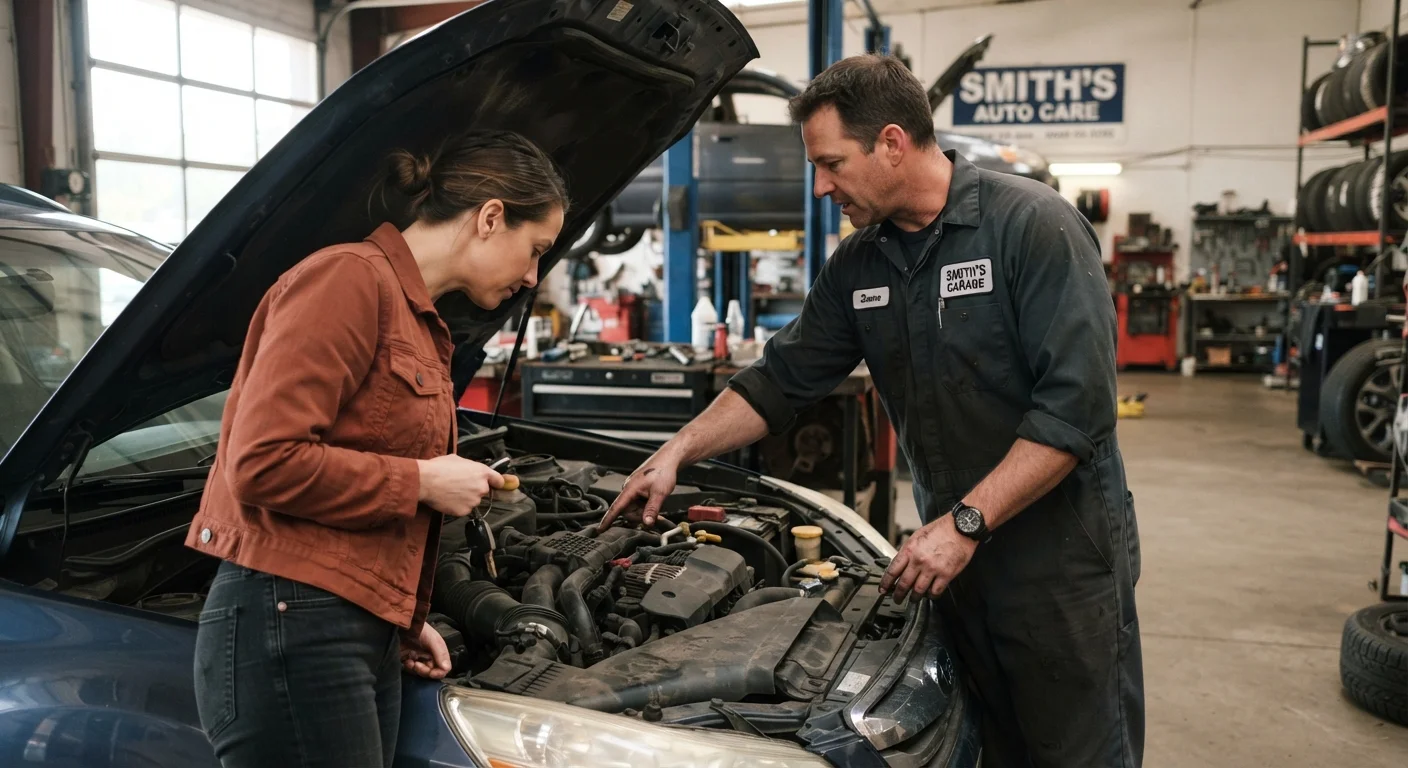
Why the Conversation at the Service Counter Matters
Most drivers hand over their keys, wait in a lobby, and then face a list of recommendations they weren't expecting. That moment - when the service advisor reads off additional items beyond the original appointment - is where confusion and unnecessary spending often take root.
The recommendations themselves aren't necessarily wrong. Many shops flag genuine issues during routine inspections. The problem is that drivers rarely have the information to evaluate what's truly pressing versus what can wait - and service environments aren't always designed to slow that conversation down.
Building a basic framework for evaluating recommendations puts you in a much stronger position, regardless of whether you use a dealership, a national chain, or an independent shop. See our comparison of DIY maintenance vs. shop visits for context on when professional service is clearly the right call.
~$1,200
Average annual vehicle maintenance and repair cost per driver
According to AAA's ongoing vehicle ownership cost research, Americans spend roughly this amount annually on maintenance and repairs, underscoring why informed decisions at the shop counter matter.
35%
Drivers who feel uncertain about mechanic recommendations
Consumer surveys on automotive service consistently find a significant share of drivers approve repairs without fully understanding what was recommended or why - often due to time pressure or unfamiliarity with technical language.
The Core Question: Safety, Function, or Preference?
Every service recommendation generally falls into one of three categories:
- Safety-critical: Items that directly affect your ability to control the vehicle or protect occupants. Brake components, tires, steering linkage, and lighting systems fall here. These warrant prompt attention.
- Functional maintenance: Items that, if ignored, will lead to mechanical damage or failure over time - coolant service, timing belt replacement at the manufacturer's interval, or oil changes. These follow a clear schedule and shouldn't be skipped without good reason. Our article on the hidden costs of skipping scheduled maintenance explains what's actually at stake inside your engine.
- Elective or comfort-related: Items like cabin air filter replacement, fuel system cleaning additives, or tire shine. These may be legitimate services but are rarely urgent and are often upsold during routine visits.
When you're handed a recommendation list, mentally sorting each item into these three buckets helps you prioritize without dismissing everything or approving everything.
Keep Your Owner's Manual Accessible
Your vehicle's owner's manual contains the manufacturer's recommended service intervals - and it's the most neutral reference point you have during a shop visit. Many automakers also publish this information on their websites. Having this information on hand makes it much easier to evaluate whether a recommendation aligns with your vehicle's actual needs.
How to Push Back - Professionally and Effectively
Asking questions at a shop isn't confrontational - it's expected. Any professional mechanic should be able to explain a recommendation clearly and without frustration. The questions worth asking include:
- "What exactly did you observe?" - Get a specific description, not just a category. "Your brake pads are at 2mm" is more useful than "your brakes need attention."
- "Can I see it?" - Request to see the worn part, a photo, or have the issue pointed out on the vehicle. Most shops accommodate this.
- "What happens if I wait?" - This separates genuinely urgent items from those that can be scheduled at a more convenient time.
- "Does my owner's manual call for this at my current mileage?" - Your manufacturer's recommended intervals are a neutral reference point. If a shop recommends a service well ahead of the published schedule, ask why your specific situation warrants early service.
For brake-related recommendations specifically, our brake health guide outlines the warning signs that genuinely indicate a problem versus normal wear.
When a Second Opinion Makes Sense
For major, unexpected, or expensive repairs, a second opinion is a legitimate and practical step - not a sign of distrust. If a shop recommends a significant repair and you're uncertain, you can take the written estimate to another qualified shop for their assessment.
A few practical notes: Always get a written estimate before authorizing any work. If you've already had work done and question the result, you have the right to ask for documentation of what was replaced or repaired. Reputable shops keep records and stand behind their work.
Understanding motor oil recommendations is another area where second opinions occasionally arise - shops sometimes recommend more frequent oil changes than manufacturers specify. Our guide to oil change intervals and oil types helps clarify what your driving habits actually require.
This article is for general informational purposes only and does not constitute professional automotive or financial advice. Always consult a qualified mechanic for diagnosis and repair of your specific vehicle.