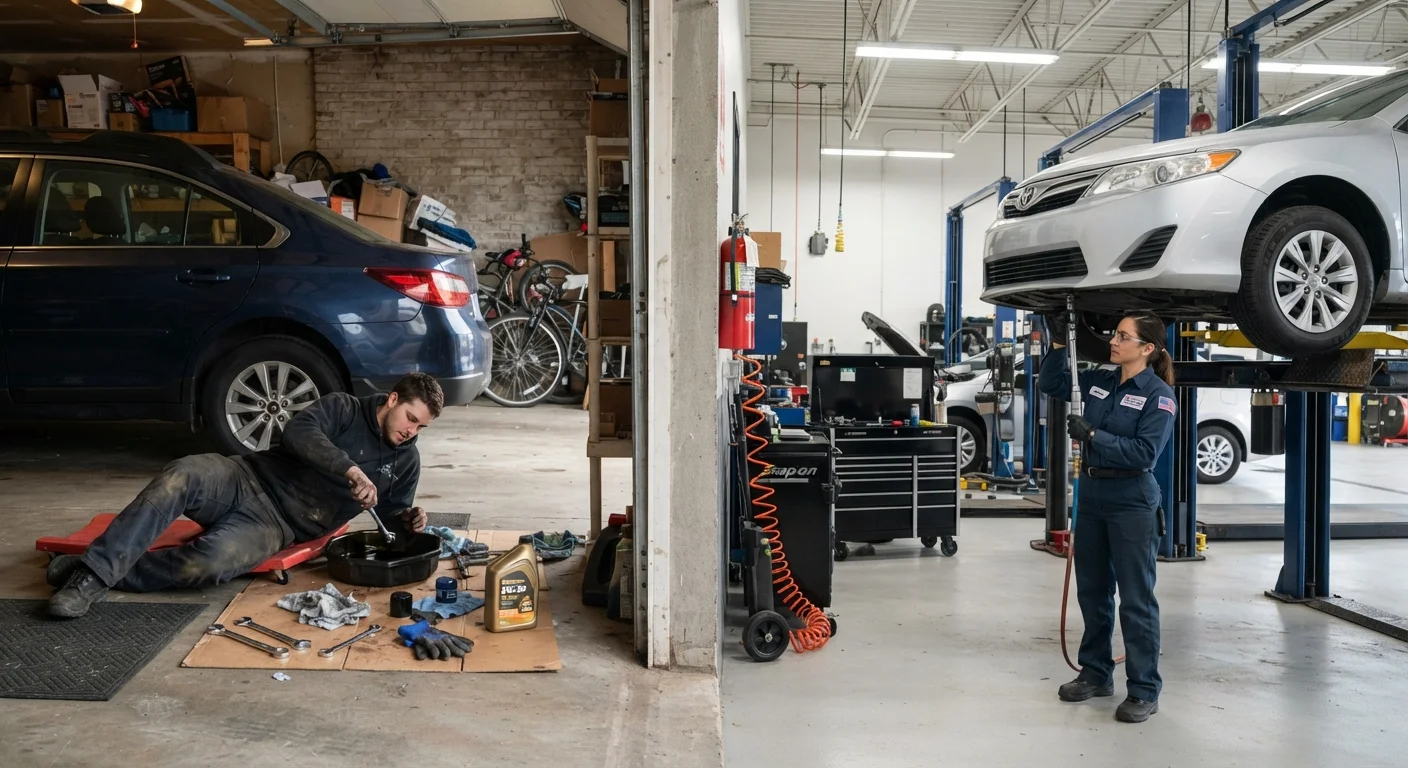
What's Realistically on the Table for DIY
A surprising number of routine maintenance tasks fall within reach of a careful, motivated driver - no lift required. The key is honest self-assessment: do you have the tools, a safe, level workspace, and reliable instructions from a vehicle-specific source like your owner's manual or a model-specific repair database?
Tasks that are generally considered low-risk and achievable at home include:
- Engine air filter replacement - Usually a matter of unclipping a housing and swapping the filter. Takes under 10 minutes.
- Windshield wiper blades - No tools required on most vehicles; clear instructions are printed on the packaging.
- Cabin air filter - Often behind the glove box. Accessible and inexpensive to replace yourself.
- Oil and oil filter changes - Requires basic tools, a drain pan, and attention to torque specs. Understanding your oil type matters here: follow your manufacturer's specification, not just whatever's on sale.
- Battery terminal cleaning or battery replacement - Straightforward on most vehicles, though modern cars with battery management systems may require a reset procedure.
- Tire pressure checks and rotation - Checking pressure is a five-minute habit. Rotation at home is possible with a floor jack and jack stands - but only if both are rated for your vehicle's weight.
Use Your Owner's Manual First
Before starting any DIY job, consult your vehicle's owner's manual for manufacturer specifications - oil viscosity, torque values, fluid types, and service intervals. Third-party guides can supplement this, but the manual is the authoritative source for your specific vehicle. When in doubt, verify with a model-specific resource or ask a trusted mechanic before proceeding.
For any job beyond these, look up your specific make, model, and year before starting. Labor estimates and parts costs from a repair manual or reputable automotive database help you evaluate a shop quote too. Knowing what's actually urgent versus what can wait is one of the most valuable skills a driver can develop.
Where DIY Carries Real Risk
Some repairs look deceptively simple but involve systems where an error can cause injury or complete component failure on the road. These are tasks that a qualified mechanic should handle:
- Brake pads, rotors, and calipers - Brake work involves hydraulic pressure, precise component fit, and torque specs that vary by axle. An improperly seated caliper or over-torqued bleeder screw can cause brake fade or failure.
- Suspension and steering components - Ball joints, tie rods, and control arms affect vehicle control directly. Incorrect installation can cause handling instability or loss of control.
- Airbag system work - Airbag components can deploy without warning, causing serious injury. This is firmly in professional territory.
- Timing belt or chain service - Critical engine work that, if done incorrectly, can destroy an engine. Labor-intensive and tolerance-sensitive.
- Transmission service beyond fluid changes - Internal transmission work requires specialized tools and expertise.
- Advanced electronics and ADAS calibration - Modern driver-assistance systems (lane keeping, automatic emergency braking) often require manufacturer-level scan tools to recalibrate after even minor repairs.
Never Cut Corners on Safety Systems
Brakes, steering, airbags, and electronic driver-assistance systems are not suitable for inexperienced DIY repair. A mistake on these systems can result in loss of vehicle control or component deployment that causes serious injury. If you're unsure whether a task falls into this category, err on the side of professional service - the cost of a shop visit is far lower than the cost of a preventable accident.
Skipping professional service on these systems doesn't just risk your vehicle - it risks your safety and the safety of others on the road. Deferred maintenance costs more over time, and safety-critical failures can be dramatically more expensive than the original service would have been.
Comparing the Two Approaches
Neither approach is universally better. The right choice depends on the task, your skill level, your tools, and what's at stake if something goes wrong. The table below summarizes how DIY and professional service compare across the factors that matter most to everyday drivers.
| DIY at Home | Professional Shop | |
|---|---|---|
| Cost of routine tasks | Lower - parts cost only | Higher - includes labor |
| Safety-critical repairs | High risk if done incorrectly | Managed by trained technicians |
| Tools required | Upfront investment needed | Included in service cost |
| Warranty on work | None - owner assumes risk | Parts and labor typically warranted |
| Time commitment | Variable; can take longer than expected | Drop-off convenience; wait time varies |
| Diagnostic capability | Limited without scan tools | Full diagnostic equipment available |
| Best suited for | Filters, fluids, wipers, battery | Brakes, suspension, electronics, timing |
One factor the table can't fully capture: peace of mind. A professional shop offers warranty on parts and labor - if a repair fails, accountability is clear. A DIY mistake comes entirely out of your pocket, and more importantly, out of your safety margin.
Building a Smarter Maintenance Habit
Whether you handle jobs yourself or rely on a shop, the foundation of good vehicle ownership is the same: stay on schedule and keep records. A simple maintenance log protects your investment, helps mechanics diagnose problems faster, and supports resale value.
For the broader picture of what your vehicle needs and when, a year-round care guide can help you prioritize. And if you're weighing DIY decisions in other areas of your life, the same cost-benefit thinking applies - as explored in deciding when to hire a contractor for home projects.
The most empowered drivers aren't necessarily those who do everything themselves. They're the ones who understand their vehicles well enough to know what questions to ask, what tasks they can confidently handle, and when handing over the keys is the smartest move they can make.