Why Tread Depth Is a Safety Issue, Not a Maintenance Box to Check
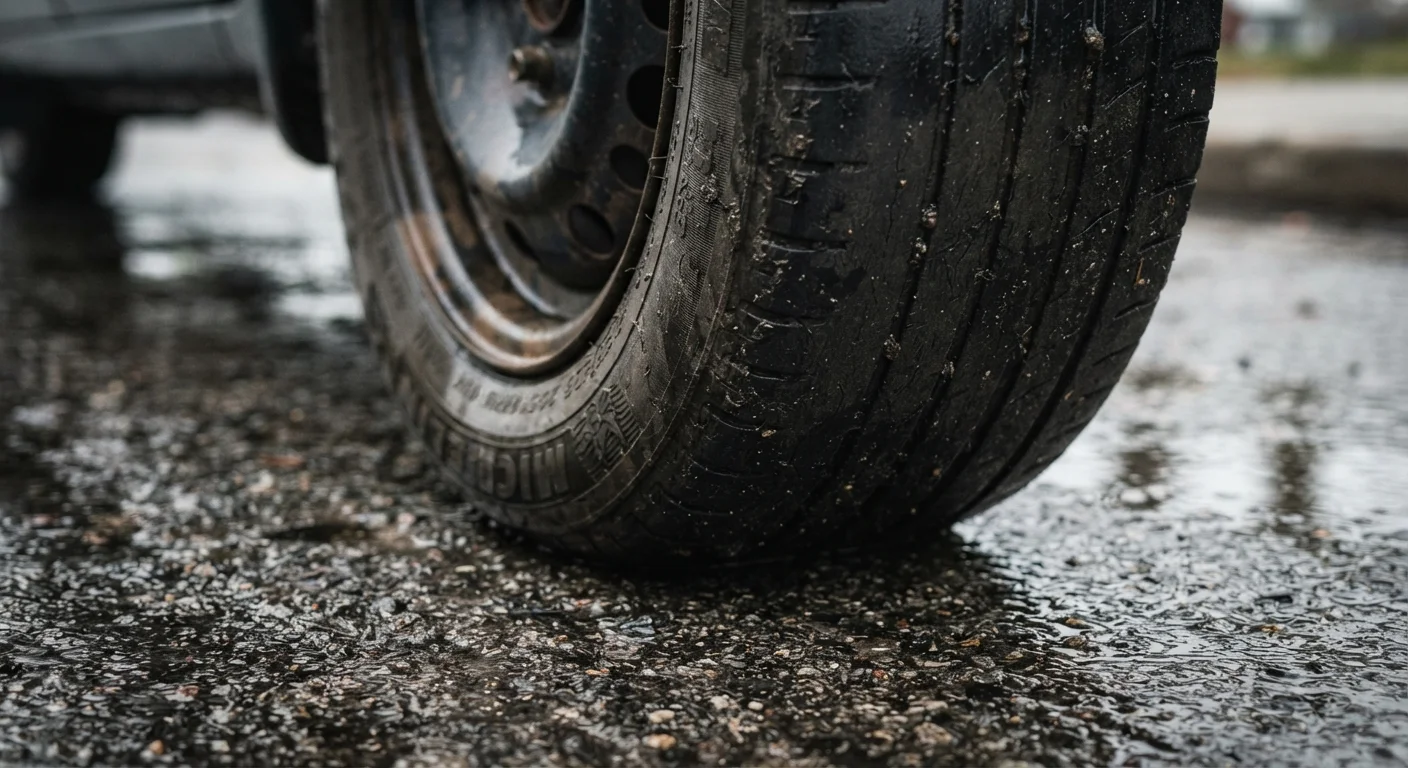
Tire tread exists to channel water away from the contact patch - the small area of rubber actually touching the road. When grooves are deep, water has somewhere to go, and the tire maintains contact and control. As tread wears down, that drainage capacity shrinks. On a wet road, worn tires take significantly longer to stop and are more prone to hydroplaning, where the tire rides on a film of water rather than the pavement.
Most drivers replace tires only when they're obviously flat or when a shop flags them during an oil change. But by then, the margin for safe wet-weather braking has often already been compromised. Understanding how to read your tires proactively - rather than reactively - is one of the more straightforward ways to protect yourself and others on the road.
Tread wear also communicates information beyond simple depth. The pattern of wear reveals whether your tires are inflated correctly, whether your wheels are aligned, and whether your suspension is performing as it should. A tire that's worn unevenly isn't just wearing out faster than it should - it's telling you something else needs attention.
What you will need
For a broader pre-drive safety routine, see our pre-trip vehicle safety check - tires are just one component of a quick but comprehensive check.
Check All Four Tires, Not Just One
It's tempting to spot-check one tire and assume the rest are fine. Front and rear tires wear differently based on drive type and braking load, and a single bald spot on a rear tire can cause a dangerous spin in wet conditions. Make a habit of walking around the entire vehicle and checking each tire individually.
What to Do When the Inspection Reveals a Problem
Knowing what you found is only useful if you act on it. If your tread is marginal but the wear is even, the main action items are scheduling replacement and keeping pressure correct in the meantime. If you've identified an abnormal wear pattern, address the underlying mechanical cause - alignment, pressure, or suspension - at the same time as or before replacing the tire.
Uneven Wear Can Mask a Larger Problem
Worn edges or diagonal scalloping are rarely a tire issue alone - they usually point to misalignment, worn suspension components, or chronic under- or over-inflation. Replacing a tire without addressing the root cause means your new tire will wear out in the same abnormal pattern. Have a qualified mechanic inspect alignment and suspension whenever you see uneven wear.
Brake health and tire condition are closely related - degraded tires can mask brake problems and vice versa. If your inspection raises questions about stopping performance, it's worth having both checked together.
Penny / Quarter
Used for the coin tread depth test - a quick visual check requiring no tools or expertise.
Tire Tread Depth Gauge
Provides a precise measurement in 32nds of an inch for accurate assessment of remaining tread life.
Tire Pressure Gauge
Checks inflation levels, since improper pressure accelerates uneven tread wear.
Flashlight or Work Light
Illuminates the tread grooves and sidewalls so you can spot cracking, bulges, or embedded debris.
Park on a level surface and gather your tools
Pull the vehicle onto a flat, well-lit surface - a driveway or garage floor works well. You'll need a penny, a quarter, and ideally a tire pressure gauge. If you have a tread depth gauge, bring that too. Make sure the engine is off and the vehicle is in park or gear with the parking brake engaged before you crouch near any wheel.
Perform the penny and quarter coin tests
Insert a penny into a tread groove with Lincoln's head pointing down into the tire. If you can see all of Lincoln's head, the tread is at or below 2/32 of an inch - replacement is overdue. Next, use a quarter the same way: if Washington's head is fully visible, you're at or below 4/32 of an inch, which is the recommended replacement threshold for drivers who regularly encounter rain or snow.
Test at least three spots across the tire's width - center and both outer edges - because wear is rarely perfectly uniform.
Identify the wear pattern
The location of wear tells a different story than depth alone:
- Center wear: Tread worn mostly in the middle indicates chronic over-inflation. The tire is riding on its center rather than its full contact patch.
- Edge wear (both sides): Worn shoulders with a healthy center points to persistent under-inflation. The tire is flexing outward and wearing on its edges.
- One-sided edge wear: Wear concentrated on a single shoulder usually signals a camber or alignment problem. The wheel is tilted beyond spec.
- Cupping or scalloping: Diagonal dips or high-low patches around the tire typically indicate worn shocks or struts, or wheel imbalance.
- Feathering: Tread blocks that feel rounded on one side and sharp on the other are a classic sign of toe misalignment.
Inspect the sidewalls for damage
Run your eyes along the full sidewall on both the outer and inner faces (use a flashlight for the inward-facing side). Look for:
- Bulges or bubbles - these indicate internal structural failure and are a blowout risk. A tire with a bulge should not be driven on.
- Deep cuts or gashes that penetrate into the cords
- Widespread craze cracking (fine surface cracks from UV and age) that extends into the grooves
Surface scuffs from curb contact are generally cosmetic, but any deep cut or sidewall deformation should be assessed by a tire professional promptly.
Check and correct tire pressure
Use a tire pressure gauge to measure cold inflation pressure (check before driving, when the tires haven't warmed up). Compare the reading to the placard inside your driver's door jamb - not the number stamped on the tire's sidewall, which is the maximum allowable pressure, not the recommended operating pressure.
Correct any significant deviation. Regular pressure checks - at least once a month and before long trips - are one of the simplest ways to extend tread life and maintain handling.
Document findings and decide on next steps
Note what you observed on each tire: tread depth at multiple points, any abnormal wear patterns, and sidewall condition. Use this to make a clear decision:
- Tread at 4/32" or above, even wear, no sidewall damage: Continue regular monitoring; schedule rotation per manufacturer guidance.
- Tread between 2/32" and 4/32": Plan replacement soon, especially if you drive in wet conditions. See how wet-weather driving demands maximum grip for context on why this matters.
- Tread at 2/32" or below, or any sidewall damage: Replace before further driving.
- Abnormal wear pattern detected: Book a wheel alignment and suspension inspection alongside or before tire replacement.
Don't Wait for the Wear Bars
Many drivers treat the built-in tread wear indicators - small raised bars visible across the groove - as the replace-now signal. In reality, those indicators appear at 2/32 of an inch, which is already the legal minimum in most U.S. states. Wet-road braking performance degrades measurably before that threshold. Plan to replace tires at or before 4/32 of an inch if you drive in rain or snow regularly.
This article provides general vehicle maintenance information for educational purposes. For diagnosis of specific mechanical issues or decisions about tire replacement, consult a qualified automotive technician.