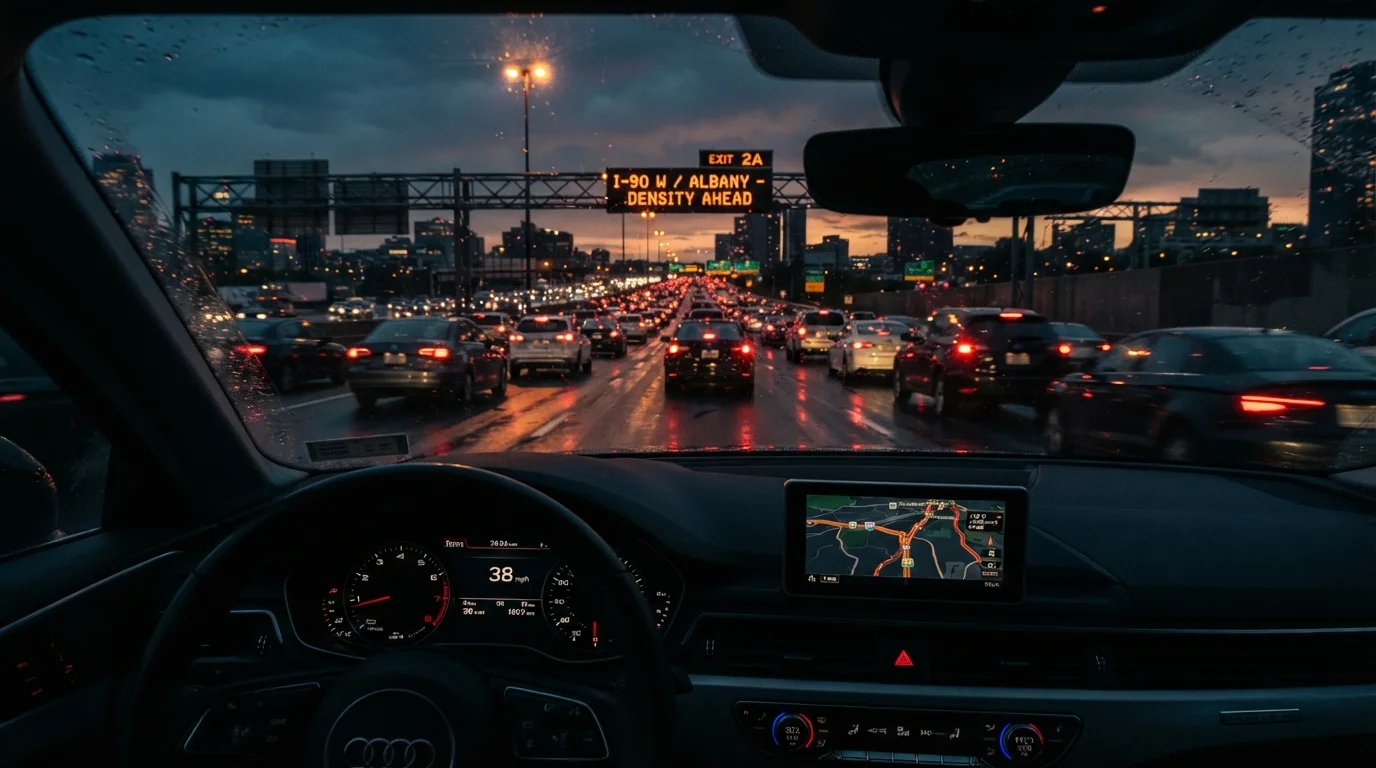
How the Road Rage Cycle Starts
Road rage rarely begins with fury. It almost always starts with something small - a perceived slight, an unexpected cut-off, a driver who didn't signal. What matters is what happens next inside the driver's mind.
When a driver interprets another's behavior as deliberate disrespect, the brain's threat-response system activates. Stress hormones rise, heart rate increases, and the thinking part of the brain - responsible for measured judgment - gets crowded out by reactive emotion. At this stage, the driver is no longer processing traffic as a shared environment. They're processing it as a conflict.
Common triggers include:
- Running late or feeling time-pressured
- Prior stress from work or personal life carried into the car
- Perceived violations of driving norms (someone cutting in line, refusing to yield)
- Sleep deprivation or physical discomfort
- Heavy traffic with no apparent reason for delay
Understanding that these triggers are largely internal - not caused by the other driver - is a critical first step. The other driver almost certainly wasn't targeting you personally.
Stress Outside the Car Follows You In
Research on driver behavior consistently shows that emotional state before a trip strongly predicts aggression behind the wheel. Drivers who are already frustrated, sleep-deprived, or under deadline pressure are significantly more likely to interpret neutral driving events as threatening. Managing stress before you get in the car is a genuine safety measure, not just a wellness suggestion.
Escalation: What Happens When Drivers Retaliate
The danger of road rage isn't just the initial flash of anger. It's the escalation loop. One driver tailgates in frustration. The other driver brake-checks in response. The first driver speeds up and cuts them off. Within a minute, both drivers are operating in full threat mode - each convinced the other is the aggressor.
This is sometimes called a mutual escalation cycle, and it's dangerous for several reasons. Both drivers are now less focused on actual traffic conditions and more focused on the conflict. Reaction times slow for hazards that aren't part of the dispute. Speed tends to increase. Risk tolerance rises as emotional arousal peaks.
Behaviors that are part of this escalation include tailgating and dangerously short following distances, aggressive lane changes, deliberate blocking, and in serious cases, forcing another vehicle to stop. These moves dramatically increase crash risk for everyone nearby, not just the parties involved.
~80%
Drivers who report significant road rage annually
According to the AAA Foundation for Traffic Safety, nearly 80% of drivers reported expressing significant anger, aggression, or road rage at least once in the prior year.
56%
Aggressive drivers who used gestures or honking
AAA research found that more than half of drivers involved in road rage incidents engaged in hostile gesturing or deliberate horn use directed at another driver.
37%
Drivers who reported being followed by an aggressive driver
AAA Foundation data indicated that more than a third of surveyed drivers reported an incident in which another driver followed them aggressively after a road conflict.
The Mindset Shift That Breaks the Cycle
Breaking out of road rage - whether you're the frustrated driver or the target of someone else's aggression - requires a deliberate shift in perspective rather than willpower alone.
The most effective strategy is disengagement. This means consciously choosing not to interpret the other driver's behavior as a personal attack, and refusing to respond in kind. It sounds simple, but in the moment it requires practice.
Practical techniques that help drivers disengage include:
- Slow your breathing: Deliberately taking slower, deeper breaths reduces physiological arousal and gives the rational brain time to reassert itself.
- Create physical space: Increasing the gap between your vehicle and the other driver reduces the sense of threat and removes you from the immediate conflict zone.
- Reframe the narrative: Rather than assuming bad intent, consider that the other driver may be distracted, lost, dealing with an emergency, or simply unaware of how their driving appeared.
- Use pre-trip stress management: If you're already stressed or rushed before you get in the car, road rage is far more likely. Build in buffer time and address mood before driving.
The principle underlying all of these is consistent with what's described in defensive driving: anticipate, don't react.
Build in Time - It's a Safety Habit
One of the most reliable ways to reduce your own road rage risk is to leave earlier than you think you need to. Time pressure is one of the strongest predictors of aggressive driving. When you have margin in your schedule, small traffic frustrations lose much of their power to provoke a strong reaction.
When Someone Else's Road Rage Targets You
If another driver is directing aggression at you, the priority is de-escalation and safety - not fairness. Even if you had the right of way, proving it in the middle of a moving confrontation is not worth the risk.
Key steps when you are the target:
- Do not make eye contact or respond with gestures. Eye contact can be interpreted as a challenge.
- Avoid retaliating - brake-checking, blocking, or matching aggression will escalate the situation further.
- Increase distance from the aggressive driver by slowing or changing lanes when safe to do so.
- Drive to a public place if you feel the situation is becoming dangerous. A gas station, police station, or busy parking area are appropriate options. Do not drive home if you believe you are being followed.
- Call 911 if the situation involves threats or dangerous behavior. Report the vehicle's description, direction of travel, and license plate if you can safely note it.
The instinct to defend yourself or your driving decisions is understandable. But road rage incidents - even ones that start with the other driver - can turn criminal quickly. The habits that keep seasoned drivers safer, including avoiding risky assumptions about other drivers' behavior, matter just as much in these moments.
This article is for general informational and educational purposes. It does not constitute legal or safety advice. If you are involved in or witness a threatening incident on the road, contact law enforcement immediately.