Why Your Home Workout Setup Doesn't Need to Be Complicated
The fitness industry has a vested interest in convincing you that progress requires products. The reality is far simpler: research consistently shows that bodyweight exercise, performed regularly and with progressive challenge, builds meaningful strength and cardiovascular fitness. You don't need a rack of dumbbells or a smart treadmill to move well and feel better.
That said, a thoughtful home setup does remove friction. When equipment is accessible and your space is ready, you're more likely to actually use it. The goal of this guide is to help you understand what genuinely supports your workouts — and what tends to collect dust. For a broader look at building movement into your life on your own terms, see how everyday movement habits support your health.
What You Actually Need
These are the items that deliver real, consistent value regardless of your fitness level or goals:
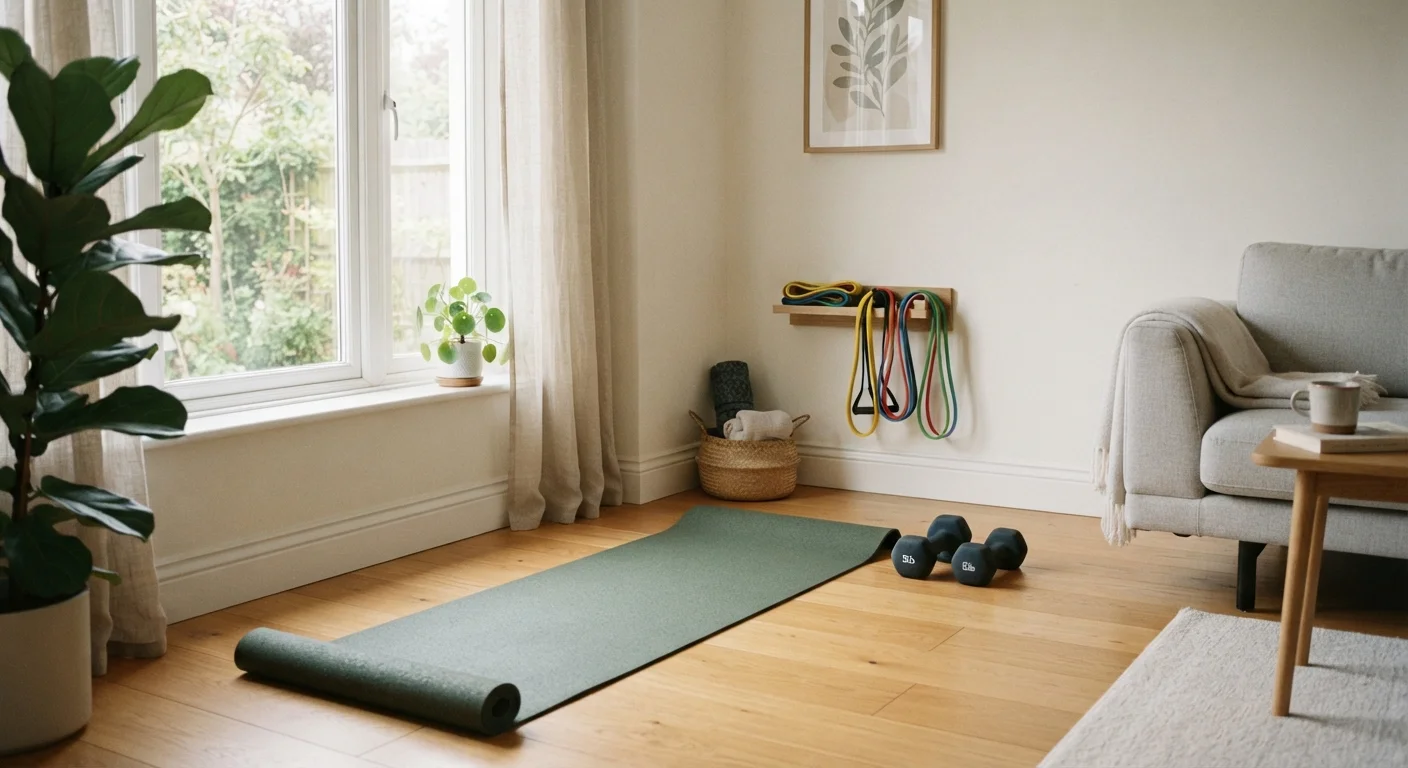
- A yoga or exercise mat: Provides cushioning for floor work, defines your workout space, and prevents slipping. This is the single most universally useful piece of home fitness equipment.
- Resistance bands: Lightweight, inexpensive, and surprisingly versatile. Bands can assist with mobility work, add challenge to bodyweight moves, and support rehabilitation exercises. They store in a drawer.
- Your own bodyweight: Push-ups, squats, lunges, planks, and hip hinges require zero equipment and can be progressed almost indefinitely by adjusting tempo, range of motion, and leverage. Bodyweight versus free weights is a genuine debate worth understanding before you spend anything.
- Adequate space: Roughly a 6-by-6-foot area — enough to extend your arms and lie down fully — is genuinely sufficient for most workouts.
- A reliable way to follow along: A phone, tablet, or laptop gives you access to guided workouts, timers, and form cues. Free options are plentiful and effective.
No commute — eliminates a major barrier to consistency
Removing travel time from the exercise equation dramatically lowers the activation energy needed to work out. Studies on habit formation suggest that reducing friction is one of the most effective ways to sustain new behaviors.
Low upfront cost compared to gym membership
A mat and a set of resistance bands can be acquired for under $50 total, making this an accessible starting point for nearly any budget. Ongoing costs are minimal once the basics are in place.
Flexible scheduling around your actual life
Working out at home means fitting exercise around your schedule — early morning, late evening, or a midday break — without worrying about gym hours or crowd peaks.
Privacy supports confidence for beginners
Many people, especially those new to exercise or returning after a long break, feel more comfortable learning movements without an audience. This psychological safety can make a meaningful difference in sticking with a routine.
Highly customizable to your specific goals
A home space can be built incrementally around what you're actually trying to achieve — whether that's mobility, strength, cardiovascular fitness, or stress relief — without paying for equipment you'll never use.
What's Nice to Have (But Not Essential)
These items can enhance a home setup once you've built a consistent habit, but they're not prerequisites for progress:
- A pair of adjustable dumbbells: Genuinely useful for adding resistance variety, but only if you're already training consistently and have identified a specific need for load. Understanding your strength and cardio goals first will help you decide whether this investment makes sense.
- A pull-up bar: Excellent for upper-body pulling strength — a movement pattern bodyweight and bands can only partially replicate. Worth considering once foundational fitness is in place.
- A foam roller: Supports post-workout recovery and tissue mobility. Beneficial, but not a substitute for adequate sleep, hydration, and movement variety.
- Cardio equipment (bikes, rowers, treadmills): High upfront cost, significant space commitment, and limited versatility. Walking outdoors or following bodyweight cardio routines accomplishes similar outcomes for most people at no cost.
- Fitness trackers and smart devices: Motivating for some, distracting or discouraging for others. Consider your personality honestly before investing.
Self-motivation is entirely your responsibility
Without a scheduled class, a trainer, or the social pull of a gym, the impetus to work out rests entirely with you. This is a genuine challenge that derails many home fitness efforts, particularly in the early weeks.
Limited equipment can create plateaus over time
Bodyweight training has a high ceiling, but it does have one. Without adding resistance progressively, some fitness goals — particularly significant muscle hypertrophy — become harder to achieve at home alone.
Home distractions compete with workout focus
Children, household tasks, phones, and the general pull of home life can interrupt or shorten sessions. Creating a dedicated space and time helps, but the environment is inherently less structured than a gym.
No professional on hand for form correction
Poor movement patterns, particularly in strength exercises, increase injury risk over time. Without a coach or trainer present, beginners may reinforce incorrect technique without realizing it. Video resources help but don't fully replace hands-on guidance.
Making the Space Work for You
The most effective home workout space is the one you'll consistently use. That means minimizing setup time, keeping must-have items visible and accessible, and not waiting until conditions are perfect. A corner of a bedroom works. So does a garage, a living room floor, or even outdoors.
Before you start any new exercise program, it's worth pausing to honestly assess where you're starting from. The self-assessment checklist for building a new fitness routine can help you set realistic expectations and reduce the risk of early burnout or injury. If you have existing health conditions, injuries, or haven't been active in a while, speak with a healthcare professional before beginning.
For anyone looking to understand the language of fitness as they build their routine, a plain-language fitness glossary breaks down common terms like progressive overload, reps, and sets in accessible language.
A Note on Special Populations
Older adults, those recovering from injury, and individuals managing chronic health conditions should approach home workout setup with extra care. Certain exercises carry higher fall or strain risk without proper guidance. Consult a physical therapist or physician before establishing a routine — they can help you identify movements that are both safe and effective for your specific situation.
~6×6 ft
Minimum floor space for most workouts
Exercise physiologists and personal trainers generally agree that a roughly 6-by-6-foot area is sufficient to perform the full range of bodyweight and resistance band exercises.
30+ min
Weekly activity linked to health benefits
The U.S. Department of Health and Human Services recommends at least 150 minutes of moderate-intensity aerobic activity per week for adults, much of which can be achieved at home.
This article is for general informational purposes only and is not a substitute for professional medical or fitness advice. Consult a qualified healthcare provider before starting any new exercise program.