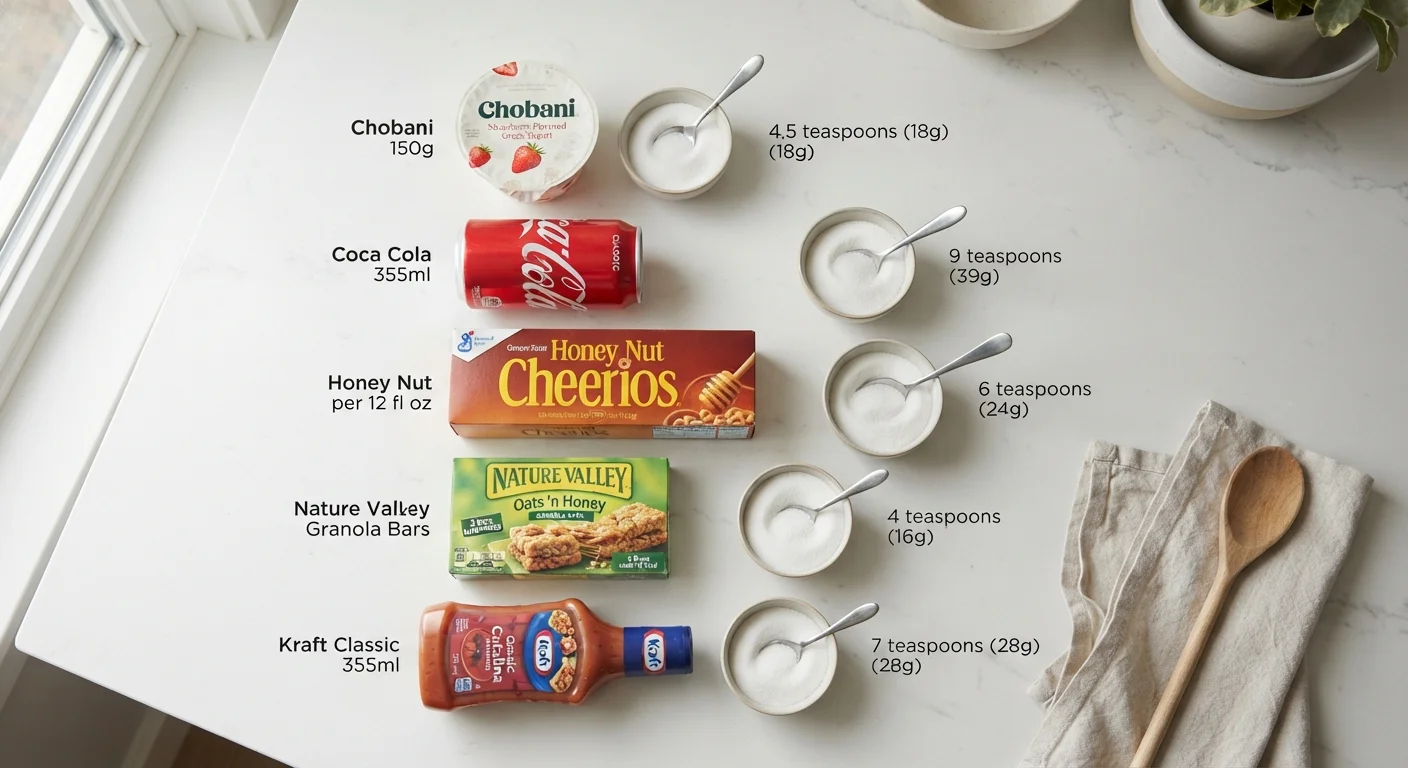
Natural vs. Added Sugar: A Critical Distinction
Not all sugar in your food is the same, and understanding the difference matters more than cutting every sweet thing from your plate. When you eat a whole apple, its fructose arrives alongside fiber that slows absorption and vitamins that contribute genuine nutritional value. When you drink a flavored sports drink, the sugar arrives with almost nothing else — no fiber, no meaningful micronutrients, just calories.
That distinction is what regulators and researchers mean when they draw a line between natural sugars and added sugars. Public health guidance does not call for limiting naturally occurring sugars in whole fruit, vegetables, or dairy. The concern is the sugar manufacturers add to products during processing — whether labeled as cane sugar, dextrose, brown rice syrup, or any of the more than 60 names sweeteners travel under.
This matters practically because added sugars can accumulate quickly, even in a diet that feels balanced on the surface. For a fuller picture of how whole grains and refined carbohydrates factor into the same conversation, see our explainer on whole grains vs. refined grains.
A Note on Sugar Alcohols and Artificial Sweeteners
Sugar alcohols (like erythritol and xylitol) and artificial sweeteners (like aspartame and sucralose) are not counted as added sugars on the Nutrition Facts label because they are metabolized differently or provide fewer calories. Research on their long-term health effects is ongoing and somewhat mixed. If you have questions about these ingredients in your diet, a registered dietitian can provide guidance tailored to your needs.
The Surprising Places Added Sugar Shows Up
Most Americans mentally file added sugar under soda, candy, and dessert — and then stop looking. But data from the National Cancer Institute show that sweetened beverages account for roughly 47% of all added sugar consumed by U.S. adults, with the next largest contributors being grain-based desserts, fruit drinks, and dairy-based desserts. The real surprise is how much comes from foods that don't taste sweet at all.
- Bread and rolls: Many commercial loaves contain 2–4 grams of added sugar per slice to enhance browning and flavor.
- Pasta sauce: A half-cup serving of jarred marinara can contain 6–12 grams of added sugar.
- Flavored yogurt: A single-serve container of fruit-on-the-bottom yogurt can exceed 20 grams of added sugar — more than many candy bars.
- Salad dressing: Low-fat vinaigrettes frequently use sugar to compensate for reduced fat flavor.
- Granola and energy bars: Products marketed as wholesome snacks often contain 10–15 grams per bar.
- Condiments: Ketchup, barbecue sauce, and teriyaki sauce deliver added sugar in tablespoon-sized doses that add up quickly.
These sources are worth tracking because they can contribute meaningfully to daily totals without registering as indulgent choices. Foods that quietly undermine dietary balance are explored in depth in our article on when "healthy" foods undermine a balanced diet.
17 tsp
Average added sugar consumed daily by U.S. adults
According to CDC data, American adults consume an average of roughly 17 teaspoons of added sugar per day — well above recommended limits.
47%
Share of added sugar from sweetened beverages
National Cancer Institute analysis found sweetened beverages are the single largest source of added sugar in the diets of U.S. adults.
< 10%
Recommended daily calorie limit from added sugar
The Dietary Guidelines for Americans recommend that added sugars comprise less than 10% of total daily calorie intake.
60+
Names added sugar appears under on ingredient lists
The Sugar Science project at the University of California San Francisco has identified more than 60 names used for added sugar on food labels.
What the Evidence Says About Health Impact
A large and consistent body of research links high added-sugar intake to several health concerns. The mechanisms are reasonably well understood: unlike fiber-rich whole foods, added sugars are rapidly absorbed, causing sharper blood glucose spikes. Over time, chronically elevated intake is associated with insulin resistance, weight gain, elevated triglycerides, and increased cardiovascular risk.
The American Heart Association has connected high sugar-sweetened beverage consumption specifically to elevated risk of cardiovascular disease mortality. A landmark analysis published in JAMA Internal Medicine found that adults who consumed 17–21% of their calories from added sugar had a 38% higher risk of cardiovascular disease death compared to those who consumed 8% or less — though observational studies show associations, not direct causation, and individual health context matters enormously.
Dietary fiber — notably absent from added-sugar foods — plays a complementary role in managing blood sugar response. Our article on fiber and why most Americans don't get enough covers that connection in more detail.
“The evidence is clear that too much added sugar can have serious health consequences. Reducing consumption is one of the most straightforward dietary changes Americans can make to support long-term cardiovascular health.”
— Frank Sacks, Professor of Cardiovascular Disease Prevention, Harvard T.H. Chan School of Public Health
This article is for general informational purposes only and is not a substitute for professional medical or dietary advice. Consult a qualified healthcare provider or registered dietitian for guidance specific to your health needs.
Reading Labels and Making Practical Reductions
Since 2020, FDA regulations have required manufacturers to list Added Sugars as a separate line on the Nutrition Facts panel, with a % Daily Value based on a 50-gram limit. This makes comparison shopping considerably more straightforward than scanning ingredient lists for sugar aliases alone.
A few practical approaches supported by nutrition research:
- Start with beverages. Swapping one sweetened drink per day for water, unsweetened tea, or sparkling water is one of the highest-impact single changes available.
- Compare similar products side by side. Two brands of pasta sauce or yogurt can differ by 8–10 grams of added sugar per serving — the label makes this visible instantly.
- Scan ingredient lists for sugar aliases. If a sweetener (by any name) appears in the first three ingredients, added sugar is a major component of that product.
- Be skeptical of health halos. Terms like "natural," "organic," or "fruit-sweetened" do not mean low in added sugar.
For a detailed walkthrough of interpreting every line of the Nutrition Facts panel, see our guide to reading a nutrition label without the confusion.
Try a One-Week Label Audit
Spend one week checking the Added Sugars line on every packaged food you buy. You don't need to eliminate anything immediately — simply knowing the numbers in your current diet is an evidence-backed first step toward meaningful change. Many people are surprised to discover their biggest sugar source isn't dessert at all.