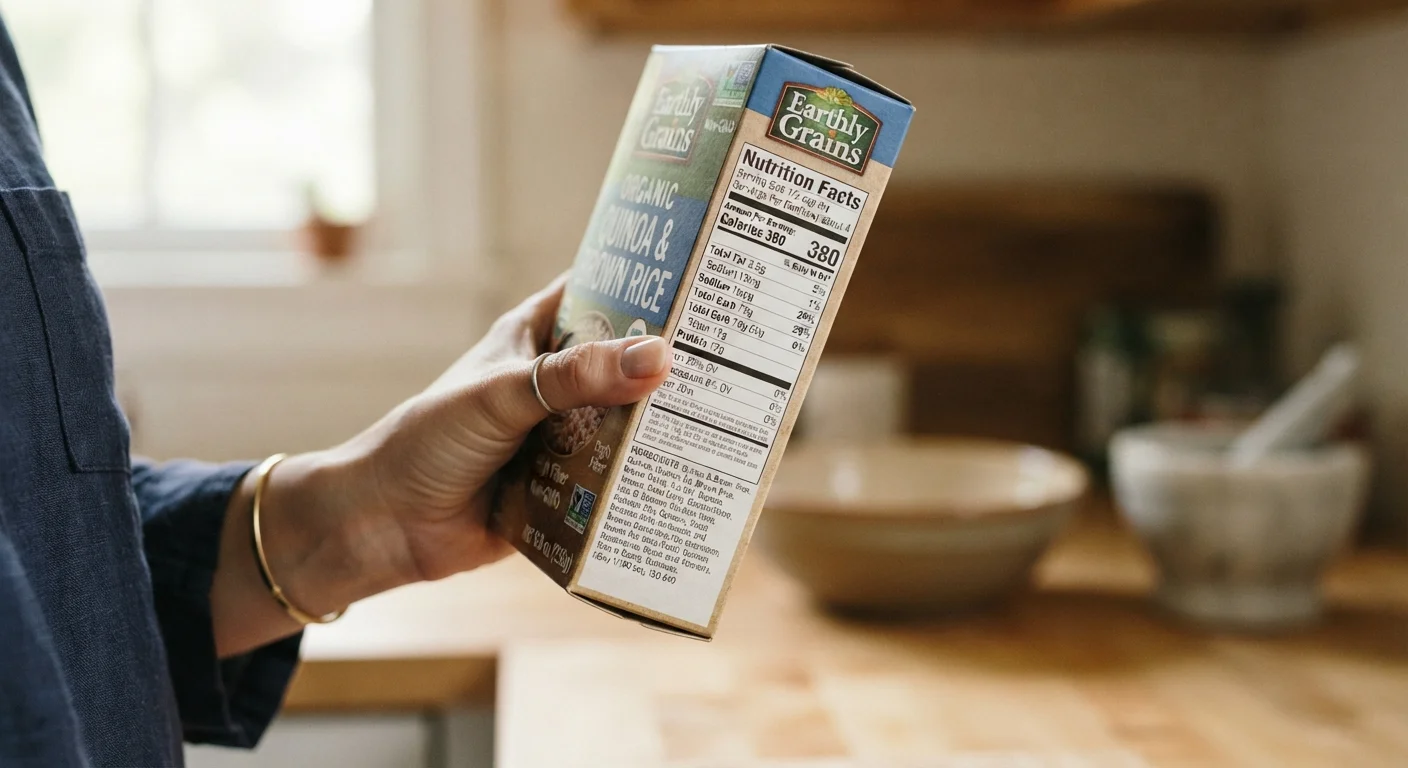
Why the Nutrition Facts Panel Exists
The Nutrition Facts label is a federally mandated tool regulated by the U.S. Food and Drug Administration (FDA). It was overhauled in 2016 — with full compliance required by 2020 — to better reflect current nutrition science and real-world eating patterns. The updated format makes calories more prominent, separates added sugars from total sugars, and updates reference values for several nutrients.
Understanding this panel is one of the most practical nutrition skills you can build. It lets you compare products, spot hidden ingredients, and make choices that align with your health goals — without relying on front-of-package marketing language. Once you know how to read it, the process takes about 30 seconds per product.
Front-of-Package Claims Can Mislead
Words like "natural," "light," or "multigrain" on the front of a package are marketing terms, not regulated health claims. Always flip to the Nutrition Facts panel and ingredient list for accurate information. A product labeled "reduced fat" may still be high in added sugar or sodium.
This skill pairs naturally with broader efforts to eat well. If you're also thinking about how different foods fit together, our introduction to balanced eating provides a grounded starting point.
Step-by-Step: Reading the Label
This Is Education, Not Medical Advice
This article provides general nutrition information to help you understand food labels. It is not a substitute for personalized dietary guidance. If you have a health condition, food allergy, or specific nutritional needs, consult a registered dietitian or qualified healthcare professional before making significant changes to your diet.
Start with Serving Size and Servings Per Container
Every number on the label is calculated per serving — not per package. Check how large one serving is (in cups, grams, or pieces) and how many servings the package contains. If the container holds 2.5 servings and you eat the whole thing, multiply every number by 2.5. This single step prevents the most common misreading of nutrition data.
Read the Calories Line
Calories measure how much energy one serving provides. They're useful context, but calories alone don't tell you much about nutritional quality. A food can be calorie-dense yet nutrient-rich (like nuts) or low-calorie yet nutritionally empty. Think of calories as one data point, not the whole story.
Identify Nutrients to Limit
Below calories, you'll find saturated fat, trans fat, sodium, and added sugars. These are the nutrients most Americans already consume in excess, according to federal dietary guidance. Diets high in these components are associated with increased risk of cardiovascular disease, high blood pressure, and other chronic conditions. Aim to keep their % Daily Values low when possible. For a deeper look at where added sugar appears unexpectedly, see Added Sugar in the American Diet.
Look for Nutrients to Get Enough Of
Further down the panel, you'll see dietary fiber, vitamin D, calcium, iron, and potassium. Most Americans fall short on these. Higher % Daily Values here are generally favorable. Fiber supports digestive health and helps you feel full; the minerals and vitamins listed support bone health, oxygen transport, and blood pressure regulation. For a fuller picture of what vitamins and minerals do, our micronutrient reference guide is a useful companion.
Understand % Daily Value
% DV tells you how much of a nutrient one serving contributes toward the recommended daily intake for an average adult eating roughly 2,000 calories per day. It's a reference point, not a personal prescription — your actual needs may differ based on age, health status, or activity level. Still, it's the fastest way to compare similar products side by side.
[tip_callout]Check the Ingredient List
Ingredients are listed in descending order by weight — the first ingredient is the most abundant. If sugar (under any of its many names) or a refined grain appears first or second, that's a significant component of what you're eating. Look for whole food ingredients near the top, and be cautious when the list is long and difficult to parse. For guidance on spotting whole grains specifically, see Whole Grains vs. Refined Grains.
Once you're comfortable with the label's structure, you can apply this knowledge every time you shop. Consistent label reading — across many foods over time — builds a clearer picture of your overall diet than any single purchase decision. For practical help translating this into a shopping routine, see Building a Grocery List That Supports Nutritional Balance.
It's also worth remembering that nutritional needs shift over a lifetime. Children, older adults, and people managing chronic conditions may have different targets for specific nutrients. Nutrition Through Every Stage of Life offers a stage-by-stage look at how those needs evolve.
This article is for general informational and educational purposes only and does not constitute medical or dietary advice. Consult a qualified healthcare professional or registered dietitian for guidance specific to your health needs.