Why the Fiber Gap Is a Real Problem
Fiber is one of the most studied and consistently supported nutrients in nutrition science — and one of the most under-consumed. According to the DGA, fiber is officially listed as a nutrient of public health concern because low intake is linked to health risks at a population level. Yet decades of data show that Americans, on average, fall dramatically short of recommended amounts.
~10–15g
Average daily fiber intake for U.S. adults
The Dietary Guidelines for Americans recommend 25–38g per day depending on age and sex — meaning most adults consume less than half the target.
95%
Americans falling short of fiber recommendations
Research published in the American Journal of Lifestyle Medicine estimates that approximately 95% of Americans do not meet recommended daily fiber intakes.
10–15%
Reduction in LDL cholesterol linked to soluble fiber
Studies on diets high in soluble fiber from oats and legumes have associated regular intake with meaningful reductions in LDL ("bad") cholesterol levels.
The gap matters because fiber does far more than keep digestion regular. It feeds the trillions of bacteria living in your gut, helps lower LDL cholesterol, slows glucose absorption after meals, and contributes to a sense of fullness that naturally supports balanced eating. Skimping on fiber doesn't produce obvious, immediate symptoms — which is partly why it gets overlooked compared to nutrients like protein or calcium.
If you've been curious about how various nutrition claims hold up to scrutiny, our look at common nutrition myths provides useful context for separating evidence from noise.
What Fiber Actually Does in Your Body
Fiber's health benefits fall into several well-documented categories:
- Digestive health: Insoluble fiber adds bulk to stool and speeds transit time through the colon, reducing the risk of constipation and supporting regular bowel function.
- Heart health: Soluble fiber — found abundantly in oats and legumes — binds to bile acids in the gut. The liver then draws on cholesterol to make more bile, which effectively lowers circulating LDL cholesterol over time.
- Blood sugar regulation: Soluble fiber forms a gel in the digestive tract that slows carbohydrate absorption, blunting post-meal blood glucose spikes.
- Gut microbiome support: Certain fibers, known as prebiotics, serve as food for beneficial gut bacteria. A well-fed microbiome is associated with immune function, inflammation regulation, and even mood research — though this area of science is still developing.
“Dietary fiber is arguably the most underappreciated nutrient in the American diet. The evidence supporting its role in reducing chronic disease risk is among the most consistent in nutrition science.”
— Dr. David Katz, Physician and founding director of the Yale-Griffin Prevention Research Center
Adequate fiber intake also pairs well with good hydration. For a closer look at how fluids interact with nutrient absorption, see our article on hydration and nutrition.
Practical Ways to Eat More Fiber Every Day
Reaching the recommended intake doesn't require a dramatic dietary overhaul. The most sustainable approach is to make targeted swaps and additions across meals you already enjoy.
Increase Fiber Gradually to Avoid Discomfort
If you're currently eating a low-fiber diet, don't try to reach the recommended daily amount overnight. Add one or two high-fiber foods per week and give your digestive system time to adjust. Drinking water throughout the day is equally important — fiber absorbs fluid, and staying hydrated helps it work properly.
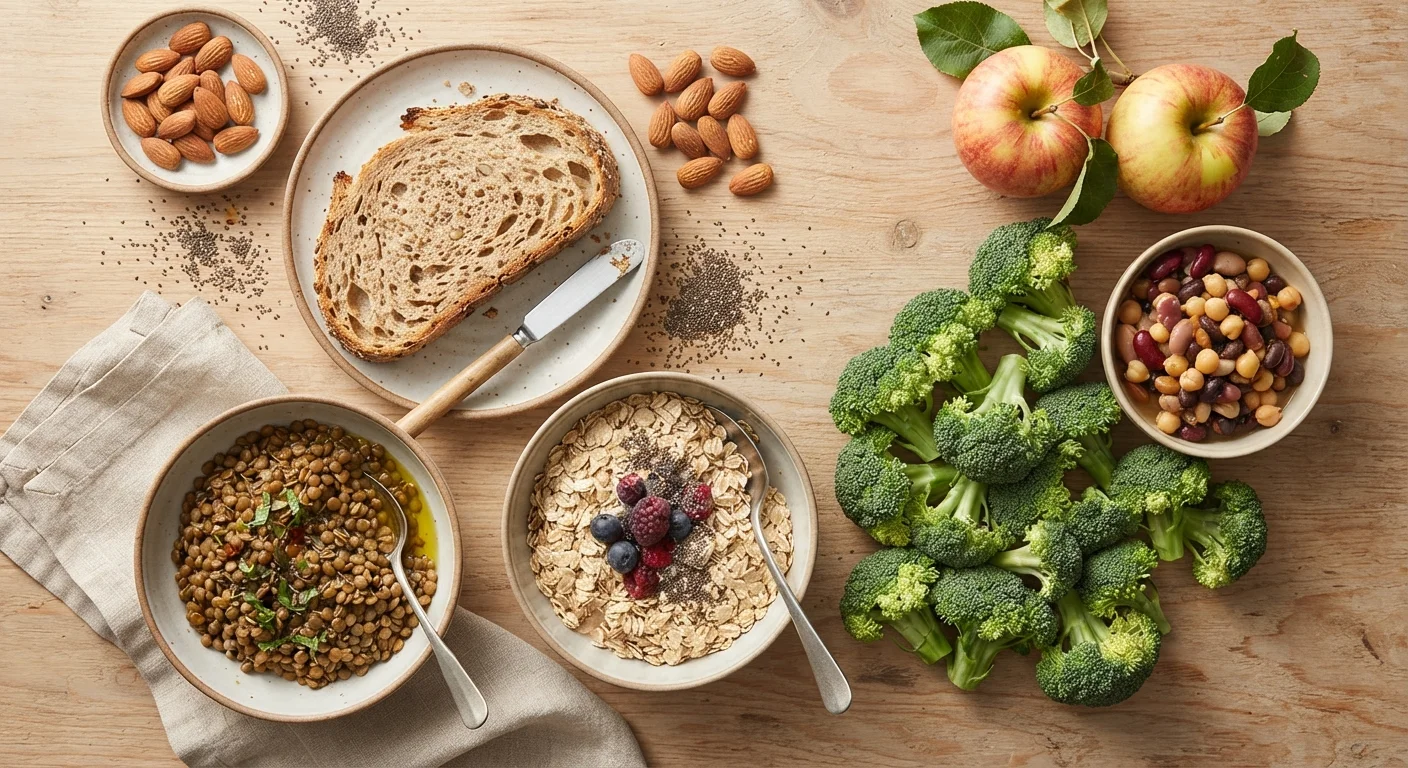
- Start breakfast with whole grains or fruit: A bowl of oatmeal with berries can deliver 8–10 grams of fiber before the day has barely started.
- Add legumes to existing dishes: Stir black beans into soups, toss chickpeas into salads, or blend lentils into sauces. Legumes are among the most fiber-dense foods available.
- Keep the skin on fruits and vegetables: The skin of apples, potatoes, and pears contains a meaningful portion of the fruit's total fiber.
- Choose whole grain versions: Whole grain bread, brown rice, and whole wheat pasta contain significantly more fiber than their refined counterparts — without requiring any new cooking skills.
- Snack on nuts, seeds, and raw vegetables: These add fiber between meals in small, convenient amounts.
When building your regular grocery routine, it helps to shop with fiber-rich categories in mind. Our guide to building a nutritionally balanced grocery list offers a practical framework.
One caution: increase your fiber intake gradually. Adding too much too quickly can cause temporary gas and bloating as your gut microbiome adjusts. Drinking enough water is also essential — fiber needs fluid to do its job effectively.
This article is for general informational and educational purposes only and is not a substitute for professional medical or dietary advice. Consult a qualified healthcare provider before making significant changes to your diet, especially if you have an underlying health condition.