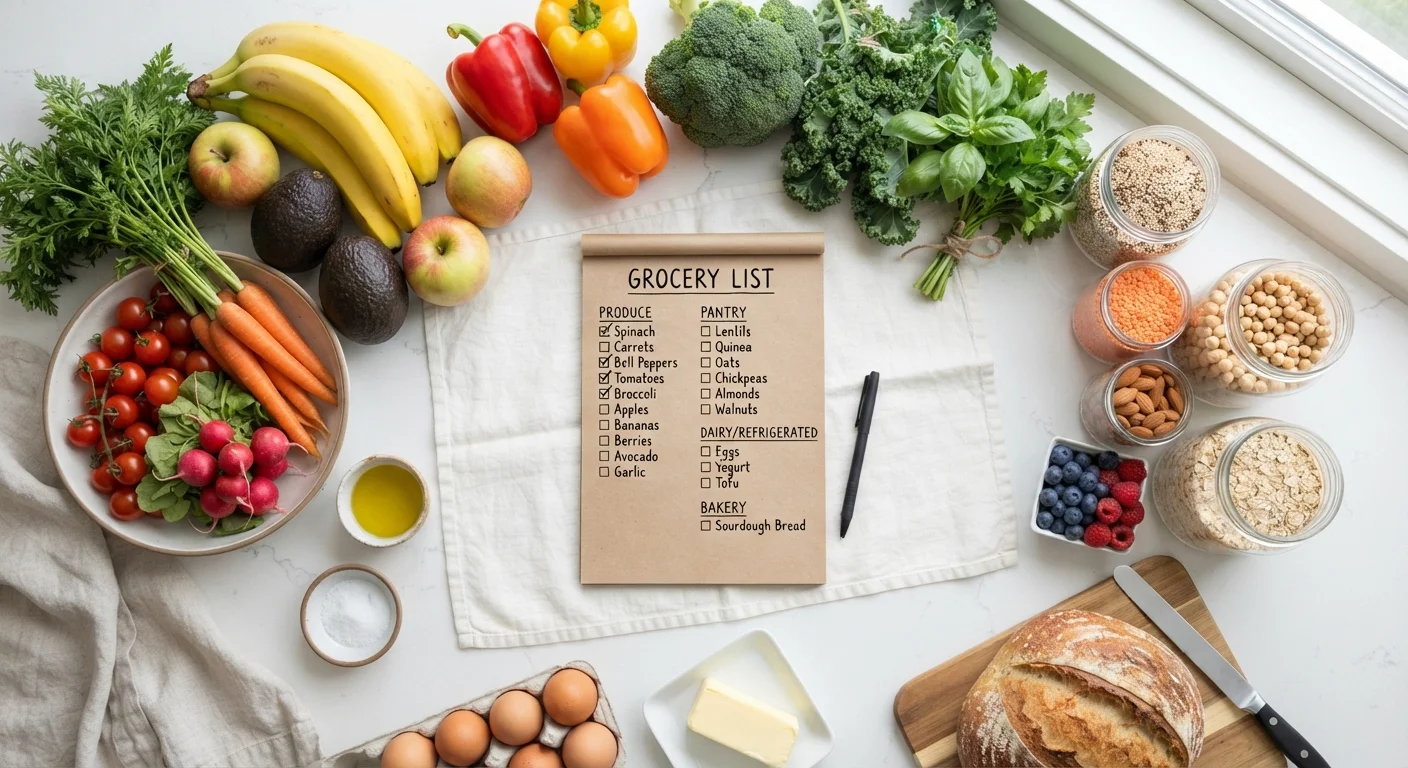
Why Your Grocery List Is a Nutrition Tool
What ends up in your cart largely determines what ends up on your plate. A grocery list built around nutritional balance isn't about strict rules or eliminating favorites — it's about making sure the foundations are covered before the extras fill in. For a grounded overview of what balanced eating actually looks like day to day, see our practical introduction to balanced meals.
This checklist walks through the key food categories your list should address each week. Use it as an audit before you shop, not a prescription. Individual needs differ based on age, activity level, and health status — for a detailed breakdown of how those needs shift over time, our nutrition through every life stage guide is a useful companion resource.
Vegetables & Fruit
Protein Sources
Whole Grains & Starchy Carbohydrates
Dairy or Dairy Alternatives
Healthy Fats
Hydration & Beverages
What to Keep in Mind While Shopping
Even a solid list can get derailed in the store. A few practical habits help translate good intentions into actual nutritional balance.
Nutrition Facts Label
Use the label to compare sodium, added sugars, fiber, and key micronutrients across similar products.
Reusable Shopping List App or Notepad
Organize your list by store section (produce, proteins, pantry) to shop efficiently and avoid missed categories.
Weekly Meal Sketch
A rough outline of planned meals for the week helps identify gaps in protein, produce, or grains before you shop.
Pantry Inventory
A quick check of what you already have prevents duplicate buying and ensures you're restocking actual gaps.
Read labels for what matters most. Ingredients are listed by weight, so the first few tell you the most. Scan for added sugars, sodium levels, and how many recognizable whole-food ingredients appear. Our reference guide on vitamins and minerals can help you understand what to look for on nutrition panels.
Watch out for halo effects. Foods marketed as "natural," "organic," or "high-protein" can still crowd out balance when eaten in excess or without context. For a closer look at this, see our article on when healthy foods quietly undermine balance.
Supplements Don't Replace Food Variety
It can be tempting to rely on multivitamins or supplements to fill nutritional gaps, but most evidence supports getting nutrients from whole foods as the foundation. Supplements may play a role in specific situations — for a balanced look at when they help and when they don't, see our article on the case for and against dietary supplements. Always speak with a healthcare provider before starting any supplement regimen.
This article provides general nutrition information for educational purposes only and is not a substitute for personalized medical or dietary advice. Consult a registered dietitian or qualified healthcare professional for guidance specific to your health needs.