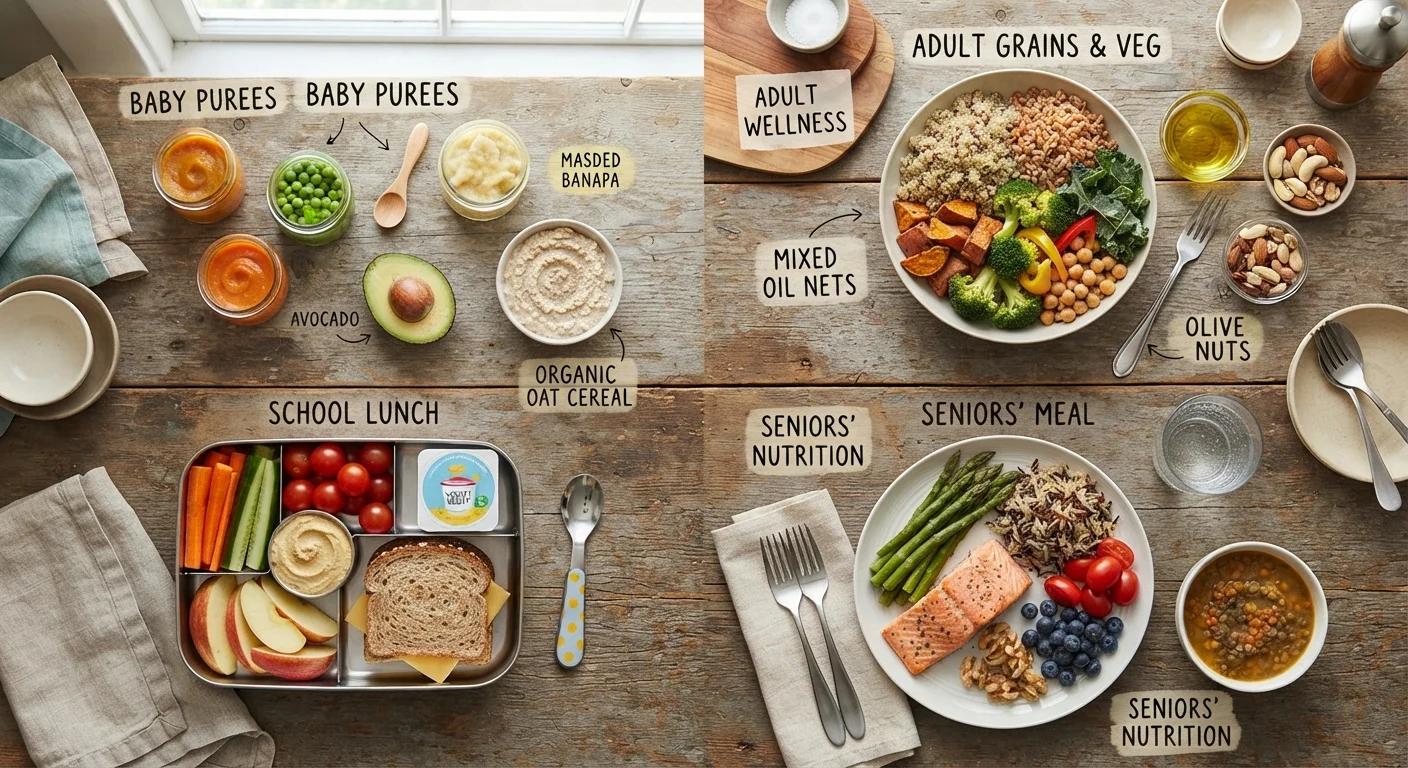
Why Nutritional Needs Change Over Time
Food is never a one-size-fits-all proposition. The body's demand for energy, vitamins, minerals, and macronutrients shifts continuously in response to growth, hormonal changes, physical activity, and the gradual changes that accompany aging. What fuels a growing toddler looks very different from what supports a woman navigating perimenopause or an older man maintaining muscle mass.
Understanding these shifts helps families make smarter everyday choices — not by following rigid rules, but by recognizing which nutrients deserve extra attention at each phase. This guide walks through the key nutritional priorities from birth through older adulthood, grounded in established dietary science. For a foundational look at building balanced meals day-to-day, see our guide to balanced eating.
This article is for general informational and educational purposes only, and is not a substitute for advice from a qualified healthcare professional or registered dietitian.
90%
Peak bone mass built by age 18
According to the National Institutes of Health, approximately 90% of peak bone mass is established by late adolescence, making teen nutrition critical for lifelong bone health.
1–2%
Per-decade metabolic rate decline after 30
Research in metabolic science generally estimates that resting metabolic rate decreases by roughly 1–2% per decade in adults, gradually reducing caloric needs with age.
~40%
US adults falling short on vitamin D
National Health and Nutrition Examination Survey (NHANES) data has consistently found that a substantial proportion of American adults have insufficient vitamin D levels.
Infancy and Early Childhood (0–5 Years)
The first five years represent the most rapid period of physical and neurological growth in a human life. Breast milk or iron-fortified infant formula provides complete nutrition for the first six months. After that, complementary foods are introduced gradually, with variety being far more important than perfection.
Key nutrients during this window include iron (critical for brain development), zinc, vitamin D, and adequate dietary fat to support myelination — the process by which nerve fibers develop their protective coating. The American Academy of Pediatrics recommends vitamin D supplementation for breastfed infants beginning in the first days of life, since breast milk alone typically does not supply enough.
Make Early Food Exposure Count
Introduce a broad range of flavors, textures, and colors during the complementary feeding window (roughly 6–24 months). Research in pediatric nutrition suggests early and repeated exposure to varied foods reduces feeding difficulties later. There is no need to delay common allergenic foods beyond six months in most infants — discuss timing with your child's pediatrician.
Food textures and flavors introduced before age two appear to shape taste preferences for years. Offering a wide variety of vegetables, fruits, proteins, and whole grains during this window can reduce picky eating later on.
School Age and Adolescence (6–18 Years)
Growth continues at a steadier pace through the school years, then surges again during puberty. Adolescence brings some of the highest absolute caloric and micronutrient needs of the entire lifespan.
Calcium and vitamin D are especially critical during the teenage years: roughly 90% of peak bone mass is accrued by age 18. Yet national surveys consistently show that many American teens fall short on both. Iron needs also increase significantly, particularly for menstruating adolescents, where deficiency can impair concentration and energy.
When counseling teens, focus on adding nutrient-dense foods rather than restricting any food group. Rigid restriction during adolescence is associated with disordered eating patterns.
Adolescence is a developmentally sensitive period for body image and food relationships; positive framing is supported by pediatric nutrition research.
For adults over 50, consider asking your doctor to check vitamin B12 and vitamin D levels at your next annual visit — these are among the most commonly missed deficiencies in this age group.
B12 absorption diminishes with age-related gastric changes, and vitamin D deficiency is widespread yet easily screened and addressed.
Protein needs rise alongside rapid muscle and tissue development. Encouragingly, most American teens meet or exceed protein recommendations — the challenge is usually diet quality rather than quantity. Ultra-processed foods displacing whole foods is a documented pattern in adolescent dietary data.
Young Adulthood (19–30 Years)
By early adulthood, growth has largely plateaued, but this decade still carries important nutritional stakes. Bone density continues consolidating into the mid-twenties, making calcium and vitamin D intake still relevant. For those who are pregnant or planning a pregnancy, folate (or folic acid) becomes especially important before and during the first trimester to support neural tube development.
“The food choices we make in early adulthood create a metabolic and physiological foundation that influences health for decades. Diet quality in your twenties is not just about how you feel today — it's an investment in your future self.”
— Walter Willett, Professor of Epidemiology and Nutrition, Harvard T.H. Chan School of Public Health
Eating patterns tend to solidify during young adulthood — for better or worse. Research published in public health nutrition journals suggests habits formed during the twenties have a measurable influence on chronic disease risk decades later. Our article on sustainable eating habits explores how to build approaches that genuinely last.
Individuals who are pregnant, nursing, or planning a pregnancy should consult a healthcare provider for personalized guidance on nutrient supplementation and dietary adjustments.
Midlife (31–60 Years)
The middle decades bring metabolic slowdown for most adults. Basal metabolic rate typically declines by roughly 1–2% per decade after age 30, meaning caloric needs decrease modestly even when activity levels remain constant. Maintaining lean muscle mass through adequate protein intake and regular physical activity becomes a meaningful priority. See our Fitness & Movement hub for accessible strategies.
For women, perimenopause and menopause shift nutritional priorities meaningfully. Estrogen decline accelerates bone loss, increasing the importance of calcium and vitamin D. Cardiovascular risk also rises post-menopause, underscoring the value of heart-healthy dietary patterns rich in fiber, healthy fats, and antioxidants.
Watch for Nutrient Gaps During Midlife
As caloric needs decrease but micronutrient needs remain high, it becomes easier to fall short on key nutrients while still consuming sufficient calories. Prioritizing whole, minimally processed foods over calorie-dense but nutrient-poor options helps close this gap. If you suspect deficiencies, a simple blood panel ordered by your doctor can identify them before they become problematic.
Nutrient density — getting the most vitamins, minerals, and fiber per calorie — becomes increasingly important during this phase. Our micronutrient reference guide offers a practical look at what each key vitamin and mineral does and where to find it.
Older Adulthood (61+ Years)
Nutritional challenges multiply after 60. Appetite often diminishes, yet the need for several key nutrients actually increases. Protein requirements rise to help counteract sarcopenia (age-related muscle loss). Vitamin B12 absorption declines because stomach acid — needed to free B12 from food — decreases with age; this is why the Dietary Guidelines for Americans recommend that adults over 50 obtain B12 from supplements or fortified foods. Calcium and vitamin D recommendations also increase for this age group.
Hydration is another underappreciated concern: the thirst sensation diminishes with age, raising the risk of chronic mild dehydration, which can affect cognition, kidney function, and physical performance.
Older Adults: Don't Ignore Unintentional Weight Loss
Unexplained or unintentional weight loss in adults over 65 is a clinical red flag, not a normal part of aging. It can signal underlying illness, medication side effects, or severe nutritional deficiency. If an older adult in your life is losing weight without trying, prompt evaluation by a healthcare provider is strongly recommended — do not assume it is simply a consequence of aging.
Emotional and social wellbeing intersect meaningfully with nutrition in older adulthood — isolation can suppress appetite and reduce dietary variety. Our complementary article on mental wellness across the lifespan explores how emotional needs evolve alongside physical ones.
For older adults managing multiple medications or chronic conditions, working with a registered dietitian is especially valuable. Nutrient-drug interactions are common and can be clinically significant. Comparing plant-based and omnivorous dietary patterns may also be useful for older adults reassessing their eating approach.
This content is general health education and does not constitute medical advice. Always consult a qualified healthcare professional before making significant changes to your diet, especially if you have existing health conditions or take medications.