What Are Micronutrients and Why Do They Matter?
Micronutrients are the vitamins and minerals your body needs in relatively small amounts — but their impact on health is anything but small. Unlike macronutrients like carbs, proteins, and fats, micronutrients don't provide calories. Instead, they serve as the biological machinery behind nearly every process in your body: energy production, immune defense, bone formation, hormone synthesis, and DNA repair.
The two broad categories are vitamins (organic compounds) and minerals (inorganic elements). Vitamins are further divided into fat-soluble (A, D, E, K) — stored in body fat and liver — and water-soluble (C and the B vitamins), which need regular replenishment since excess is excreted. Most minerals are classified as either macrominerals (needed in larger amounts, like calcium and magnesium) or trace minerals (needed in tiny amounts, like iron and zinc).
Understanding what each micronutrient does — and where deficiencies show up — helps you make smarter food choices every day. Use this guide as a practical reference, not a substitute for personalized advice from a healthcare provider.
Micronutrients
Vitamins and minerals required by the body in small quantities to support essential physiological processes. Unlike macronutrients, they do not supply energy (calories).
Fat-soluble vitamins
Vitamins A, D, E, and K, which dissolve in fat and are stored in the liver and fatty tissues. Because they accumulate, excessive intake from supplements can reach toxic levels.
Water-soluble vitamins
Vitamin C and the eight B vitamins. These dissolve in water, are not stored in significant amounts, and must be regularly replenished through diet.
Trace minerals
Minerals such as iron, zinc, iodine, and selenium that the body requires in very small amounts — typically less than 100 mg per day — but that are still essential for health.
Daily Value (DV)
A reference amount set by the FDA representing how much of a nutrient a typical adult needs per day, used as the basis for the % Daily Value on Nutrition Facts labels.
Bioavailability
The proportion of a nutrient that the body actually absorbs and uses. Bioavailability varies by food source, preparation method, and what other foods are eaten at the same time.
Key Vitamins: Functions, Food Sources, and Deficiency Signs
The table below summarizes the major vitamins, their primary roles, reliable dietary sources, and common warning signs when intake falls short.
| Total essential vitamins | 13 (USDA Dietary Reference Intakes) |
| Total essential minerals | 16 (approx.) (National Institutes of Health, Office of Dietary Supplements) |
| Most common vitamin deficiency in the U.S. | Vitamin D (National Health and Nutrition Examination Survey (NHANES)) |
| Most common mineral deficiency globally | Iron (World Health Organization) |
| Vitamin most affected by cooking heat | Vitamin C (General nutritional chemistry consensus) |
| Fat-soluble vitamins | A, D, E, K |
| Vitamin | Primary Role | Key Food Sources | Deficiency Signs |
|---|---|---|---|
| A | Vision, immune function, skin integrity | Liver, eggs, dairy, orange/yellow vegetables | Night blindness, dry skin, increased infections |
| D | Calcium absorption, bone health, immune modulation | Fatty fish, fortified dairy, sunlight exposure | Bone pain, muscle weakness, fatigue |
| E | Antioxidant protection, immune support | Nuts, seeds, vegetable oils, spinach | Nerve damage, muscle weakness (rare in healthy adults) |
| K | Blood clotting, bone metabolism | Leafy greens, fermented foods, broccoli | Easy bruising, impaired wound healing |
| C | Collagen synthesis, antioxidant, iron absorption | Citrus, bell peppers, strawberries, broccoli | Fatigue, gum bleeding, slow wound healing |
| B12 | Nerve function, red blood cell production, DNA synthesis | Meat, fish, dairy, eggs, fortified foods | Fatigue, numbness, memory problems, anemia |
| Folate (B9) | Cell division, fetal neural development | Leafy greens, legumes, fortified grains | Anemia, elevated homocysteine; neural tube defects in pregnancy |
| B6 | Protein metabolism, neurotransmitter production | Poultry, fish, potatoes, bananas | Dermatitis, depression, confusion |
| Thiamine (B1) | Energy metabolism, nerve signaling | Whole grains, legumes, pork | Fatigue, nerve pain, heart complications |
Note: Individuals who are pregnant, breastfeeding, elderly, or managing chronic conditions have distinct micronutrient needs. Consult a qualified healthcare professional before making significant dietary changes or starting any supplement.
Essential Minerals: What They Do and Where to Find Them
Minerals don't just build bones — they regulate fluid balance, transmit nerve signals, and enable enzyme activity throughout the body.
42%
U.S. adults with vitamin D insufficiency
Based on NHANES data analyzed in a study published in Nutrition Research (2011), with ongoing surveillance suggesting the pattern has persisted.
10%
U.S. women of childbearing age with iron deficiency
According to CDC national surveillance data on iron deficiency in the United States.
~1 in 6
Americans fall short on magnesium intake
Dietary intake data from NHANES indicates a substantial portion of U.S. adults consume less than the Estimated Average Requirement for magnesium.
| Mineral | Primary Role | Key Food Sources | Deficiency Signs |
|---|---|---|---|
| Calcium | Bone and tooth structure, muscle contraction, nerve signaling | Dairy, fortified plant milks, leafy greens, sardines | Muscle cramps, brittle nails, bone loss over time |
| Iron | Oxygen transport (hemoglobin), energy metabolism | Red meat, legumes, tofu, fortified cereals, spinach | Fatigue, pallor, shortness of breath, impaired cognition |
| Magnesium | Enzyme reactions, muscle and nerve function, blood sugar regulation | Nuts, seeds, whole grains, dark chocolate, legumes | Muscle cramps, insomnia, irregular heartbeat |
| Potassium | Blood pressure regulation, fluid balance, muscle function | Bananas, potatoes, beans, yogurt, avocado | Muscle weakness, cramps, fatigue, heart rhythm issues |
| Zinc | Immune function, wound healing, taste and smell | Oysters, beef, pumpkin seeds, legumes | Slow wound healing, hair loss, taste changes, increased illness |
| Iodine | Thyroid hormone production, metabolism regulation | Iodized salt, seafood, dairy | Goiter, fatigue, weight gain, cognitive sluggishness |
| Selenium | Antioxidant defense, thyroid function | Brazil nuts, tuna, eggs, sunflower seeds | Muscle weakness, compromised immunity (deficiency is rare) |
Pairing iron-rich plant foods with a source of vitamin C — like beans with tomato sauce — improves absorption. When reading a Nutrition Facts label, the % Daily Value column can help you gauge how well a packaged food contributes to your mineral intake.
Hydration Affects Nutrient Absorption
Water plays a quiet but important role in how your body processes micronutrients. Many water-soluble vitamins and minerals are transported through the bloodstream in a fluid medium, and dehydration can impair their absorption and distribution. For more on this connection, see our article on how hydration fits into your overall nutrition.
Building a Micronutrient-Rich Diet
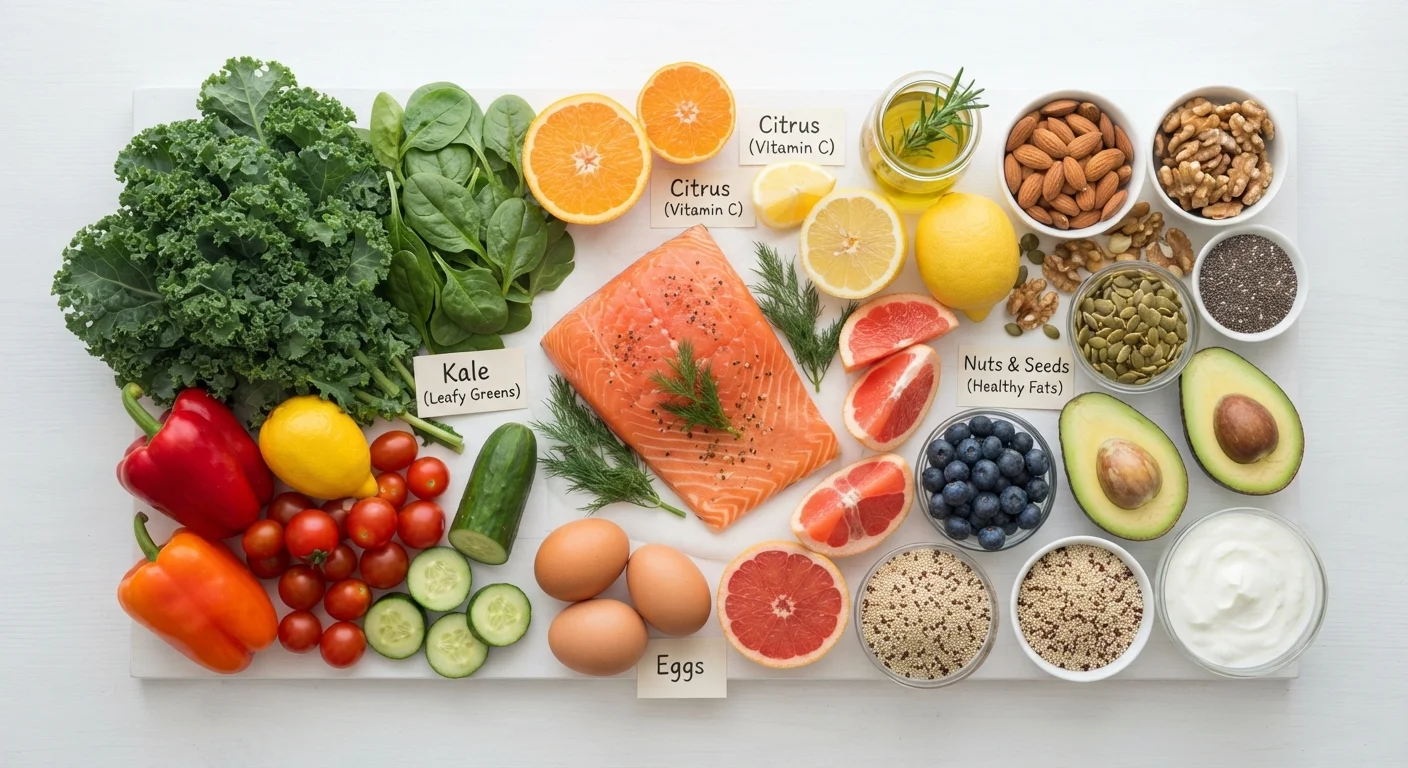
No single food delivers every micronutrient your body needs, which is why dietary variety is the most reliable strategy. A practical rule: aim for a plate that includes multiple colors, as different pigments in plant foods generally reflect different micronutrients.
- Leafy greens (spinach, kale, chard) supply vitamins K, A, C, folate, calcium, and magnesium.
- Legumes (lentils, chickpeas, black beans) provide iron, folate, zinc, and magnesium.
- Fatty fish (salmon, sardines, mackerel) offer vitamin D, B12, selenium, and iodine.
- Eggs and dairy cover B12, iodine, calcium, and vitamin A.
- Nuts and seeds deliver vitamin E, magnesium, selenium, and zinc.
- Whole grains contribute B vitamins, iron, magnesium, and thiamine.
If you're building a grocery list, prioritizing these food groups provides a strong foundation. Those following plant-based diets may need to pay particular attention to B12, iron, zinc, iodine, and vitamin D — consult a registered dietitian for personalized guidance. For a broader picture of how needs change over time, our overview of nutrition through every stage of life is a useful companion. Before turning to supplements, learn what the evidence actually says.
This article is for general informational purposes only and does not constitute medical or dietary advice. Speak with a qualified healthcare professional or registered dietitian for guidance specific to your health situation.