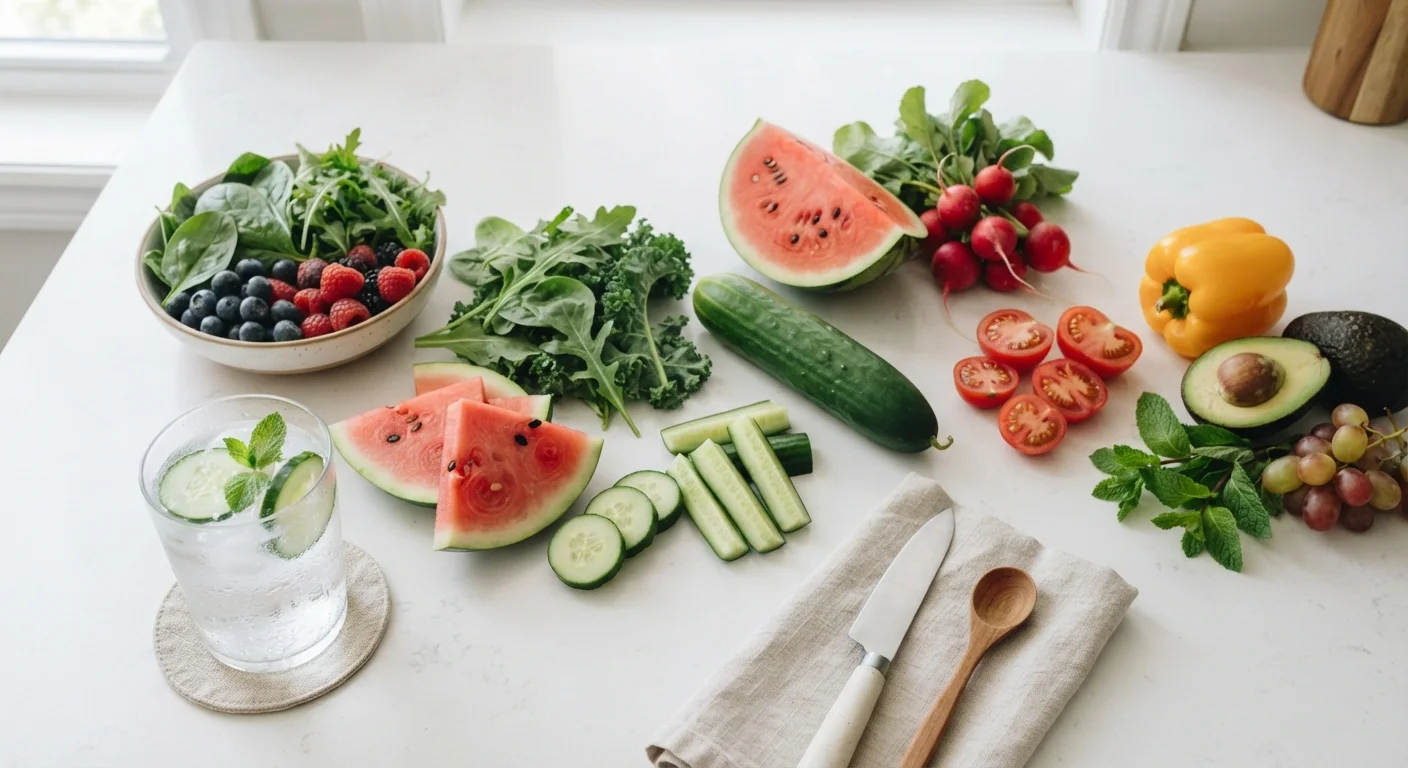
Water Is Part of Your Diet, Not Separate From It
Most nutrition conversations focus on macronutrients, vitamins, and minerals — but water is also a nutrient, and one your body cannot produce in sufficient quantities on its own. It plays a direct role in digestion, circulation, temperature regulation, and the delivery of the very nutrients found in everything else you eat. Understanding how hydration fits into your overall diet — rather than treating it as an afterthought — is one of the simplest ways to support your health.
Fluid intake doesn't come exclusively from what you drink. Research consistently shows that roughly 20% of total daily fluid consumption comes from solid food. That means the produce aisle, not just the water bottle, is part of your hydration strategy. See our overview of what macronutrients do in your body for context on how all dietary components, including water, support normal function.
~20%
Daily fluid intake sourced from food
The National Academies of Sciences, Engineering, and Medicine estimate that roughly 20% of total water intake for most people comes from food rather than beverages.
3.7 L
Total daily water intake for adult men
This figure — approximately 125 oz per day — represents total water from all sources (food and drinks) according to National Academies reference values for adult males.
90%+
Water content in cucumbers and iceberg lettuce
Several common vegetables and fruits exceed 90% water content by weight, making them a significant dietary source of hydration alongside their nutritional value.
Water-Rich Foods and What They Offer
Several common foods are composed of more than 90% water by weight. Cucumbers, iceberg lettuce, celery, tomatoes, strawberries, and watermelon all fall into this category. Broth-based soups and stews are another meaningful source, providing fluids alongside sodium and other electrolytes that help the body retain water efficiently.
These foods don't just hydrate — they also deliver fiber, vitamins, and minerals. A bowl of vegetable soup, for instance, provides fluid, potassium, and often significant fiber. This matters because fiber and water work together in the digestive tract: fiber absorbs water to form the bulk that keeps digestion moving. If you're increasing fiber intake — a goal worth pursuing, as explored in our guide to fiber intake for most Americans — adequate hydration becomes even more important to prevent discomfort or constipation.
How Hydration Interacts With Nutrient Absorption
Water is the medium through which most nutrient absorption happens. Water-soluble vitamins — including vitamin C and the B vitamins — dissolve in water and are transported through the bloodstream in aqueous solution. The kidneys rely on adequate fluid levels to filter metabolic byproducts and reabsorb nutrients that the body needs to retain.
Dehydration, even at mild levels, can slow gastric emptying and reduce the efficiency of digestion. It also affects the mucous lining of the intestines, which plays a protective and absorptive role. Staying well-hydrated supports the conditions under which the vitamins and minerals in your diet can actually be used by your cells.
“Water is not just a vehicle for nutrients — it is itself a nutrient, essential to every metabolic process the body carries out, from digestion to cellular energy production.”
— National Academies of Sciences, Engineering, and Medicine, Dietary Reference Intakes for Water, Potassium, Sodium, Chloride, and Sulfate (paraphrased)
Beverages, Balance, and What Actually Counts
Plain water is the most straightforward source of dietary fluid, but it isn't the only one that matters. Coffee, tea, milk, and even juice contribute to daily fluid totals. For most healthy adults, caffeinated beverages like coffee provide a net hydration benefit despite caffeine's mild diuretic properties. Sugary drinks, however, come with trade-offs — they add calories and may displace more nutritious food and drink choices, which can quietly undermine an otherwise balanced diet. Our article on foods that quietly undermine a balanced diet covers similar displacement dynamics worth understanding.
Use Food to Help Meet Fluid Goals
On days when drinking enough water feels challenging, intentionally including water-rich foods at meals can help close the gap. Starting with a broth-based soup, including cucumber or tomato in a salad, or ending with melon are all practical strategies. These foods hydrate while simultaneously delivering vitamins, fiber, and minerals — making every bite count toward more than one nutritional goal.
Fluid needs also shift across life stages — older adults, for example, often have a reduced sense of thirst despite having higher vulnerability to dehydration. Our comprehensive nutrition through every stage of life overview covers how hydration needs evolve over time.
This article is for general informational and educational purposes only and is not a substitute for professional medical or dietary advice. Consult a qualified healthcare provider or registered dietitian for guidance specific to your health needs.