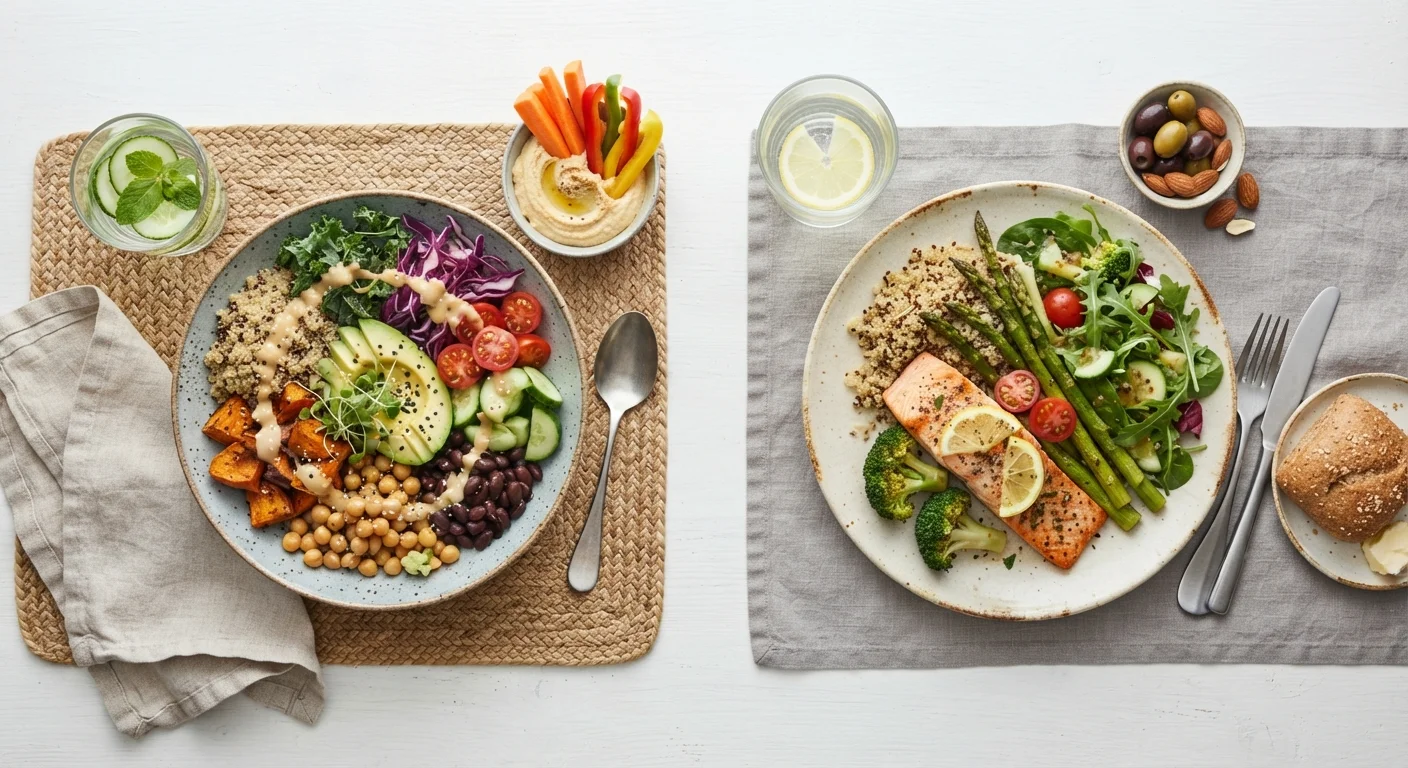
What Each Eating Pattern Actually Involves
The terms "plant-based" and "omnivorous" are broad umbrellas. A plant-based diet can range from fully vegan — excluding all animal products — to flexitarian, where meat and dairy appear occasionally. An omnivorous diet includes both plant and animal foods, but quality varies widely depending on food choices.
What matters most in any comparison is not the label but the nutritional composition. A poorly planned plant-based diet heavy in refined grains and processed meat alternatives is not inherently healthier than a well-balanced omnivorous diet rich in vegetables, legumes, whole grains, and lean proteins. For a grounding overview of balanced eating regardless of dietary pattern, see our introduction to balanced meals.
Key Nutritional Strengths and Gaps
Plant-based diets tend to deliver higher fiber, more antioxidants, and lower levels of saturated fat. Research published in major nutrition journals has consistently associated well-planned plant-based diets with reduced risk of cardiovascular disease, type 2 diabetes, and certain cancers. However, several nutrients are either absent or less bioavailable from plant sources alone:
- Vitamin B12: Found almost exclusively in animal products; supplementation or fortified foods are essential for vegans.
- Heme iron: Animal-sourced iron is absorbed significantly more efficiently than the non-heme iron in plants.
- Omega-3 fatty acids (EPA and DHA): Plants provide ALA, a precursor, but conversion to the active forms is limited.
- Zinc and calcium: Present in plants but bound to compounds like phytates that reduce absorption.
Omnivorous diets offer broader access to these nutrients in more bioavailable forms. The trade-off is that diets heavy in red and processed meats are associated with elevated cardiovascular and colorectal cancer risk, according to major health organizations including the World Health Organization.
| Nutrient / Factor | Plant-Based Diet | Omnivorous Diet | |
|---|---|---|---|
| Dietary fiber | Typically high | Moderate (varies widely) | |
| Saturated fat | Generally lower | Higher with red/processed meat | |
| Vitamin B12 | Requires supplementation or fortified foods | Well covered by animal products | |
| Iron bioavailability | Lower (non-heme only) | Higher (heme and non-heme sources) | |
| Omega-3 (EPA/DHA) | Limited; ALA conversion low | Readily available via fish and seafood | |
| Protein variety | Requires intentional combining | Broad and easily accessible | |
| Antioxidant intake | Typically high | Depends on plant food volume | |
| Planning complexity | Higher — gaps need monitoring | Moderate — quality still matters |
It's also worth noting that foods sometimes celebrated as nutritious can still create imbalance in excess — a nuance explored in our article on foods that quietly undermine balance.
Planning Around the Gaps
Awareness of each diet's weak points allows for practical correction. Plant-based eaters can strengthen their nutritional profile by incorporating fortified foods, varied protein sources such as legumes, tofu, tempeh, and seeds, and by discussing supplementation — particularly B12 and vitamin D — with a healthcare provider.
Omnivorous eaters benefit from prioritizing plant diversity within their meals: adequate vegetables, legumes, and whole grains remain underconsumed by most Americans regardless of dietary pattern, according to the Dietary Guidelines for Americans.
The 80/20 Approach Works for Both Patterns
Rather than aiming for dietary perfection, focus on getting the fundamentals right most of the time. For plant-based eaters, that means consistently including diverse protein sources and monitoring key nutrients. For omnivores, it means keeping vegetable intake high and limiting processed meats. Small, consistent improvements tend to outperform sweeping dietary overhauls.
For those building or refining their grocery habits, our nutritional grocery list guide offers a practical framework for either eating pattern. Supplement use is another area worth understanding carefully — our overview of dietary supplements covers when they genuinely fill gaps and when they are unnecessary.
Sustainability and Long-Term Fit
Nutritional adequacy is only half the equation. An eating pattern that cannot be maintained consistently offers limited long-term benefit. Research on dietary adherence consistently shows that rigid, all-or-nothing approaches tend to fail over time for most people.
Both patterns can be adjusted to align with personal preferences, cultural traditions, life stage, and health goals. Nutritional needs also shift with age, activity level, and health conditions — a dimension covered in depth in our nutrition through every life stage guide. For practical strategies on sustaining any dietary approach long term, see our piece on sustainable eating habits.
This article is for general informational and educational purposes only and does not constitute medical or dietary advice. Speak with a qualified healthcare professional or registered dietitian before making significant changes to your diet, particularly if you have an existing health condition or belong to a population with specific nutritional needs.