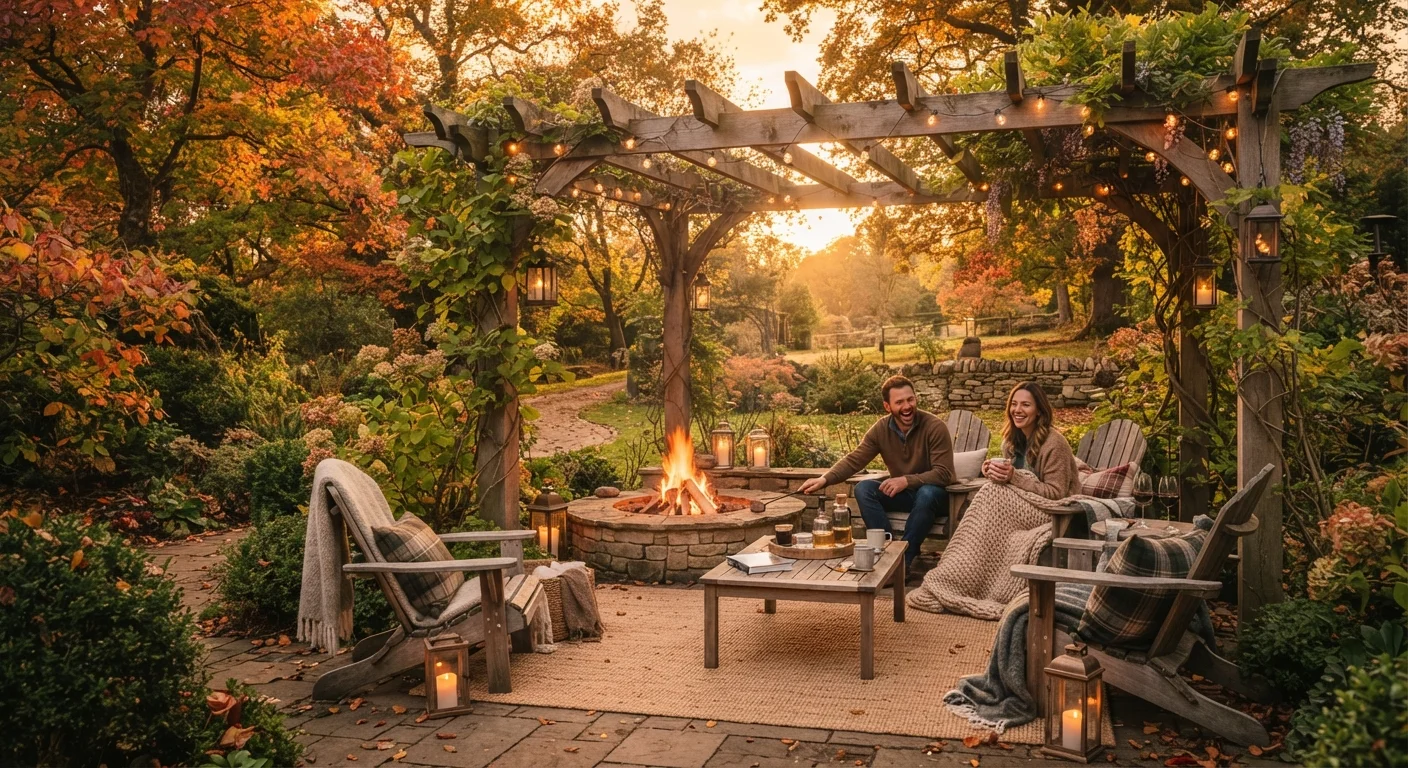
Designing for where you actually live
A beautiful outdoor living space isn't defined by a single perfect summer day — it's defined by how well it handles the full range of conditions your climate delivers. Rain, wind, intense sun, and cold snaps all test materials, structures, and plantings in ways that fair-weather design ignores. The good news is that with intentional choices, most homeowners across a wide range of U.S. climate zones can create patios, decks, and garden rooms that remain inviting and usable through much of the year.
This isn't about spending more — it's about spending smarter. Choosing the right surface, structure, and heating approach from the start avoids costly replacements and retrofits later. The strategies below address the key decisions that determine whether an outdoor space works through shoulder seasons or sits unused half the year. For context on how your specific yard conditions influence what will work, our annuals vs. perennials guide offers useful framing on designing outdoor spaces that perform across changing seasons.
Start with a climate-smart structure
Before choosing furniture or lighting, the bones of your outdoor space need to match your regional weather reality. A pergola works beautifully in mild Pacific Northwest summers but needs a retractable canopy or polycarbonate roof panels if you're dealing with heavy rain or snow load. In hot, sunny climates, a solid-roof structure or shade sail may be non-negotiable for comfort.
Consider prevailing wind direction when positioning walls, screens, or plantings. Solid privacy screens block wind effectively but can create turbulence at the edges; slatted or lattice panels filter airflow more gently. If your area sees regular freeze-thaw cycles, avoid structures anchored in shallow footings — frost heave can shift posts and create safety hazards over time. Consult a local contractor when in doubt about foundation depth requirements for your specific region.
The right structure for your climate is the single most important outdoor living decision you'll make.
Choose surfaces that hold up through the seasons
Patio surface materials aren't just aesthetic choices — they're performance decisions. Concrete pavers, natural stone, and porcelain tile generally handle freeze-thaw cycles well when properly installed with appropriate base depth and joint spacing to allow for expansion. Unsealed wood decking can warp and crack with repeated moisture exposure; composite decking materials tend to be more dimensionally stable in wet or humid climates.
In regions with heavy rainfall, surface texture matters for safety. Smooth polished finishes can become dangerously slippery when wet. Look for materials rated for slip resistance, and plan for adequate drainage slope — typically a minimum 1–2% grade away from the house. For areas with intense UV exposure, certain materials fade or degrade faster; check manufacturer guidance on UV ratings before committing.
Surface material choice determines both safety and maintenance burden across every season.
Layer your heating and shade options
A truly year-round outdoor space needs to handle both ends of the temperature spectrum. For warmth, freestanding or wall-mounted radiant heaters extend comfortable time outdoors well into cool fall and spring evenings. A wood-burning or gas fire pit adds ambiance alongside heat, though local ordinances on open burning vary widely — check your municipality's rules before installation.
Shade management is equally important for summer comfort and furniture longevity. Adjustable pergola louvers, retractable awnings, and shade sails allow you to tune sun exposure throughout the day. Shade structures also protect outdoor fabrics from UV degradation, significantly extending the life of cushions and rugs. Think of heating and shade not as separate features but as a coordinated system that lets one space serve multiple seasons.
Layering heat and shade transforms a single-season patio into a four-season destination.
Use plants strategically as living climate control
Well-placed plantings do real work in outdoor living areas. Evergreen shrubs or ornamental grasses positioned on the windward side of a seating area can significantly reduce wind chill during shoulder-season use. Deciduous trees planted on the south or west side of a patio provide shade in summer but allow warming winter sun through once leaves drop — a passive solar benefit that costs nothing to operate.
Understanding your site's microclimate is essential here. A low-lying patio may collect cold air on still nights while a slightly raised terrace stays several degrees warmer. Our guide on hardiness zones and microclimates explains how local conditions shape what actually works in your specific yard. For patio-adjacent growing, container gardening on patios offers flexible options that can be moved indoors when temperatures drop.
Strategic plantings provide natural wind protection and passive temperature regulation at no operating cost.
Select furnishings built for flexibility and durability
Outdoor furniture in variable climates needs to earn its keep through weather swings, UV exposure, and humidity changes. Powder-coated aluminum frames resist rust and stay lightweight enough to reposition or store. Teak and similar dense hardwoods hold up well outdoors but require periodic oiling in dry climates to prevent cracking. Synthetic wicker (resin wicker) handles moisture better than natural rattan and tends to be easier to clean after storms or pollen season.
Modular sectional configurations let you reconfigure the space — tight grouping around a fire feature in cooler months, spread out for summer entertaining. Invest in high-quality outdoor-rated fabrics with solution-dyed yarns rather than surface-printed options; they retain color significantly longer under UV. Storage solutions — a deck box or weatherproof cabinet — make it easy to bring cushions and accessories in during extended bad weather without storing everything indoors permanently.
Modular, weather-resistant furniture lets your outdoor space adapt to both the season and the occasion.
Plan lighting for comfort and safety across seasons
Outdoor lighting extends usability into darker fall and winter evenings and improves safety on wet or icy surfaces. Low-voltage LED path and step lighting makes threshold changes visible and reduces trip hazards year-round. String lights strung across a pergola create warm ambiance and are easy to remove or adjust seasonally.
In regions with significant snowfall, avoid mounting fixtures in locations where snow accumulation could submerge or damage them. Any electrical work outdoors must use weatherproof-rated fixtures and GFCI-protected circuits — this is non-negotiable for safety and code compliance. If you're planning new lighting circuits, have a licensed electrician do the installation; outdoor electrical work is not a DIY project in most jurisdictions. Pair your lighting plan with your overall seasonal maintenance schedule — our seasonal home maintenance guide covers when to inspect and service exterior fixtures.
Proper outdoor lighting extends your season into the evening and keeps pathways safe in all conditions.
Bringing it all together
Year-round outdoor living isn't about fighting your climate — it's about designing with it. Each of the decisions above compounds: a well-sited structure with a durable surface, layered climate control, strategic planting, and quality furnishings adds up to a space that genuinely gets used through spring showers, summer heat, fall evenings, and mild winter afternoons.
Protect surfaces before harsh weather arrives
Sealing stone or concrete pavers before winter helps prevent moisture infiltration and freeze-thaw cracking. Apply sealers when surfaces are clean and dry, typically in early fall. A consistent sealing schedule — usually every one to three years depending on the product and traffic — meaningfully extends surface life and reduces long-term repair costs.
Check local codes before you build
Pergolas, covered patios, fire features, and outdoor electrical work may require permits depending on your municipality and the scope of the project. Requirements vary significantly by location and structure size. Always verify local building codes and HOA rules before breaking ground, and factor in inspection timelines when planning your project schedule.
Start with whichever element most limits your current enjoyment — whether that's a lack of shade, an uncomfortable surface, or no source of warmth after dark — and build outward from there. Linking outdoor improvements to your broader home upkeep routine, as outlined in the seasonal home maintenance checklist, keeps your investment performing well for years. More inspiration and guidance on outdoor projects is available through our Home Improvement hub.